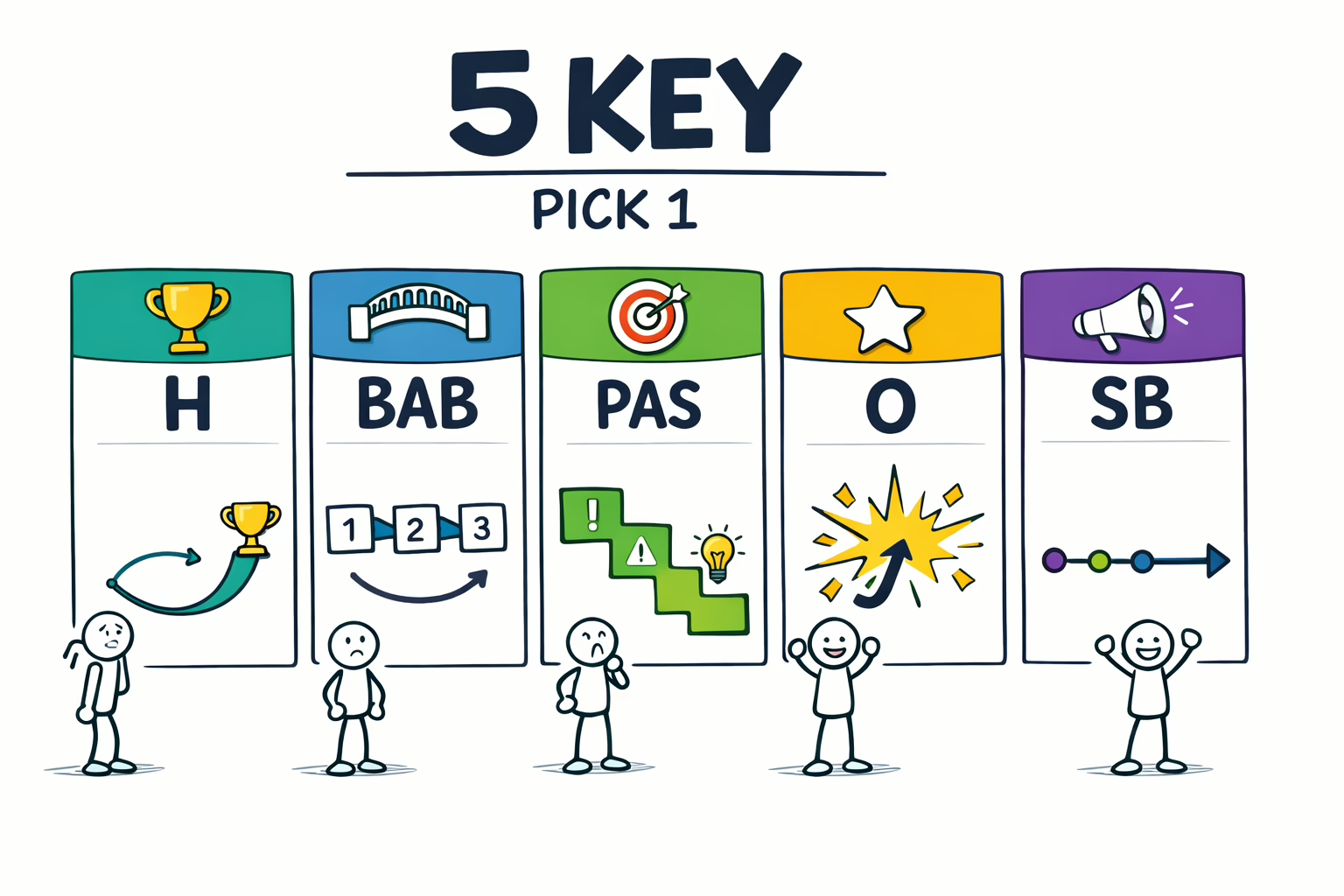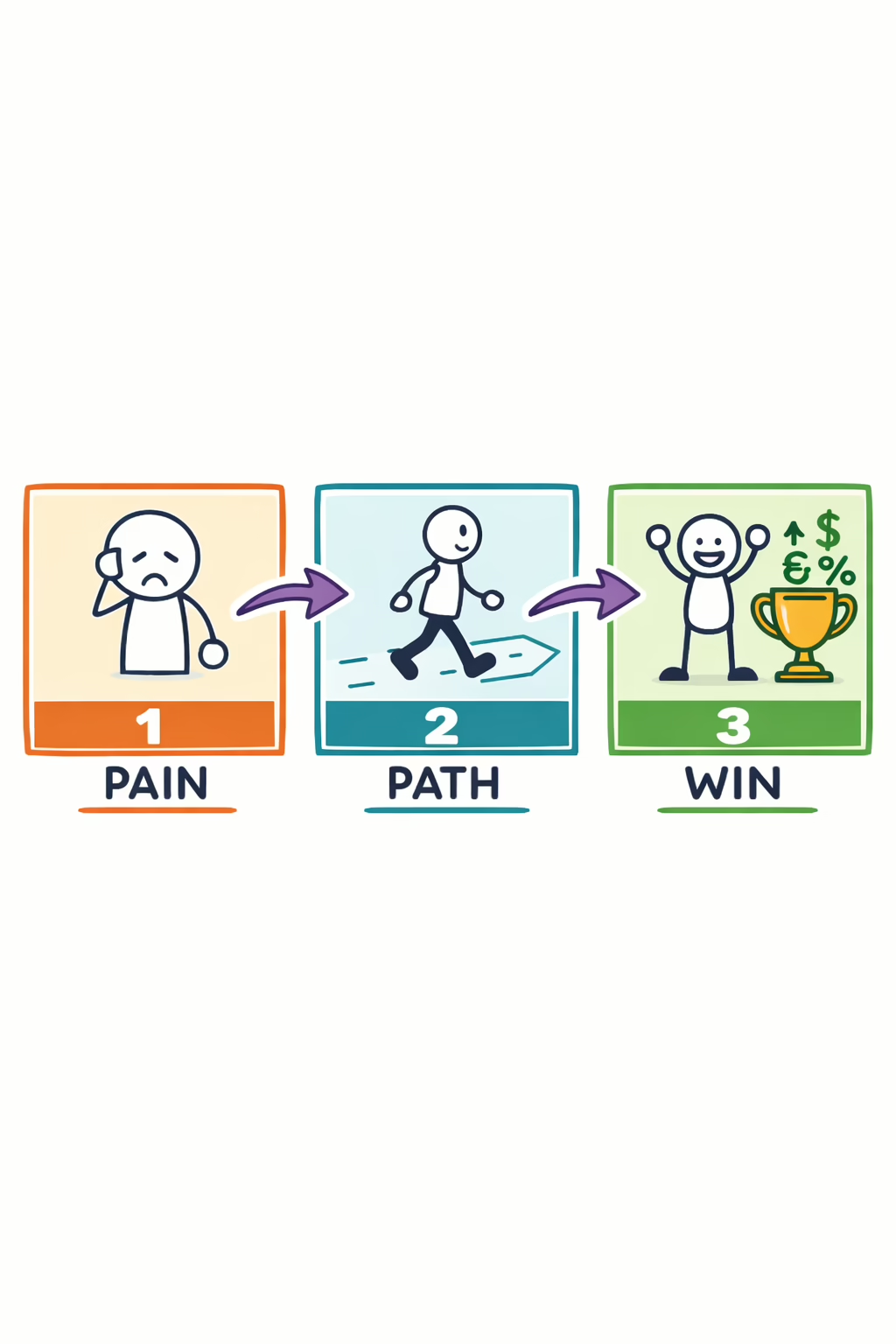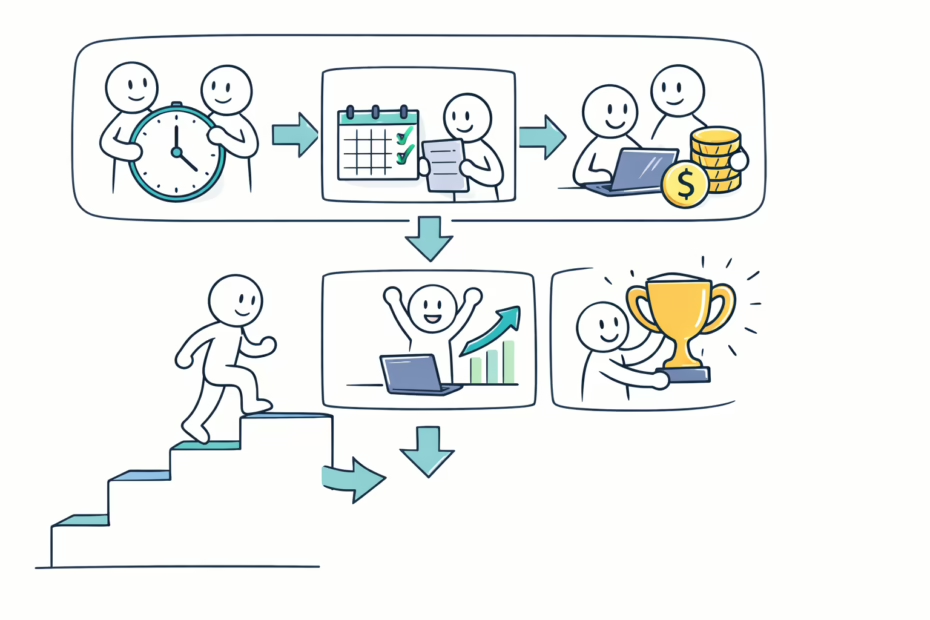
Your CTA examples determine whether prospects click or scroll past. Most service businesses lose conversions because their calls to action lack urgency, clarity, or relevance. I’ve generated over $25M in client revenue by testing hundreds of CTA examples across landing pages, emails, and ads. The right CTA examples can double your conversion rate overnight.
A strong CTA example tells prospects exactly what to do next. It removes friction. It creates urgency. Your CTA examples should match your audience’s intent at every stage of the buyer journey.
This guide shows you proven CTA examples that increase conversions for service businesses. You’ll see real examples, learn when to use each type, and discover how to test CTA examples systematically. Every CTA example here comes from real campaigns that drove measurable results.
Table of Contents
- What Makes CTA Examples Effective
- High Converting CTA Examples by Funnel Stage
- CTA Examples for Service Businesses
- How to Test CTA Examples
- Common CTA Mistakes That Kill Conversions
- AI Tools for CTA Creation
What Makes CTA Examples Effective
Effective CTA examples share three core elements. They create clarity about the next action. They reduce perceived risk. They motivate immediate response through urgency or value.
The best CTA examples use action verbs that tell prospects exactly what happens next. Words like “Get,” “Start,” “Book,” “Download,” and “Join” work better than passive phrases. Your CTA examples should never leave prospects guessing about outcomes.
Clarity Beats Cleverness
Your CTA examples must communicate value instantly. Prospects scan pages in seconds. Vague CTA examples like “Learn More” or “Click Here” waste conversions because they don’t promise specific benefits.
Strong CTA examples name the deliverable. “Download Your Free Sales Script” converts better than “Get Started.” The AI landing page builder helps you generate clear CTA examples matched to your offer.
Specificity increases trust. When your CTA examples tell prospects exactly what they’ll receive, conversion rates rise. Generic CTA examples create hesitation.
Urgency and Scarcity
The most effective CTA examples incorporate time pressure or limited availability. Phrases like “Book Your Free Audit Today” or “Join 47 Spots Left” trigger immediate action.
But false urgency damages trust. Your CTA examples should only use scarcity when it’s real. Service businesses can create legitimate urgency through limited consultation slots or seasonal offers.
Test CTA examples with and without urgency language. Track which versions drive more qualified leads. Urgency works when it aligns with your business model.
Risk Reversal
Strong CTA examples reduce friction by addressing objections directly. Adding “No Credit Card Required” or “Cancel Anytime” to your CTA examples removes barriers to conversion.
Your CTA examples should emphasize what prospects gain, not what they risk. “Start Your Free Trial” beats “Sign Up Now” because it highlights the no-risk benefit.
Service businesses benefit from CTA examples that promise consultations, audits, or assessments. These offers feel less committal than “Hire Us” CTA examples.
Expert Insight from Kateryna Quinn, Forbes Next 1000:
“I’ve tested over 200 CTA examples across client campaigns. The ones that name a specific outcome always win. Your CTA examples aren’t creative writing exercises. They’re conversion tools.”
High Converting CTA Examples by Funnel Stage
Different funnel stages require different CTA examples. Top-of-funnel CTA examples focus on education and value. Bottom-of-funnel CTA examples drive purchase decisions.
Your CTA examples must match prospect awareness levels. Cold audiences need low-commitment CTA examples. Warm audiences respond to direct sales CTA examples.
Top-of-Funnel CTA Examples
Cold prospects aren’t ready to buy yet. Your top-of-funnel CTA examples should offer free resources that build trust and capture contact information.
Effective top-of-funnel CTA examples include:
- “Download Your Free Marketing Checklist”
- “Watch the 5-Minute Training Video”
- “Get the Step-by-Step Guide”
- “Subscribe for Weekly Tips”
- “Join 2,000+ Business Owners”
These CTA examples work because they promise immediate value without asking for money. The SBA’s market research guide shows how educational content builds audience trust before conversion.
Your top-of-funnel CTA examples should align with content topics. If your blog post covers email marketing, your CTA examples should offer email templates or strategy guides.
Middle-of-Funnel CTA Examples
Middle-of-funnel prospects understand their problem and evaluate solutions. These CTA examples offer deeper engagement like consultations or demos.
Strong middle-of-funnel CTA examples:
- “Book Your Free 30-Minute Strategy Call”
- “Schedule a Personalized Demo”
- “Get Your Custom Growth Plan”
- “Take the 2-Minute Assessment”
- “See How We Helped [Client Type]”
These CTA examples work because they move prospects toward a buying decision without forcing commitment. Your middle-of-funnel CTA examples should qualify leads while providing value.
Service businesses should use CTA examples that showcase expertise. Offering audits or assessments positions you as the trusted advisor.
Bottom-of-Funnel CTA Examples
Bottom-of-funnel prospects are ready to buy. Your CTA examples here should be direct and action-oriented.
High-converting bottom-of-funnel CTA examples:
- “Start Your Project Today”
- “Get Started for $99/Month”
- “Hire Us Now”
- “Add to Cart”
- “Schedule Your Onboarding Call”
These CTA examples convert because they match high purchase intent. Don’t dilute bottom-of-funnel CTA examples with educational language. Be direct about what happens next.
Your bottom-of-funnel CTA examples should appear on pricing pages, proposal follow-ups, and consultation recap emails. Make the next action obvious.
CTA Examples for Service Businesses
Service businesses need CTA examples that reflect the consultation-based sales process. Your CTA examples should bridge the gap between interest and commitment.
Most service business CTA examples fail because they ask for too much too soon. Prospects won’t “Hire Us” on first contact. They will book calls.
CTA Examples for Consulting Services
Consulting CTA examples should emphasize the discovery process. Prospects want to understand if you’re the right fit before committing.
Proven consulting CTA examples:
- “Book Your Free Business Audit”
- “Schedule a 15-Minute Discovery Call”
- “Get Your Custom Roadmap”
- “Claim Your Complimentary Strategy Session”
- “Start with a Free Consultation”
These CTA examples work because they position the call as valuable in itself. The sales strategies hub offers frameworks for converting consultations into clients.
Your consulting CTA examples should specify call length and deliverables. “Book Your Free 30-Minute SEO Audit” converts better than “Contact Us.”
CTA Examples for Agencies
Agency CTA examples should showcase capabilities while capturing leads. Your CTA examples need to differentiate your agency from competitors.
High-converting agency CTA examples:
- “See Your Custom Marketing Plan”
- “Get Your Free ROI Projection”
- “Review Our Case Studies”
- “Schedule Your Campaign Kickoff”
- “Download Our Agency Portfolio”
These CTA examples work because they prove expertise before asking for commitment. Agency CTA examples should include social proof when possible.
Test CTA examples that reference specific industries. “Book Your Gym Marketing Audit” converts better than generic agency CTA examples for fitness businesses.
CTA Examples for Coaches
Coaching CTA examples should emphasize transformation and results. Your CTA examples must communicate the value of investing time and money.
Effective coaching CTA examples:
- “Book Your Breakthrough Session”
- “Start Your Transformation Journey”
- “Join the Next Coaching Cohort”
- “Get Your Personalized Action Plan”
- “Schedule Your Complimentary Clarity Call”
These CTA examples work because they promise outcomes, not just services. Your coaching CTA examples should speak to specific pain points your ideal clients face.
Include client results in CTA examples when possible. “See How We Helped 50+ Coaches Scale” adds credibility to your call to action.
How to Test CTA Examples Systematically
Testing CTA examples reveals what actually drives conversions for your audience. Your assumptions about effective CTA examples often differ from reality.
Start by testing one element at a time. Change button color, then copy, then placement. Testing multiple CTA examples simultaneously makes it hard to identify what works.
A/B Testing CTA Examples
A/B testing lets you compare two CTA examples head-to-head. Run each version to at least 100 conversions before declaring a winner.
Test these CTA example elements:
- Action verbs (Get vs. Download vs. Claim)
- Button color (contrasting vs. brand colors)
- Copy length (short vs. descriptive)
- Urgency language (with vs. without deadlines)
- Placement (above fold vs. after content)
Your CTA examples should perform 20-30% better after systematic testing. Small changes in CTA examples often create large conversion improvements.
The Harvard Business Review’s A/B testing guide explains statistical significance and sample sizes for reliable test results.
Multivariate Testing for CTA Examples
Multivariate testing lets you test multiple CTA example elements simultaneously. This approach works best with high-traffic pages.
Test combinations of:
- Headline + CTA copy + button color
- Image + CTA placement + urgency language
- Social proof + risk reversal + action verb
Multivariate testing reveals how CTA example elements interact. Sometimes a weak headline makes a strong CTA example perform poorly.
Your testing software should track clicks, conversions, and revenue per variation. Focus on CTA examples that drive business results, not just clicks.
Qualitative Feedback on CTA Examples
User testing reveals why certain CTA examples fail. Ask five prospects to review your landing page and explain what they’d click and why.
Record their hesitations. Common issues with CTA examples include:
- Unclear outcomes (“What happens after I click?”)
- Too much commitment (“I’m not ready to buy”)
- Missing information (“What’s the price?”)
- Trust concerns (“Is this legitimate?”)
Fix these objections in your CTA examples. Add clarifying language or risk reversal statements that address specific concerns.
Expert Insight from Kateryna Quinn, Forbes Next 1000:
“Most service businesses never test their CTA examples. They assume what works for others works for them. Test everything. Your audience is unique.”
Common CTA Mistakes That Kill Conversions
Weak CTA examples sabotage otherwise strong landing pages. Most conversion problems trace back to poor CTA examples that confuse or overwhelm prospects.
Your CTA examples should never compete with each other. Multiple CTA examples on one page split attention and reduce conversions.
Too Many CTA Examples
Landing pages with three or more different CTA examples confuse prospects. Each additional CTA example reduces conversion rates for all of them.
Use one primary CTA example per page. Secondary CTA examples should support the main action, not offer completely different paths.
For example, your main CTA example might be “Book Your Free Audit” while your secondary CTA example offers “Download the Checklist.” Both move prospects forward.
Passive CTA Examples
Passive CTA examples like “Learn More” or “Submit” lack urgency and specificity. These generic CTA examples convert poorly because they don’t promise clear outcomes.
Replace passive CTA examples with active alternatives:
- Instead of “Submit” → “Get Your Free Quote”
- Instead of “Learn More” → “See How It Works”
- Instead of “Click Here” → “Start Your Free Trial”
- Instead of “Contact” → “Book Your Strategy Call”
Your CTA examples should start with strong action verbs. Test different verbs to find what resonates with your audience.
Hidden CTA Examples
CTA examples that blend into your page design get ignored. Your call to action should be the most visually prominent element on the page.
Use contrasting colors for CTA example buttons. If your site uses blue, make your CTA examples orange or green. The button should stand out immediately.
Test CTA example placement too. Above-the-fold CTA examples capture high-intent visitors. End-of-content CTA examples convert readers who need more information first.
Mismatched CTA Examples
Your CTA examples must align with page content and visitor intent. A blog post about email marketing shouldn’t end with a CTA example for web design services.
Match your CTA examples to content topics:
- SEO blog posts → “Get Your Free SEO Audit”
- Social media guides → “Download Social Templates”
- Case studies → “Schedule Your Strategy Call”
- Pricing pages → “Start Your Free Trial”
Relevant CTA examples convert two to three times better than generic alternatives. Your audience expects logical next actions.
AI Tools for CTA Creation and Optimization
AI tools help service businesses generate and test CTA examples faster. The AI landing page builder creates conversion-optimized CTA examples based on your offer and audience.
These tools analyze thousands of high-converting CTA examples to suggest language that works. You get proven CTA examples tailored to your business in minutes.
Generating CTA Examples with AI
AI CTA generators create multiple variations instantly. Input your offer details and target audience, then review dozens of CTA examples.
The best AI tools for CTA examples consider:
- Industry benchmarks and conversion data
- Audience awareness levels
- Offer type (consultation, download, purchase)
- Brand voice and messaging
Test AI-generated CTA examples against your current versions. Many service businesses see immediate conversion improvements from AI-optimized CTA examples.
Testing CTA Examples at Scale
AI tools enable rapid testing of CTA examples across multiple channels. Test email CTA examples, ad CTA examples, and landing page CTA examples simultaneously.
Your AI platform tracks which CTA examples drive conversions for different audience segments. Service businesses selling to multiple industries benefit from personalized CTA examples.
The AI marketing tools suite includes CTA optimization features that learn from your conversion data over time.
Personalizing CTA Examples
AI enables dynamic CTA examples that change based on visitor behavior. First-time visitors see different CTA examples than returning prospects.
Personalized CTA examples convert better because they match visitor intent:
- New visitors → “Download Your Free Guide”
- Return visitors → “Book Your Strategy Call”
- Email subscribers → “Join the Next Workshop”
- Cart abandoners → “Complete Your Purchase”
Your CTA examples should evolve as prospects move through your funnel. Generic CTA examples waste warm traffic that’s ready for stronger calls to action.
Start optimizing your CTA examples today with the AI landing page builder to see immediate conversion improvements.
10-Step Process for Creating High-Converting CTA Examples
Follow this proven framework to develop CTA examples that increase conversions for your service business.
- Identify the specific action you want prospects to take next
- Research CTA examples competitors use successfully in your industry
- Write five different CTA examples using strong action verbs
- Add specific outcomes or benefits to each CTA example
- Include urgency or scarcity in three of your CTA examples
- Test risk reversal language in two CTA examples
- Design visually distinct buttons for your top three CTA examples
- Place CTA examples strategically throughout your landing page
- Run A/B tests comparing your best two CTA examples
- Analyze conversion data and iterate on winning CTA examples
Quick Reference: What Are CTA Examples?
CTA examples are specific instances of calls to action that prompt prospects to take desired actions. Effective CTA examples combine clear action verbs, specific outcomes, and urgency to drive conversions. Service businesses use CTA examples like “Book Your Free Consultation” or “Download Your Strategy Guide” to move prospects through the sales funnel.
Strong CTA examples reduce friction by telling prospects exactly what happens next. The Entrepreneur’s conversion optimization guide shows how strategic CTA examples improve business results across industries.
Your CTA examples should match visitor intent at each funnel stage. Early-stage CTA examples offer educational resources. Late-stage CTA examples drive purchase decisions.
Frequently Asked Questions About CTA Examples
What makes CTA examples effective for service businesses?
Effective CTA examples for service businesses emphasize consultation and discovery rather than immediate purchase. They use specific language like “Book Your Free Audit” instead of generic phrases. Strong CTA examples reduce risk by offering no-commitment first actions. Your CTA examples should promise clear outcomes that match your prospect’s awareness level. Service business CTA examples work best when they showcase expertise through assessments or strategy calls.
How many CTA examples should appear on one landing page?
One primary CTA example per landing page drives the highest conversions. Multiple competing CTA examples split attention and reduce action rates. Your main CTA example should appear three to five times throughout the page at strategic points. Secondary CTA examples can support the primary action but shouldn’t offer completely different paths. Service businesses should maintain a single clear next action for prospects.
Should CTA examples include pricing information?
CTA examples work best without pricing for service businesses offering consultations or custom solutions. Price transparency matters on product pages but creates friction in consultation-based sales. Your CTA examples should focus on value delivered rather than cost. Include pricing information on dedicated pricing pages where prospects expect it. Test CTA examples with and without price mentions to determine what converts better for your specific audience.
How do I test CTA examples without high traffic volumes?
Test CTA examples sequentially rather than simultaneously when traffic is low. Run one version for two weeks, then switch to the alternative. Compare conversion rates over matching time periods. Your CTA example testing can also use qualitative methods like user interviews. Ask five prospects which CTA examples they’d click and why. Small businesses can test CTA examples across email campaigns where sample sizes accumulate faster than website traffic.
What CTA examples work best for cold traffic versus warm leads?
Cold traffic responds to low-commitment CTA examples offering free resources or education. Examples include “Download Your Free Guide” or “Watch the Training Video.” Warm leads convert better with direct CTA examples like “Schedule Your Strategy Call” or “Get Your Custom Quote.” Your CTA examples should progress from educational to transactional as prospects move through your funnel. Match CTA example intensity to prospect awareness and engagement levels.
Final Thoughts: Start Testing Your CTA Examples Today
Your CTA examples directly impact conversion rates and revenue. Small improvements in CTA example effectiveness compound into significant business growth over time.
Start by auditing your current CTA examples across your website, landing pages, and email campaigns. Identify weak CTA examples that use passive language or lack specificity. Replace them with action-oriented alternatives that promise clear outcomes.
Test systematically. Compare CTA examples one element at a time so you know what drives improvements. Track conversions, not just clicks, to measure real business impact.
The AI landing page builder generates proven CTA examples for service businesses in minutes. You’ll get industry-specific language optimized for conversions without hiring copywriters or running expensive tests.
Your CTA examples determine whether prospects become clients. Invest time in getting them right. Strong CTA examples turn traffic into revenue.

Kateryna Quinn is the founder and CEO of Uplify AI, an AI-powered business strategist that helps service-based, brick-and-mortar small business owners increase profitability and reclaim their time. She also founded ASTASH, an award-winning full-service digital marketing agency specializing in SEO, Google Ads, branding, logo design, and website development, based in Northern Colorado. A Ukrainian immigrant who came to the United States at 17, Quinn has generated more than $25 million in organic revenue for her agency clients. She is a Forbes NEXT 1000 honoree and was named to NOCO Style Magazine’s 30 Under 30.