You want more clients without burning cash on ads. So, seo vs paid ads becomes your biggest question. Both drive traffic to your service business. Yet, they work in completely different ways.
Paid ads give you instant visibility and quick results. SEO builds long-term organic traffic that compounds over time. Most service business owners pick one and ignore the other. That’s a mistake.
I built a marketing agency that generated $25M in client revenue. I tested both seo and paid ads strategies across hundreds of campaigns. Here’s what I learned: the right choice depends on your business stage, budget, and goals. Let me show you exactly how to decide.
Table of Contents
- SEO vs Paid Ads: Core Comparison
- Cost Analysis: Ad Spend vs SEO Investment
- Results Timeline: When Each Strategy Pays Off
- Organic vs Paid Traffic Quality
- Choosing Your Marketing Strategy
- AI Marketing Tools for Both Channels
SEO vs Paid Ads: Core Comparison
The seo vs paid ads debate starts with understanding what each channel actually does. SEO earns you free organic traffic through search rankings. Paid ads buy you immediate placement above organic results.
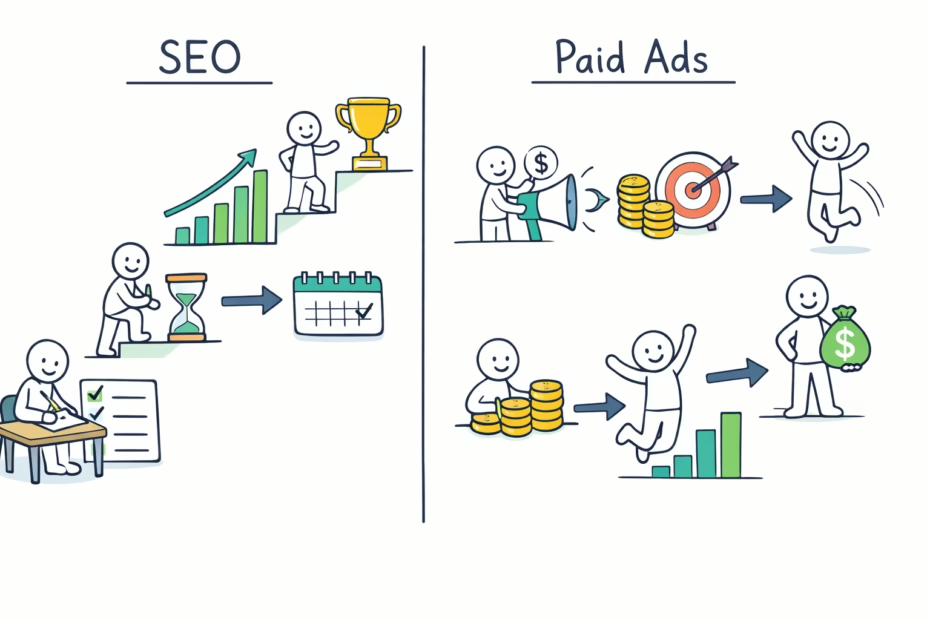
Search engine optimization takes months to show results. You create content, build links, and optimize pages. Google rewards this work with higher rankings over time. Once ranked, your seo traffic costs nothing per click.
Paid advertising shows results within hours or days. You set a budget, write ad copy, and launch campaigns. Your ads appear immediately when people search. But you pay for every single click.
How SEO Works for Service Businesses
SEO builds authority through content and technical optimization. Your service business needs three core elements: keyword-optimized pages, quality backlinks, and strong user signals. Google ranks sites that answer searcher questions best.
For example, a fitness studio targeting “personal training Boston” needs pages about their training services. They also need blog posts answering common fitness questions. Over time, this content attracts links and rankings.
The comparison between seo and paid ads becomes clear here. SEO compounds value month after month. Your old content keeps bringing new clients. Paid ads stop working the moment you stop paying.
How Paid Ads Work for Service Businesses
Paid ads put your business at the top of search results instantly. You bid on keywords related to your services. When someone searches those terms, your ad appears above organic results.
Google Ads and Facebook Ads dominate the paid advertising space. Google catches people actively searching for services. Facebook targets demographics and interests. Both charge per click or impression.
The ad spend vs seo tradeoff is simple. Ads give immediate traffic but require constant budget. SEO takes longer but costs less per client over time. Most successful businesses use both strategically.
Key Metrics for Each Channel
Measuring seo vs paid ads performance requires different metrics. SEO success shows in organic rankings, traffic growth, and backlink count. Paid ads track cost per click, conversion rate, and return on ad spend.
For SEO, monitor your keyword positions monthly. Track organic traffic in Google Analytics. Watch your domain authority score climb. These metrics predict long-term revenue potential.
For paid ads, watch cost per acquisition closely. Calculate customer lifetime value against ad spend. Test different ad variations weekly. Paid campaigns need constant optimization to stay profitable.
The marketing comparison reveals this truth: SEO builds assets while ads rent attention. Your SEO content strategy creates pages that work for years. Your ad campaigns only work while you pay.
Cost Analysis: Ad Spend vs SEO Investment
The seo vs paid ads cost comparison looks different than you think. Paid ads cost $1-$50 per click depending on your industry. SEO costs $500-$5,000 monthly for professional services. But ROI tells the real story.
Most service business owners see paid ads as “too expensive.” They’re wrong. The real question is cost per client, not cost per click. If one client pays you $2,000 and costs $200 in ads, that’s profitable.
Paid Ads Cost Structure
Paid advertising charges you in three ways: platform fees, management costs, and actual ad spend. Google Ads has no platform fee. Facebook Ads is also free to use. You only pay when people click or view.
Ad spend varies wildly by industry and competition. Legal services pay $50-$150 per click. Fitness studios pay $2-$8 per click. The comparison between high and low competition keywords matters enormously.
Most businesses need $1,000-$3,000 monthly ad spend minimum. Below that, algorithms struggle to optimize. You also need budget for ad creative, landing pages, and testing. Total monthly cost often hits $2,000-$5,000.
SEO Investment Breakdown
SEO requires upfront investment before results appear. You pay for content creation, technical optimization, and link building. Professional SEO services cost $1,500-$10,000 monthly depending on competition.
Content creation forms the biggest seo expense. Quality blog posts cost $200-$500 each. Service pages need $300-$800 each. Most businesses need 20-50 pages to compete. That’s $6,000-$25,000 in content alone.
The seo vs paid ads cost comparison favors seo long-term. Your content keeps working after you create it. Paid ads stop the moment you pause campaigns. But seo takes 6-12 months to show ROI.
Hidden Costs in Each Channel
Both seo and paid ads carry hidden costs beyond obvious expenses. Paid ads need constant creative refreshes to avoid ad fatigue. SEO needs ongoing content updates and link maintenance.
For paid ads, creative production costs add up fast. New ad images cost $50-$500 each. Video ads cost $500-$5,000 to produce. Landing page design runs $1,000-$5,000. These costs repeat every 60-90 days.
For SEO, content decay requires budget. Old blog posts need updates every 12-18 months. Broken links need fixing. Technical issues need monitoring. Budget $500-$1,500 monthly for ongoing maintenance.
According to the SBA marketing guide, small businesses should allocate 7-8% of revenue to marketing. Split this between seo and paid ads based on your goals.
ROI Comparison Over Time
The marketing comparison between seo and paid ads shifts dramatically over time. Month 1, paid ads deliver 10x better ROI. Month 12, seo often wins. By month 24, seo typically crushes paid ads on cost per client.
Here’s real data from my agency work. A fitness studio spent $3,000 monthly on Google Ads. Year 1 ROI: 300%. They also invested $2,000 monthly in seo. Year 1 ROI: 50%. But year 2 changed everything.
Year 2, their seo traffic doubled without additional spend. Paid ads needed more budget to maintain results. Their seo cost per client dropped to $87. Paid ads cost per client climbed to $156. The comparison became obvious.
Smart businesses use paid ads for immediate revenue. Then they invest profits into seo for long-term growth. This dual strategy outperforms choosing just one channel. Your AI marketing strategy should include both from day one.
Results Timeline: When Each Strategy Pays Off
The seo vs paid ads timeline comparison reveals the biggest difference. Paid ads deliver results in days. SEO takes months to show meaningful traffic. This timeline gap explains why most businesses choose wrong.
Impatient business owners pick paid ads exclusively. They need clients today, not in six months. Patient owners choose seo only. They want to avoid ad costs. Both approaches leave money on the table.
Paid Ads Timeline
Paid advertising shows results almost instantly. Launch a campaign Monday, get clicks by Tuesday. Optimize your ads Wednesday, see better results Thursday. This speed makes paid ads incredibly attractive.
Week 1 of paid ads focuses on testing. You test different audiences, ad copy, and landing pages. Most campaigns lose money initially. That’s normal. You’re buying data about what works.
Weeks 2-4 optimize based on early results. You cut losing ads and scale winners. Profitable campaigns emerge. Smart advertisers reach profitability by week 4. Average advertisers need 8-12 weeks.
Month 3 marks maturity for paid campaigns. You know your target audience. Your ads convert well. Cost per client stabilizes. But competition constantly increases costs. You must keep testing forever.
SEO Timeline
Search engine optimization follows a completely different timeline. Month 1 brings almost zero results. You’re laying foundation. Month 3 might show your first rankings. Month 6 delivers meaningful organic traffic.
Months 1-3 focus on content creation and technical fixes. You publish blog posts weekly. You fix site speed issues. You optimize title tags. Google barely notices your site yet. This phase feels frustrating.
Months 4-6 bring your first meaningful rankings. Lower competition keywords start ranking. Organic traffic climbs from 50 to 500 monthly visitors. You get your first seo-generated clients. ROI turns slightly positive.
Months 7-12 show exponential growth. Your content library reaches critical mass. Google sees you as an authority. Rankings jump. Traffic doubles or triples. The comparison between month 6 and month 12 is dramatic.
Year 2 is where seo becomes magical. Your old content ranks higher. New content ranks faster. Organic traffic compounds monthly. Many businesses see 300-500% traffic growth in year 2 with consistent effort.
The Optimal Timeline Strategy
The best seo vs paid ads timeline strategy uses both in sequence. Start with paid ads for immediate revenue. Invest 30% of ad profits into seo. Let seo build while ads pay bills.
Month 1-3: Run paid ads aggressively. Generate revenue fast. Start creating seo content. Your paid campaigns fund your seo investment. This keeps cash flow positive.
Month 4-6: Scale profitable ad campaigns. Your seo content starts ranking. Organic traffic grows slowly. You now have two traffic sources. Risk decreases.
Month 7-12: Reduce ad spend as seo traffic grows. Your organic vs paid traffic ratio improves. Cost per client drops. Profit margins increase. You’ve built a real marketing engine.
Year 2+: Maintain minimal paid ads for consistent flow. Your seo dominates traffic sources. You’re no longer dependent on paid advertising. This independence feels amazing.
When to Choose Speed vs Sustainability
Sometimes the seo vs paid ads timeline comparison forces a clear choice. New businesses need revenue now. Established businesses can afford to wait. Your stage determines strategy.
Choose paid ads first if you need clients this month. Your business has less than 6 months of runway. You’re launching a new service. You want to test market demand quickly.
Choose seo first if you have stable cash flow. Your business can wait 6-12 months for results. You want to build long-term assets. You’re committed to content creation.
Most service businesses benefit from the hybrid approach. Paid ads for immediate results. SEO for long-term growth. The AI marketing ROI calculator helps you model both scenarios before committing budget.
Organic vs Paid Traffic Quality
The seo vs paid ads quality comparison surprises most business owners. They assume all traffic converts equally. Wrong. Organic traffic often converts 2-3x better than paid traffic. Here’s why.
People clicking organic results trust Google’s judgment. They see your high ranking as social proof. They’re more likely to read your content fully. This pre-qualification makes organic traffic more valuable.
Organic Traffic Characteristics
Organic traffic from seo tends to be highly qualified. These visitors found you while researching solutions. They read multiple pages on your site. They spend 3-5 minutes learning about your services.
The comparison between organic and paid traffic shows clear behavior differences. Organic visitors view 2.5 pages on average. Paid visitors view 1.3 pages. Organic visitors spend 3x longer on site.
Organic traffic also shows higher intent signals. They download lead magnets more often. They fill out contact forms at better rates. They’re more likely to become paying clients. This quality matters more than quantity.
For service businesses, organic traffic converts at 3-5% on average. That means 3-5 leads per 100 visitors. Some niches see even higher rates. Legal services hit 8-10% conversion from organic traffic.
Paid Traffic Characteristics
Paid advertising traffic behaves differently than organic traffic. These visitors clicked an ad, not a search result. They’re often earlier in the buying journey. They need more education before converting.
Paid traffic converts at 1-3% for most service businesses. Lower than organic, but still profitable if your numbers work. The key is matching ad message to landing page perfectly.
The seo vs paid ads traffic quality comparison reveals another truth. Paid traffic lets you control exactly who sees your offer. You target specific demographics, locations, and interests. This targeting compensates for lower conversion rates.
Facebook Ads excels at finding people who don’t know they need your service yet. Google Ads catches people actively searching. Both deliver different traffic types. Both can be profitable with proper optimization.
Intent Matching and Conversion Rates
Traffic quality depends heavily on intent matching. High-intent keywords convert better. Low-intent keywords generate more traffic. The comparison matters for both seo and paid ads.
High-intent keywords include “near me,” “cost,” “best,” and service names. Someone searching “personal trainer near me” wants to hire someone now. They convert at 10-15% with good messaging.
Low-intent keywords include “how to,” “what is,” and “tips for.” Someone searching “how to lose weight” isn’t ready to hire yet. They convert at 0.5-2%. But they might convert later.
Smart marketers target both intent levels strategically. High-intent keywords for paid ads deliver immediate ROI. Low-intent keywords for seo build long-term authority. This layered approach maximizes results.
Trust Factors That Affect Quality
The organic vs paid traffic comparison extends to trust signals. Organic rankings signal authority. Paid ads signal that you’re willing to spend money. Both affect conversion rates differently.
Organic traffic arrives with built-in trust. Google ranked you highly, so you must be credible. This halo effect boosts conversion rates 20-40% compared to paid traffic.
Paid traffic requires you to build trust quickly. Your ad copy must pre-qualify visitors. Your landing page must establish credibility fast. Social proof, testimonials, and clear value propositions become critical.
Research from Entrepreneur Magazine shows that combining seo and paid ads creates a compound trust effect. Visitors who see both your ads and organic listings convert 30% better than those seeing only one.
Cost Per Acquisition by Traffic Source
The final seo vs paid ads quality metric is cost per acquisition. This number tells you what each new client actually costs. It’s the only comparison that truly matters for profitability.
Paid ads typically cost $50-$500 per client depending on your industry. Legal services often exceed $1,000. Home services run $100-$300. Professional services average $200-$400. These costs stay relatively constant.
SEO cost per client starts high and drops dramatically. Month 6 might show $800 per client. Month 12 drops to $300. Month 24 might hit $100. Year 3 can reach $25-$50 per client.
This declining cost curve makes the seo vs paid ads comparison clear. Paid ads offer consistent cost per client. SEO offers declining cost per client. Both have value depending on your business stage and goals.
Choosing Your Marketing Strategy
The seo vs paid ads decision isn’t binary. You don’t pick one and ignore the other. Smart service business owners use both strategically. Here’s exactly how to decide your budget split.
Your business stage determines your strategy. New businesses need paid ads for immediate cash flow. Established businesses shift budget toward seo for better margins. Growing businesses balance both for maximum reach.
For Businesses Under $100K Revenue
Small service businesses need revenue fast. The comparison between seo and paid ads favors paid ads heavily at this stage. You can’t wait 6 months for seo results. You need clients next week.
Allocate 80% of marketing budget to paid ads. Focus on high-intent keywords that convert fast. Google Ads works better than Facebook for most service businesses at this stage.
Invest remaining 20% in seo foundation work. Create your core service pages. Start a blog with one post weekly. Build your keyword research list. Plant seeds for future growth.
Month 3 of consistent paid ads should generate positive ROI. Use 10-15% of ad revenue to increase seo investment. This gradual shift builds long-term assets while maintaining cash flow.
For Businesses at $100K-$500K Revenue
Mid-sized service businesses can afford to invest in both channels equally. The seo vs paid ads comparison becomes more balanced. You have cash flow to fund seo’s slower timeline.
Split marketing budget 50/50 between paid ads and seo. Your paid campaigns generate consistent revenue. Your seo investment starts showing real returns. Both channels feed growth.
At this stage, your seo should be 6-12 months mature. Organic traffic brings 20-30% of total leads. Paid ads provide the remaining 70-80%. This diversification reduces risk significantly.
Focus paid ads on scaling what works. Test new audiences and geographies. Use seo to dominate your local market and long-tail keywords. The combination creates market leadership.
For Businesses Over $500K Revenue
Established service businesses should shift heavily toward seo. The comparison between organic vs paid traffic costs favors organic dramatically at scale. Your paid ad costs increase with competition.
Allocate 70% of marketing budget to seo and content. Invest in comprehensive content strategy. Hire writers, videographers, and seo specialists. Build a content moat competitors can’t match.
Use remaining 30% for strategic paid ads. Target high-value keywords that seo hasn’t captured yet. Test new markets quickly with ads. Retarget website visitors who didn’t convert.
Your goal is 60-70% of traffic from organic sources. This protects you from rising ad costs. It also maximizes profit margins. Most million-dollar service businesses follow this model.
Industry-Specific Considerations
Some industries favor one channel over the other. The seo vs paid ads comparison looks different for lawyers versus fitness trainers. Know your industry’s dynamics before allocating budget.
Legal services need heavy seo investment. Paid ads cost $100-$300 per click. Organic rankings deliver $20-$50 cost per client over time. The comparison is obvious. Invest in seo aggressively.
Home services benefit from Google Local Services Ads. These paid ads convert extremely well for plumbers, electricians, and cleaners. Combine with local seo for maximum market coverage.
Professional services (coaching, consulting) need both channels working together. Paid ads test messaging quickly. SEO builds authority and trust. The combination converts better than either alone.
Your marketing strategy builder should account for these industry differences when planning budget allocation and timeline expectations.
Budget Allocation Framework
Here’s a simple framework for the seo vs paid ads budget split. Use your monthly revenue as the starting point. Then apply these percentages based on your growth stage.
Startup Stage (0-12 months): 80% paid ads, 20% seo foundation. Focus on immediate revenue while planting seeds.
Growth Stage (12-36 months): 50% paid ads, 50% seo. Balance immediate results with long-term asset building.
Scale Stage (36+ months): 30% paid ads, 70% seo. Maximize profit margins through organic traffic dominance.
Adjust these ratios based on competitive intensity. Highly competitive markets need more paid ads longer. Low competition markets can shift to seo faster.
Testing and Optimization Approach
The best seo vs paid ads strategy includes constant testing. Don’t set budget splits and forget them. Review performance monthly. Shift budget toward what’s working best.
Track cost per client from each channel separately. If paid ads drop to $150 per client while seo sits at $300, increase ad spend. If seo drops to $75 while ads climb to $400, shift budget to content.
Most businesses find optimal ratios through experimentation. Start with the framework above. Then adjust based on your actual results. Data beats theory every time.
According to Harvard Business Review, successful marketing strategies iterate quarterly. Review your seo and paid ads performance every 90 days. Make budget shifts based on ROI trends.
AI Marketing Tools for Both Channels
Modern marketing comparison between seo and paid ads requires AI tools. Manual optimization wastes time and money. AI tools help you maximize ROI from both channels simultaneously.
Smart business owners use AI to handle repetitive tasks. This frees time for strategy and client work. Your marketing runs while you sleep. Results compound faster than manual methods.
AI Tools for SEO Optimization
AI-powered seo tools revolutionize content creation and optimization. They analyze top-ranking pages. They suggest keywords. They optimize existing content for better rankings. This technology makes seo accessible to everyone.
Content creation AI tools generate blog posts that rank. They understand search intent. They optimize for readability and keyword density. They create content 10x faster than manual writing.
The AI on-page SEO optimizer analyzes your pages against top competitors. It suggests specific improvements. It tracks keyword density. It ensures your content matches search intent perfectly.
Technical seo tools audit your site automatically. They find broken links, slow pages, and mobile issues. They prioritize fixes by impact. This automation prevents costly mistakes that hurt rankings.
AI Tools for Paid Advertising
AI transforms paid advertising through better targeting and optimization. Machine learning algorithms find profitable audiences. They adjust bids in real-time. They test ad variations automatically.
Google Ads and Facebook Ads both include AI optimization. Smart Bidding uses machine learning to maximize conversions. Automated rules pause losing ads. This AI handles tasks that took hours manually.
The comparison between manual and AI-optimized paid ads campaigns is dramatic. AI campaigns typically achieve 30-50% better ROI. They test faster. They scale winners automatically. They catch problems before you lose money.
Creative AI tools generate ad copy variations instantly. They test headlines, descriptions, and calls-to-action. They identify winning combinations. Your ads improve continuously without manual testing.
Integrated Marketing AI Platforms
The best approach combines seo and paid ads tools in one platform. This integration lets you compare performance accurately. You see which channel delivers better ROI. You allocate budget more effectively.
Integrated platforms track customer journey across channels. They show how seo and paid ads work together. They identify which touchpoints convert best. This visibility transforms decision-making.
Your marketing comparison becomes data-driven instead of guesswork. You know exactly what each channel costs. You know which keywords drive revenue. You optimize based on facts, not opinions.
Smart business owners use these integrated platforms to automate their entire marketing funnel. Traffic generation, lead nurturing, and conversion optimization all run automatically. You focus on serving clients, not managing campaigns.
AI Analysis for Strategy Decisions
AI marketing analysis tools help you make better seo vs paid ads decisions. They model different budget scenarios. They predict ROI based on historical data. They recommend optimal channel mix.
These tools analyze your competition automatically. They show you gaps in their strategy. They identify opportunities where you can win. This intelligence guides your investment decisions.
Predictive AI forecasts results before you spend money. It estimates how long seo will take to deliver ROI. It calculates break-even point for paid ads. You invest confidently knowing expected outcomes.
The comparison between businesses using AI tools versus manual methods is stark. AI-powered businesses achieve 2-3x better marketing ROI. They scale faster. They waste less budget on testing. They dominate their markets.
Implementation Without Overwhelm
Most business owners feel overwhelmed by marketing technology. The seo vs paid ads decision already feels complex. Adding AI tools seems like too much. But modern platforms make implementation simple.
Start with one AI tool that addresses your biggest pain point. If content creation slows your seo, use an AI writing tool first. If ad optimization takes too much time, implement AI bidding next.
The Uplify AI tools suite combines multiple marketing functions in one platform. You manage seo content, paid ads, and performance tracking in one place. No switching between ten different tools.
Most businesses see positive ROI from AI tools within 30 days. The time savings alone justify the investment. The performance improvements deliver 3-5x ROI within 90 days. This makes adoption a no-brainer for growth-focused businesses.
SEO vs Paid Ads: Making Your Decision
The seo vs paid ads comparison reveals one truth. You need both. The question isn’t which one. The question is how much of each, and when.
Start with your current situation. New businesses use paid ads first. Established businesses shift toward seo. Smart businesses use both strategically. Your stage determines your budget split.
Track cost per client religiously. This metric tells you everything. If paid ads cost $300 per client and seo costs $150, shift budget to seo. If seo still costs $600 per client, keep investing in ads.
The comparison between channels changes constantly. What works today might not work in six months. Markets evolve. Competition increases. Ad costs rise. Your strategy must adapt continuously.
Most million-dollar service businesses get 60-70% of traffic from seo. They use paid ads strategically for high-value keywords and new markets. This balance maximizes profit while maintaining growth.
Stop debating seo vs paid ads as if you must choose. Use both. Allocate budget based on ROI data. Test constantly. Optimize religiously. Your business grows faster when both engines run together.
Ready to optimize both your seo and paid advertising? The AI marketing strategy builder creates your custom plan in minutes. It analyzes your business, recommends budget splits, and shows expected ROI timelines.
Frequently Asked Questions
What is seo vs paid ads comparison?
SEO vs paid ads comparison evaluates organic search optimization against paid advertising. SEO builds long-term free traffic through content and rankings. Paid ads buy immediate visibility through pay-per-click campaigns. Both drive traffic but work differently.
How much should I spend on seo vs paid ads?
New businesses allocate 80% to paid ads, 20% to seo. Growing businesses split 50/50. Established businesses shift 70% to seo, 30% to paid ads. Your revenue stage determines the optimal split for maximum ROI.
Which converts better: organic vs paid traffic?
Organic traffic converts 2-3x better than paid traffic. SEO visitors trust high rankings as social proof. They spend more time on site. Paid visitors need more education before converting. But both can be highly profitable.
How long does seo take vs paid ads?
Paid ads show results in days. SEO takes 6-12 months for meaningful traffic. Month 1 paid ads deliver ROI. Month 6 seo starts working. By month 24, seo typically outperforms paid ads on cost per client.
Can I do seo vs paid ads myself?
Yes, but AI tools make both easier. Manual seo and paid ads management takes 20+ hours weekly. AI platforms automate optimization, content creation, and performance tracking. Most business owners use AI to handle execution while they focus on strategy.
Step-by-Step: Implementing Your Marketing Strategy
Follow this process to balance seo vs paid ads effectively. Each step builds on the previous one. Complete all ten steps for best results.
- Calculate your marketing budget as 7-8% of monthly revenue. This determines total funds available for seo and paid ads.
- Determine your business stage: startup, growth, or scale. This guides your initial budget split between channels.
- Set up Google Ads account and create three high-intent keyword campaigns. Start with $1,000-$2,000 monthly budget.
- Install conversion tracking on your website. Track leads and clients from both seo and paid ads separately.
- Create 10 core service pages optimized for seo. These pages target your main keyword themes and services.
- Publish one blog post weekly answering customer questions. Focus on long-tail keywords with commercial intent.
- Review paid ads performance weekly for first month. Pause losing keywords. Scale winning campaigns. Optimize continuously.
- Track cost per client from each channel monthly. Compare seo vs paid ads performance using actual data.
- Adjust budget allocation quarterly based on ROI trends. Shift more budget to whichever channel delivers better results.
- Scale both channels as revenue grows. Reinvest 15-20% of new revenue into marketing to maintain growth momentum.
Quick Reference: Understanding Marketing Channels
SEO (Search Engine Optimization) is the process of improving website visibility in organic search results. It involves creating optimized content, building authoritative backlinks, and fixing technical issues that affect rankings. SEO generates free traffic but takes months to show results. Cost per client decreases over time as content compounds.
Paid ads are advertisements that appear in search results or social media feeds. Businesses pay each time someone clicks. Paid advertising delivers immediate visibility and traffic. Results appear within days. Cost per client stays relatively constant. Campaigns stop working when you stop paying.
The comparison between seo and paid ads comes down to timeline versus sustainability. Paid ads offer speed. SEO offers compounding value. Smart businesses use both strategically to maximize total marketing ROI and reduce dependence on any single channel.
Expert Insight from Kateryna Quinn, Forbes Next 1000:
“I generated $25M for clients using both seo and paid ads. The businesses that grew fastest never chose one or the other. They used paid ads for immediate cash flow. Then they invested profits into seo. By year two, their marketing cost per client dropped 60-70%. That’s when profit really scales.”

Kateryna Quinn is the founder and CEO of Uplify AI, an AI-powered business strategist that helps service-based, brick-and-mortar small business owners increase profitability and reclaim their time. She also founded ASTASH, an award-winning full-service digital marketing agency specializing in SEO, Google Ads, branding, logo design, and website development, based in Northern Colorado. A Ukrainian immigrant who came to the United States at 17, Quinn has generated more than $25 million in organic revenue for her agency clients. She is a Forbes NEXT 1000 honoree and was named to NOCO Style Magazine’s 30 Under 30.