You keep hearing about multi-agent systems. But what does it really mean for your business? Most explanations are too technical or too vague. You need clear answers fast.
This guide breaks down multi-agent systems in plain English. You’ll learn what they are, how they work, and why they matter in 2026. Plus, you’ll see how to use them without a tech degree.
I built a marketing agency that generated over $25 million for clients. Now I help business owners use AI tools that actually work. Multi-agent systems are the next big shift. Let’s make it simple.
Table of Contents
- What Are Multi-Agent Systems?
- How Multi-Agent Systems Work
- Why Multi-Agent Systems Matter Now
- Real Business Uses for Multi-Agent Systems
- Getting Started with Multi-Agent Systems
- Common Mistakes to Avoid
- Frequently Asked Questions
What Are Multi-Agent Systems?
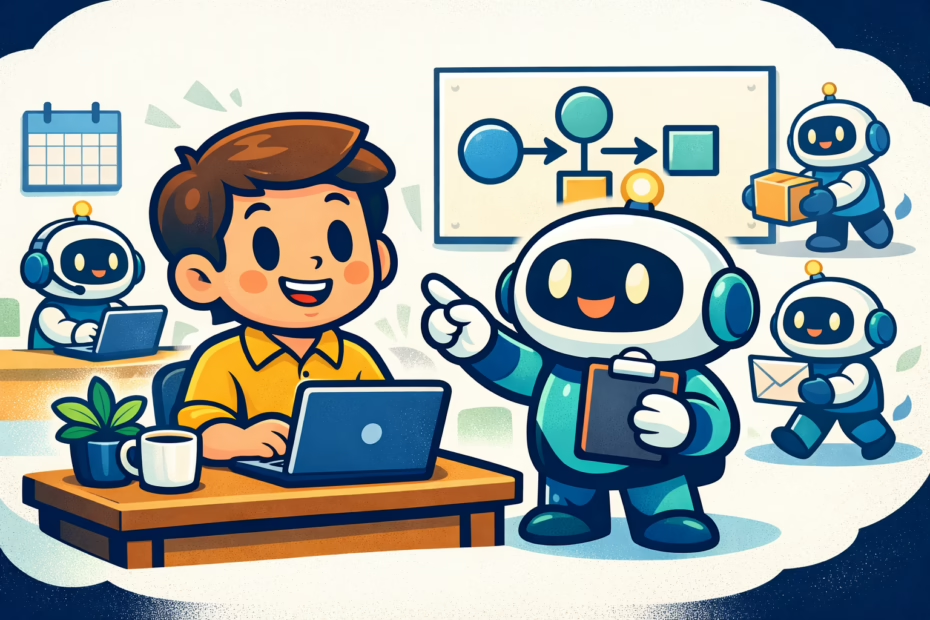
Multi-agent systems are networks of AI agents working together. Each agent handles a specific task. They communicate, share data, and coordinate actions. Think of them as a digital team.
A single AI agent does one job. Multi-agent systems combine multiple agents for complex work. One agent might research leads. Another qualifies them. A third sends follow-up emails. Together, they complete the full process.
The Basic Building Blocks
Every multi-agent system has three core parts. First, individual agents with clear roles. Second, a communication layer so agents share information. Third, coordination rules that keep everything aligned.
Each agent has its own knowledge base. One might know your product catalog. Another understands customer preferences. A third tracks inventory levels. They pool their knowledge when needed.
The system assigns tasks based on agent capabilities. It’s like having specialists on your team. You wouldn’t ask your accountant to write sales copy. Same principle applies here.
How This Differs from Single AI Tools
Single AI tools handle one function. ChatGPT answers questions. Grammarly checks grammar. These tools work alone. They don’t coordinate with other systems.
Multi-agent systems create workflows across multiple functions. One agent drafts an email. Another checks it for tone. A third schedules delivery time. The process flows automatically from start to finish.
This approach mirrors how real teams operate. Different people handle different steps. They communicate and hand off work. Multi-agent systems do the same thing digitally.
Expert Insight from Kateryna Quinn, Forbes Next 1000:
“I used to juggle ten different AI tools. Each solved one problem. Multi-agent systems connect them into actual workflows. That’s where the real time savings happen.”
Quick Reference Definition
Multi-agent systems are AI frameworks where multiple specialized agents collaborate on tasks. Each agent has a defined role. They share information and coordinate actions. Together, they complete complex business processes automatically.
How Multi-Agent Systems Work
Multi-agent systems operate through clear communication protocols. Agents send messages to each other. They request data, report status, and share results. This happens in milliseconds.
Each agent runs independently but stays connected. Think of it like Slack for AI. Agents post updates, ask questions, and respond. The system tracks all interactions.
Agent Roles and Specialization
Every agent has a specific job. A research agent gathers information. An analysis agent processes data. A writing agent creates content. A quality agent checks output.
Specialization makes each agent better at its task. Instead of one generalist agent, you get expert agents. They develop deep capabilities in narrow domains.
You can mix and match agents for different workflows. Use the same research agent for market analysis and competitor tracking. Combine it with different downstream agents for each use case.
Communication and Coordination
Agents need structured ways to talk. They use predefined message formats. One agent might say “I found 50 leads.” Another responds “I’ll qualify them now.”
The system includes a coordinator agent. It manages task assignments and prevents conflicts. If two agents try to contact the same lead, the coordinator steps in.
Communication happens through APIs and message queues. Agents don’t need to be on the same platform. They just need compatible interfaces. This allows flexibility in tool choices.
Modern platforms like Uplify integrate collaborative AI agents with built-in coordination. You don’t build the infrastructure yourself. It’s ready to use out of the box.
Learning and Adaptation
Multi-agent systems improve over time. They track which agent combinations work best. They optimize task routing based on past results.
Individual agents also learn. A sales agent gets better at qualification. It remembers which questions identify good leads. This knowledge compounds across thousands of interactions.
The system adapts to your business patterns. It notices peak activity times. It adjusts agent availability accordingly. Everything becomes more efficient automatically.
Real-World Example: Lead Management
Here’s how multi-agent systems handle lead management. Agent one scrapes business directories for prospects. Agent two visits their websites for contact info. Agent three checks LinkedIn for decision makers.
Agent four analyzes firmographic data to score leads. Agent five personalizes outreach messages. Agent six schedules emails at optimal times. Agent seven tracks responses and updates your CRM.
This entire workflow runs without human intervention. You set it up once. The agents execute it continuously. You only step in when a lead responds.
Why Multi-Agent Systems Matter Now
Small businesses face a time crisis. You wear too many hats. Marketing, sales, operations, finance. Multi-agent systems give you leverage. They multiply your output without hiring staff.
The technology finally works reliably. Early multi-agent systems were fragile. Agents failed to communicate properly. They duplicated work or skipped steps. Modern platforms solved these problems.
The Competitive Advantage
Your competitors are adopting AI. But most use disconnected tools. They copy-paste between ChatGPT and their email. They manually track everything in spreadsheets.
Multi-agent systems create true automation. While competitors handle five leads per day, you process fifty. While they spend hours on proposals, your agents generate them instantly.
Speed matters in business. The first responder wins most deals. Multi-agent systems let you respond in minutes, not days. That’s a massive edge.
According to research from SBA’s business growth resources, automation is a key driver of scalable growth. Multi-agent systems represent the next evolution in business automation.
Cost Efficiency
Hiring a full team is expensive. A salesperson costs $60,000 yearly. A marketer costs $55,000. A customer service rep costs $40,000. That’s $155,000 before benefits and overhead.
Multi-agent systems cost a fraction of that. Most platforms charge $99 to $399 monthly. That’s $1,200 to $4,800 yearly. You save over $150,000 while getting 24/7 operation.
The ROI is immediate. If your agents generate one extra client monthly, they’ve paid for themselves. Most businesses see 10x to 50x returns within 90 days.
Scalability Without Burnout
Traditional growth means working more hours. You hire slowly because recruiting is hard. You train people for months. Turnover sets you back constantly.
Multi-agent systems scale instantly. Add more workflows by connecting more agents. There’s no hiring, training, or management overhead. The system handles complexity for you.
This lets you grow without burning out. I scaled my agency using early versions of these systems. I went from 70-hour weeks to 30-hour weeks. Revenue tripled during the same period.
Expert Insight from Kateryna Quinn, Forbes Next 1000:
“Most business owners think growth means more stress. Multi-agent systems prove otherwise. They handle the repetitive work so you focus on strategy and relationships.”
Better Customer Experience
Customers expect fast responses. They want personalized service. They need consistent follow-up. Doing this manually is nearly impossible at scale.
Multi-agent systems deliver on all three. They respond within minutes. They personalize based on customer data. They never forget to follow up. Your service quality improves dramatically.
Happy customers buy more and refer others. Multi-agent systems create better experiences, which drives better business results. It’s a virtuous cycle.
Real Business Uses for Multi-Agent Systems
Multi-agent systems work across every business function. Let’s look at specific use cases. These examples show how the technology solves real problems.
Sales and Lead Generation
Sales involves multiple steps. Prospecting, outreach, qualification, follow-up, proposal, closing. Each step needs different skills. Multi-agent systems assign specialized agents to each.
Agent swarms can process thousands of prospects daily. One agent finds leads in your target market. Another researches each company. A third personalizes outreach. A fourth tracks engagement.
When someone responds, a qualification agent asks discovery questions. Based on answers, a proposal agent generates custom quotes. A follow-up agent nurtures the relationship until they’re ready to buy.
This entire sales machine runs continuously. You wake up to qualified leads in your inbox. You focus only on closing deals, not chasing prospects.
Customer Service and Support
Customer questions come through multiple channels. Email, chat, phone, social media. Manually monitoring everything is exhausting. Response times suffer.
Multi-agent workflows route questions to the right agent. A triage agent categorizes incoming requests. A knowledge base agent handles common questions. An escalation agent flags complex issues for human review.
Response times drop from hours to seconds. Customer satisfaction rises. Your support costs decrease. You handle more volume with fewer resources.
The system learns from every interaction. Agents identify patterns in customer questions. They suggest knowledge base articles to add. Your support gets smarter over time.
Content Creation and Marketing
Content marketing requires research, writing, editing, SEO, and distribution. Most businesses struggle to maintain consistency. They publish sporadically or sacrifice quality for speed.
Multi-agent systems create content pipelines. A research agent gathers data on trending topics. A writing agent drafts posts. An editing agent refines tone and clarity. An SEO agent optimizes keywords.
A distribution agent schedules posts across platforms. An analytics agent tracks performance. A strategy agent adjusts topics based on what works. The whole cycle runs automatically.
You can produce daily content without daily effort. The agents maintain your content strategy while you focus on bigger initiatives.
Financial Management
Financial tasks are detail-heavy and time-sensitive. Invoicing, expense tracking, reconciliation, reporting. Missing steps creates cash flow problems.
Multi-agent systems automate financial workflows. An invoicing agent sends bills immediately after service delivery. A collections agent follows up on overdue payments. A reconciliation agent matches transactions.
A reporting agent generates financial dashboards. A forecasting agent predicts cash flow based on patterns. You get real-time visibility into business finances without manual data entry.
This improves cash flow significantly. Faster invoicing means faster payment. Automated follow-ups reduce aging receivables. You always know your financial position.
Operations and Project Management
Projects involve task assignment, progress tracking, deadline monitoring, and communication. Juggling multiple projects manually leads to dropped balls.
Multi-agent workflows manage projects automatically. A planning agent breaks projects into tasks. An assignment agent delegates based on capacity. A monitoring agent tracks progress and flags delays.
A communication agent updates stakeholders. A documentation agent records decisions and changes. Everything stays organized without constant oversight from you.
Projects complete faster with fewer errors. Team members know exactly what to do. You spend less time in status meetings and more time on strategic work.
Getting Started with Multi-Agent Systems
Starting with multi-agent systems doesn’t require technical skills. You need clear thinking about your processes. Then you connect the right agents in the right order.
Step 1: Map Your Current Workflows
Write down your repetitive business processes. Sales outreach. Customer onboarding. Content publishing. Invoice generation. Pick the most time-consuming ones first.
Break each workflow into individual steps. For sales outreach: find prospects, research companies, write personalized emails, schedule sends, track opens, follow up on responses.
Identify which steps are purely mechanical. These are prime candidates for agent automation. Keep human judgment for nuanced decisions only.
Step 2: Choose Your Starting Point
Don’t automate everything at once. Start with one high-impact workflow. Sales outreach gives fast ROI. Customer service reduces daily stress. Pick what hurts most.
Estimate time spent on this workflow weekly. If you spend ten hours on lead generation, automating it frees ten hours. That’s your first win.
Simple workflows are easier to automate first. Build confidence before tackling complex processes. Early wins create momentum for bigger projects.
Step 3: Select Your Platform
Multiple platforms offer multi-agent capabilities. Some require coding. Others use visual builders. Some focus on specific industries. Choose based on your technical comfort and needs.
Uplify provides pre-built agent workflows for small businesses. You don’t configure individual agents. You select business processes and the platform handles agent coordination. This reduces setup time from weeks to minutes.
Look for platforms with good documentation and support. You’ll have questions during setup. Responsive help makes the difference between success and frustration.
Step 4: Configure Your First Agent Workflow
Most platforms use a visual workflow builder. You drag and drop agents onto a canvas. Then you connect them in sequence. Each connection defines what data flows between agents.
Start by defining inputs. What information does the workflow need to start? For sales outreach, you might input a target industry and location.
Then configure each agent’s parameters. Tell the research agent where to find prospects. Give the writing agent your value proposition. Set the follow-up agent’s timing rules.
Test with small batches first. Run the workflow with ten prospects before scaling to hundreds. Fix issues early when the impact is small.
Step 5: Monitor and Optimize
Multi-agent systems provide detailed analytics. You see which agents take longest. You track success rates at each step. You identify bottlenecks quickly.
Review performance weekly at first. Are agents making mistakes? Is the workflow producing desired results? Make adjustments based on data, not assumptions.
Optimization is ongoing. As you learn what works, refine agent instructions. Add conditional logic for edge cases. The workflow improves continuously.
Platforms like Uplify include built-in optimization suggestions. The system analyzes your workflows and recommends improvements. You benefit from AI analyzing AI.
Step 6: Scale Gradually
Once your first workflow runs smoothly, add more. But pace yourself. Implement one new workflow monthly. This prevents overwhelm and ensures quality.
Look for workflows with similar patterns. If sales outreach works well, partnership outreach uses the same structure. Reuse successful agent combinations.
Document your workflows as you build. Write down what each agent does and why. This helps when you need to troubleshoot or train team members.
Step 7: Train Your Team
Your team needs to understand what the agents do. They’ll interact with agent outputs. They should know how to provide feedback for improvements.
Create simple guides for each workflow. Show team members how to review agent work. Teach them how to flag issues or suggest changes.
Include your team in optimization discussions. They see things you might miss. Their frontline experience improves agent performance.
Step 8: Measure Business Impact
Track specific metrics before and after implementation. Time spent on tasks. Number of leads generated. Customer response rates. Revenue per client.
Calculate ROI quarterly. Compare platform costs against time saved and revenue gained. Most businesses see 10x to 50x returns within six months.
Use these metrics to justify expanding your multi-agent systems. Show your team the tangible benefits. This builds buy-in for further automation.
Step 9: Stay Updated
Multi-agent technology evolves rapidly. New capabilities emerge monthly. Follow your platform’s updates. Join user communities to learn from others.
Attend webinars and training sessions. Most platforms offer ongoing education. These sessions teach advanced techniques and new features.
Experiment with new agent types as they release. Early adopters gain competitive advantages. Test new features in low-risk workflows first.
Step 10: Plan for Long-Term Integration
Think about how multi-agent systems fit your growth plans. As your business scales, workflows become more complex. Design with expansion in mind.
Build modular workflows that connect together. This creates flexibility for future changes. You can swap agents or add steps without rebuilding everything.
Consider how agents integrate with your other systems. CRM, accounting software, project management tools. Seamless integration multiplies the value of all systems.
Expert Insight from Kateryna Quinn, Forbes Next 1000:
“I started with one sales workflow. Within a year, I had fifteen agent workflows running. Each one freed time for higher-value work. That’s how I scaled from solopreneur to agency owner.”
Common Mistakes to Avoid
Most businesses make predictable mistakes with multi-agent systems. Knowing these upfront saves time and frustration. Learn from others’ errors.
Automating Broken Processes
The biggest mistake is automating inefficient workflows. If your current process is messy, agents will replicate that mess at scale. Fix processes before automating them.
Map workflows carefully. Remove unnecessary steps. Clarify decision points. Streamline before you automate. Clean processes produce better agent results.
Ask yourself: “Would I teach this exact process to a new employee?” If not, refine it. Agents follow instructions literally. Unclear instructions create chaos.
Over-Complicating Initial Setups
New users often try building complex workflows immediately. They connect ten agents with conditional logic everywhere. These setups break constantly.
Start simple. Three to five agents maximum for your first workflow. Linear progression from step to step. Add complexity only after basics work perfectly.
Simple workflows are easier to debug. When something breaks, you quickly find the problem. Complex workflows hide issues across multiple agents.
Ignoring Agent Outputs
Some businesses set up agents and never review results. They assume everything works correctly. Then they wonder why results are poor.
Review agent outputs regularly, especially initially. Check quality. Verify accuracy. Look for patterns in errors. This feedback improves agent performance.
Schedule weekly reviews for the first month. Then shift to biweekly or monthly. Ongoing monitoring maintains quality as workflows evolve.
Not Training Agents Properly
Agents need good instructions. Vague prompts produce vague results. Specific, detailed instructions create better outputs.
Include examples in agent configurations. Show what good output looks like. Provide context about your business and customers. The more information agents have, the better they perform.
Refine instructions based on results. If an agent misunderstands something, clarify the instruction. This iterative improvement is essential.
Failing to Test Before Scaling
Testing prevents disasters. Run workflows with small data sets first. One prospect, not one hundred. One customer inquiry, not your entire support queue.
Small-scale tests reveal issues quickly. You fix problems before they affect real customers. This protects your business reputation.
Test changes in staging environments when possible. Some platforms offer sandbox modes. Use them. Production environments aren’t for experimentation.
Choosing the Wrong Platform
Not all platforms fit all businesses. Some are built for developers. Others target specific industries. Research thoroughly before committing.
Consider your technical skills honestly. If you’re not technical, avoid platforms requiring code. Visual builders are better fits.
Read user reviews from businesses similar to yours. Their experiences predict your likely experience. Look for reviews mentioning support quality and ease of use.
Neglecting Data Privacy
Multi-agent systems process customer data. You’re responsible for protecting it. Ensure your platform complies with data privacy regulations.
Review platform security practices. Where is data stored? Who has access? How is it encrypted? These questions matter for compliance and customer trust.
Configure agents to handle sensitive information properly. Don’t include private data in logs or error messages. Build privacy into workflows from the start.
Setting Unrealistic Expectations
Multi-agent systems are powerful but not magic. They require setup, monitoring, and optimization. Results improve over weeks, not instantly.
Plan for a learning curve. Your first workflow might take a week to configure. The second takes two days. The tenth takes two hours. Efficiency grows with experience.
Budget time for troubleshooting. Issues will arise. Agents will misunderstand instructions. Workflows will need adjustments. This is normal.
Successful implementations from organizations like those highlighted in Entrepreneur’s growth strategies guide show that patience and iteration are key.
Frequently Asked Questions
What is a multi-agent system in simple terms?
A multi-agent system is multiple AI agents working together on tasks. Each agent specializes in one function. They communicate and coordinate to complete complex workflows. Think of it as a digital team where each member handles specific jobs.
How much do multi-agent systems cost?
Platform costs range from $99 to $399 monthly for small businesses. Some charge per agent or per task instead. This is far cheaper than hiring employees. Most businesses see positive ROI within 90 days of implementation.
Do I need technical skills to use multi-agent systems?
Not anymore. Modern platforms use visual builders and pre-built workflows. You configure settings, not write code. If you can use basic software, you can set up multi-agent systems. Technical skills help but aren’t required.
Can multi-agent systems replace my team?
No, they augment your team, not replace it. Agents handle repetitive tasks. Your team focuses on strategy, relationships, and complex decisions. This combination produces better results than either alone. Think leverage, not replacement.
What’s the difference between multi-agent systems and regular AI tools?
Regular AI tools perform single functions in isolation. ChatGPT writes text. Grammarly checks grammar. Multi-agent systems connect multiple AI tools into workflows. They coordinate actions across tools automatically. This creates end-to-end automation.
How long does it take to see results?
Simple workflows show results within days of setup. Complex workflows take weeks to optimize. Most businesses report significant time savings within the first month. ROI typically appears in 60 to 90 days depending on use case.
Are multi-agent systems secure?
Reputable platforms use enterprise-grade security. Data is encrypted in transit and at rest. Access controls limit who sees information. Always review a platform’s security practices before committing. Ask about compliance with relevant regulations.
What happens if an agent makes a mistake?
Build review steps into workflows. Use quality-check agents to catch errors. Set up human approval for high-stakes actions. Monitor agent outputs regularly. Mistakes happen, but good design minimizes their impact. Most platforms let you pause agents instantly.
Can I integrate multi-agent systems with my existing tools?
Most platforms offer integrations with popular business tools. CRM, email, calendars, project management systems. Check integration options before choosing a platform. API access allows custom connections if needed. Seamless integration maximizes value.
How do I know which workflows to automate first?
Start with high-volume, repetitive tasks that drain your time. Sales outreach, customer support, content creation. Calculate hours spent weekly on each. Automate the biggest time drain first. This creates immediate, noticeable impact.
Your Step-by-Step Multi-Agent System Implementation Plan
- Audit your workflows: List all repetitive business processes. Note time spent on each weekly.
- Prioritize by impact: Choose the workflow consuming most time or creating biggest bottleneck.
- Research platforms: Compare three to five multi-agent platforms. Focus on ease of use and support quality.
- Start with a trial: Test your top choice with a free trial or starter plan. Build one simple workflow.
- Map the process: Break your chosen workflow into discrete steps. Identify where agents fit.
- Configure agents: Set up each agent with clear instructions. Include examples and context.
- Test at small scale: Run the workflow with minimal data. Check outputs for quality and accuracy.
- Refine and optimize: Adjust agent instructions based on test results. Iterate until outputs are consistently good.
- Scale gradually: Increase workflow volume slowly. Monitor for issues as you scale up.
- Measure and expand: Track time saved and results generated. Document ROI. Then add your next workflow.
Quick Reference: Multi-Agent Systems Definition
Multi-agent systems are AI frameworks where specialized agents collaborate on business tasks. Each agent performs one function like research, writing, or analysis. Agents communicate through structured protocols to share data and coordinate actions. Together, they automate complex workflows that traditionally required human intervention at every step. Multi-agent systems differ from single AI tools by connecting multiple capabilities into end-to-end processes. They enable small businesses to scale operations without proportionally scaling headcount.
Take Action Today
Multi-agent systems represent a fundamental shift in how small businesses operate. They provide leverage previously available only to large enterprises. Now any business can access sophisticated automation.
The businesses implementing these systems now will dominate their markets in 2026. Early adopters gain compounding advantages. They build more workflows, learn faster, and serve more customers.
Don’t wait until your competitors force you to catch up. Start small today. Choose one workflow. Set up your first multi-agent system. Learn by doing.
Uplify makes this process simple. Our platform includes pre-built agent workflows for common business tasks. You don’t start from scratch. You customize proven templates for your specific needs. Try the Profit Amplifier tool to see how AI agents can transform your business operations.
The sooner you start, the sooner you reclaim your time. You built a business for freedom. Multi-agent systems finally deliver on that promise. Begin your journey today.

Kateryna Quinn is the founder and CEO of Uplify AI, an AI-powered business strategist that helps service-based, brick-and-mortar small business owners increase profitability and reclaim their time. She also founded ASTASH, an award-winning full-service digital marketing agency specializing in SEO, Google Ads, branding, logo design, and website development, based in Northern Colorado. A Ukrainian immigrant who came to the United States at 17, Quinn has generated more than $25 million in organic revenue for her agency clients. She is a Forbes NEXT 1000 honoree and was named to NOCO Style Magazine’s 30 Under 30.