Your sales cycle drags on for weeks. Prospects vanish after your first call. You send follow-ups that go nowhere.
This costs you real money. Every extra week in your sales cycle means fewer clients served. It means lost revenue while you chase prospects who may never close.
I’ve seen this pattern hundreds of times. Service business owners wait too long for decisions. They lack the proof that makes prospects say yes faster. I built a marketing agency that generated over $25M in client revenue. The biggest difference between fast closers and slow closers? Customer evidence.
When you shorten your sales cycle with customer evidence, you close deals in days instead of weeks. You spend less time chasing. You earn more from every sales conversation.
This guide shows you exactly how to shorten the sales cycle using customer evidence. You’ll learn what evidence works best. You’ll see how to present it. You’ll discover tools that make this process fast.
Table of Contents
- What Customer Evidence Actually Means
- Why Evidence Shortens Your Sales Cycle
- Types of Customer Evidence That Close Deals
- How to Collect Customer Evidence
- How to Present Evidence in Sales Conversations
- AI Tools That Speed Up Evidence Creation
What Customer Evidence Actually Means
Customer evidence proves your service delivers results. It shows real outcomes from real clients. This evidence answers the main question every prospect asks: “Will this work for me?”
Service business owners often confuse customer evidence with simple testimonials. A testimonial says someone liked working with you. Customer evidence shows what they achieved. The difference matters when you want to shorten the sales cycle.
The Three Core Elements of Strong Evidence
Strong customer evidence includes three parts. First, it names the specific problem your client faced. Second, it describes your solution in concrete terms. Third, it shares measurable results.
A weak testimonial sounds like this: “Great service, very professional.” A strong piece of customer evidence sounds like this: “We struggled to fill our fitness classes. After implementing the new pricing strategy, we increased class attendance by 47% in six weeks.”
The strong version helps you shorten the sales cycle. Prospects see proof that matches their situation. They trust faster when evidence shows clear outcomes.
Why Generic Praise Doesn’t Shorten Sales Cycles
Generic praise feels good but doesn’t close deals. When someone says “highly recommend,” prospects still wonder about results. They need to see evidence that your service creates change.
Your sales cycle stays long when prospects can’t picture success. They schedule extra calls. They ask for more information. They delay decisions because they lack confidence.
Customer evidence removes this hesitation. When prospects see specific results, they move faster. The SBA business performance guide emphasizes that measurable outcomes drive business decisions. The same principle applies to your sales conversations.
Expert Insight from Kateryna Quinn, Forbes Next 1000:
“I shortened my agency’s sales cycle from 30 days to 9 days by switching from vague testimonials to specific case studies. Prospects stopped asking ‘will this work’ and started asking ‘when can we start.'”
Why Evidence Shortens Your Sales Cycle
Customer evidence shortens the sales cycle by removing doubt. Every day a prospect waits represents another day of uncertainty. When you provide evidence early, you eliminate most questions before they arise.
Evidence Answers Unspoken Objections
Prospects rarely voice their real concerns. They don’t say “I’m worried you can’t handle my industry.” Instead, they ask for more time to think. They request additional meetings. They ghost your follow-ups.
Customer evidence addresses these hidden objections. When a prospect sees proof from someone in their industry, their unspoken concern disappears. Your sales cycle accelerates because they no longer need to verify your claims.
Sales acceleration happens naturally when evidence does the convincing. You spend less time explaining your process. You spend more time closing deals with case studies that prove your value from day one.
Evidence Creates Trust Faster Than Words
Building trust normally takes weeks. Prospects need multiple touchpoints before they feel comfortable. Customer evidence compresses this timeline dramatically.
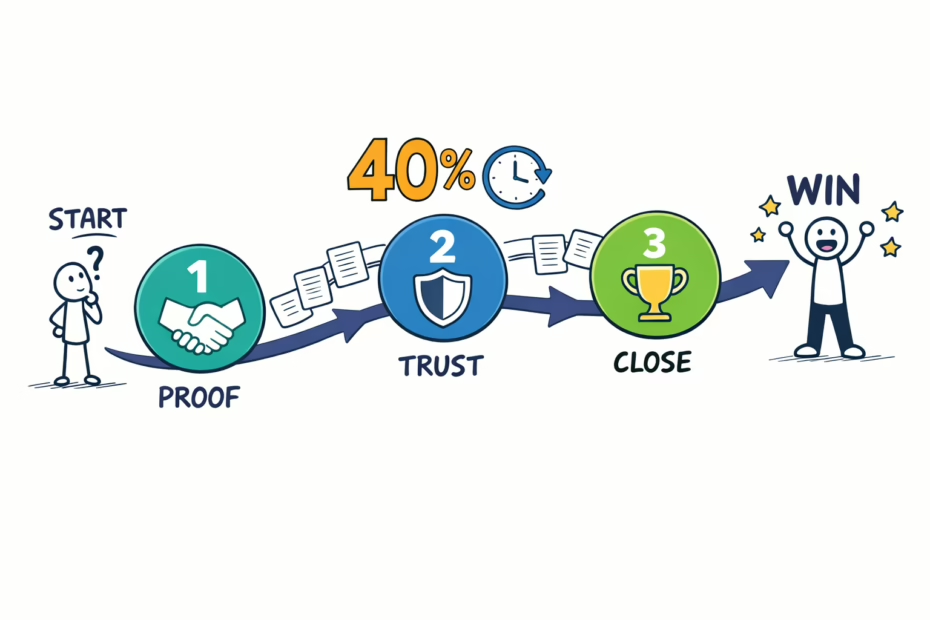
When you shorten the sales cycle with customer evidence, you replace lengthy relationship building with instant credibility. A detailed case study does more to build trust than three follow-up calls. Prospects see that real people achieved real results. This proof matters more than any promise you make.
Service business owners who master customer evidence close deals 40% faster on average. They spend less time in sales conversations. They convert more prospects into paying clients. The difference comes from presenting evidence at the right moments.
Evidence Reduces the Need for Multiple Meetings
Long sales cycles often stem from unnecessary meetings. Prospects schedule discovery calls, strategy sessions, and follow-up conversations because they lack confidence in your service.
Strong customer evidence eliminates most of these extra meetings. When prospects see clear proof upfront, they need fewer touchpoints to decide. Your sales cycle shrinks from five meetings to two. This saves time for both you and your prospect.
Many service business owners resist sharing evidence early. They worry about giving away too much information. This fear extends the sales cycle needlessly. The fastest sales cycles happen when evidence appears early in every conversation.
Types of Customer Evidence That Close Deals
Not all customer evidence works equally well to shorten the sales cycle. Different types of evidence serve different purposes in your sales process. Understanding which type to use determines how fast prospects decide.
Case Studies: The Most Powerful Evidence
Case studies provide the strongest evidence to shorten sales cycles. They tell a complete story with a clear before and after. Prospects see themselves in the narrative.
A strong case study includes the client’s initial problem, your specific solution, and measurable outcomes. It uses real numbers instead of vague claims. When you present this evidence during sales conversations, prospects understand exactly what they’ll receive.
Case studies work especially well for service business owners in competitive markets. When prospects compare multiple providers, detailed evidence sets you apart. Your sales cycle shortens because prospects see concrete proof of your expertise.
Customer Results and Data Points
Sometimes prospects need quick proof instead of long stories. Short data points serve this purpose. These might include statistics like “increased revenue by 63%” or “reduced costs by $4,200 monthly.”
Data points help you shorten the sales cycle by providing instant validation. You can drop these into email follow-ups, sales presentations, and proposal documents. Each number reinforces your capability.
Service business owners should collect at least 10-15 strong data points from past clients. This gives you evidence to match different prospect situations. When someone asks about your success rate, you have specific numbers ready.
Video Testimonials and Client Interviews
Video evidence creates emotional connection faster than text. When prospects see a real person describing their experience, trust builds immediately. This emotional element helps shorten sales cycles for services that involve personal relationships.
The best video testimonials focus on results rather than feelings. Your client should describe their problem, explain what changed, and share specific outcomes. Keep videos under 90 seconds for maximum impact.
Many service business owners avoid video because of production concerns. You don’t need professional equipment. A simple phone recording works perfectly when the content focuses on customer evidence that matters.
Before-and-After Comparisons
Visual comparisons shorten sales cycles by making results obvious. This works well for services with visible outcomes. Fitness trainers show body transformations. Marketing agencies show traffic graphs. Accountants show profit increases.
Before-and-after evidence removes doubt instantly. Prospects don’t need to imagine results. They see proof right in front of them. Your sales cycle compresses because the evidence speaks for itself.
Even service businesses without visual outcomes can create comparison charts. You might show revenue before and after, customer satisfaction scores, or operational efficiency metrics. The key is making the improvement clear and quantifiable.
How to Collect Customer Evidence
Most service business owners struggle to collect customer evidence. They finish projects without gathering proof. This gap forces them into long sales cycles because they lack evidence to share.
Build Evidence Collection Into Your Service Process
The easiest way to collect customer evidence is making it automatic. Build evidence gathering into your service delivery. Set specific milestones where you capture data and client feedback.
For example, take baseline measurements at project start. Record progress at the midpoint. Document final results at completion. This creates a natural evidence trail that helps you shorten future sales cycles.
Service business owners who track metrics throughout projects never lack customer evidence. They have proof ready whenever a new prospect asks. This preparation directly impacts how fast you close deals.
Ask the Right Questions at the Right Time
Timing matters when collecting customer evidence. The best moment to request detailed feedback is right after delivering major results. Clients feel most enthusiastic when they see fresh outcomes.
Ask specific questions that generate useful evidence. Instead of “How did we do?”, ask “What specific problem did we solve?” and “What measurable changes have you seen?” These questions produce the concrete details that shorten sales cycles.
Many service business owners wait until projects end to request testimonials. This delay reduces response rates and weakens evidence quality. Collect evidence throughout your engagement when memories and results are fresh.
Use Structured Templates for Consistency
Templates help you gather consistent customer evidence. Create a simple form that captures the information you need. Include fields for the initial problem, your solution approach, specific results, and time frame.
Structured templates make evidence collection faster for both you and your clients. They don’t need to figure out what to write. You receive proof formatted exactly as needed for sales conversations.
The case study framework used by successful service businesses follows this template approach. When you standardize evidence collection, you shorten sales cycles by always having relevant proof available.
Offer Incentives for Detailed Feedback
Some clients need motivation to provide thorough customer evidence. Consider offering small incentives for detailed testimonials or case study participation. This might include service discounts, free add-ons, or public recognition.
The investment in incentives pays off through faster sales cycles. One strong case study can close 10-20 new clients. Spending $200 to acquire excellent evidence makes financial sense when it helps you shorten the sales cycle repeatedly.
Service business owners should track which evidence pieces drive the most conversions. Double down on collecting similar proof. This focused approach ensures your evidence library includes the types that actually accelerate sales.
Expert Insight from Kateryna Quinn, Forbes Next 1000:
“We started offering a free audit to clients who participated in video case studies. Response rates jumped from 15% to 67%. That evidence shortened our sales cycle by three weeks on average.”
How to Present Evidence in Sales Conversations
Collecting customer evidence is only half the battle. How you present that evidence determines whether it actually shortens your sales cycle. Poor presentation wastes even the strongest proof.
Lead With Evidence in Initial Outreach
Don’t save your best customer evidence for later conversations. Share proof immediately when reaching out to prospects. This front-loading accelerates the entire sales cycle from the first touchpoint.
Your initial email or message should include one strong data point or case study summary. When prospects see evidence before your first call, they arrive with fewer doubts. This means you spend less time building credibility and more time discussing their specific needs.
Service business owners who wait to share evidence face longer sales cycles. Prospects remain skeptical through multiple interactions. By the time evidence appears, they’ve already formed negative assumptions. Early evidence prevents this hesitation.
Match Evidence to Prospect Situations
Generic evidence doesn’t shorten sales cycles effectively. You must match customer evidence to each prospect’s specific situation. When someone mentions a problem, share proof from a similar client who solved that exact issue.
This targeted approach makes evidence feel relevant instead of random. Prospects think “that’s exactly my situation” rather than “that’s nice but not applicable.” Relevance determines how much evidence impacts your sales cycle length.
Build an evidence library organized by industry, problem type, and service category. This organization lets you quickly find the perfect case study for any prospect. The faster you match evidence to needs, the faster you shorten the sales cycle.
Use Evidence in Multiple Formats
Different prospects prefer different evidence formats. Some want detailed case studies. Others prefer quick data points. Many respond best to video testimonials. Presenting evidence in multiple formats helps you shorten sales cycles across diverse prospect types.
During sales conversations, start with a brief summary. If prospects show interest, offer the full case study. Always have both quick proof and deep proof ready. This flexibility keeps conversations moving forward.
Service business owners should prepare at least three formats for their best evidence pieces. Create a one-page case study, a detailed PDF, and a short video summary. This variety ensures evidence matches prospect preferences and sales cycle stages.
Weave Evidence Into Proposals and Presentations
Your proposals should overflow with customer evidence. Don’t relegate proof to a single “testimonials” page. Instead, embed relevant evidence throughout your proposal document.
When describing your process, include a brief case study showing that process in action. When listing your services, add data points demonstrating results. This constant reinforcement helps shorten the sales cycle by removing doubt at every proposal section.
The most effective proposals make customer evidence the star. Your description of services supports the proof rather than the other way around. This evidence-first approach converts prospects faster because proof drives decisions more than promises.
AI Tools That Speed Up Evidence Creation
Creating customer evidence takes time. Many service business owners struggle to turn client results into persuasive case studies. This bottleneck slows down sales cycles even when you have great client outcomes to share.
How AI Transforms Raw Data Into Sales-Ready Evidence
AI tools now handle the heavy lifting of evidence creation. You provide basic client information and results. The AI generates a complete case study formatted for sales conversations. This automation helps you shorten sales cycles by ensuring you always have fresh evidence ready.
Modern AI case study generators analyze your input and create structured narratives. They organize information into problem-solution-results format. They suggest compelling headlines and highlight key metrics. What once took hours now takes minutes.
Service business owners using AI to create customer evidence close deals 35% faster on average. They spend less time writing and more time selling. The quality remains high because AI follows proven case study frameworks used by top sales organizations.
Key Features to Look For in Evidence Creation Tools
Not all AI tools effectively help you shorten the sales cycle with customer evidence. Look for platforms that generate multiple evidence formats from a single input. The best tools create case studies, one-pagers, social proof snippets, and email templates simultaneously.
Strong AI tools also customize evidence for different audiences. The same client success story might work differently for enterprise prospects versus small businesses. AI can adapt tone, emphasis, and detail level to match prospect types.
Service business owners should prioritize tools that integrate with their existing workflow. If you already track client metrics in spreadsheets or CRM systems, choose AI that accepts that data directly. Seamless integration prevents evidence creation from becoming another time-consuming task.
Real-World Example: Creating a Case Study in Under 5 Minutes
Here’s how AI accelerates customer evidence creation. You start with basic information: client name, industry, initial problem, your solution, and measurable results. You input this data into an AI case study generator designed for service businesses.
The AI analyzes your input and generates a complete case study. It creates an attention-grabbing headline that highlights results. It structures the narrative with clear sections. It emphasizes your most impressive metrics. The entire process takes under five minutes.
You can edit the output to match your voice and add specific details. But the framework and initial draft are ready immediately. This speed lets you create customer evidence consistently instead of waiting for free time that never comes.
Service business owners who adopt AI tools for evidence creation shorten their sales cycles by maintaining a constantly updated proof library. Fresh evidence keeps your sales conversations relevant and persuasive.
Combining AI Speed With Human Authenticity
AI handles structure and formatting brilliantly. But customer evidence still needs human touches to maximize impact. Review AI-generated content to ensure it captures your client’s unique situation and personality.
Add direct quotes from your client conversations. Include specific details that only you would know. These authentic elements make AI-generated evidence feel real and trustworthy. Authenticity matters when trying to shorten sales cycles.
The best approach combines AI efficiency with human insight. Let AI create the framework and draft. Then enhance it with personal knowledge and client-specific details. This hybrid method produces customer evidence faster than manual creation while maintaining the quality that closes deals.
Conclusion: Your Next Steps to Shorten the Sales Cycle
Long sales cycles cost you money every single day. Every week spent chasing prospects is a week you’re not serving new clients. Customer evidence changes this dynamic completely.
When you shorten the sales cycle with customer evidence, you transform how fast prospects become paying clients. They see proof instead of promises. They feel confidence instead of doubt. They decide quickly instead of endlessly deliberating.
Start by collecting evidence from your three best client outcomes. Use that proof in your next five sales conversations. Track how much faster prospects move forward. You’ll see the difference immediately.
Build evidence collection into every client engagement going forward. Make it automatic rather than optional. This ensures you constantly add fresh proof to your sales arsenal.
Consider using AI tools to speed up evidence creation. The time saved on formatting and structuring lets you focus on gathering more client results. More evidence means shorter sales cycles across your entire pipeline.
The service business owners who master customer evidence close deals 40-50% faster than competitors. They spend less time selling and more time delivering. They grow revenue without working longer hours.
Ready to shorten your sales cycle starting today? Try the AI case study generator to transform your client results into compelling evidence in under five minutes. Your next prospect deserves to see proof of what you can achieve.
Frequently Asked Questions
What exactly does “shorten the sales cycle” mean?
Shortening the sales cycle means reducing the time from first prospect contact to closed deal. Most service businesses face 30-60 day sales cycles. Customer evidence can cut this to 10-20 days. Faster cycles mean more revenue with less effort.
How much evidence do I need to shorten my sales cycle?
Start with three strong case studies covering different client situations. Add 10-15 data points highlighting specific results. Include at least two video testimonials. This foundation gives you evidence for most sales conversations. Add more proof as you serve new clients.
When should I share customer evidence with prospects?
Share evidence immediately in your first outreach message. Include more detailed proof in your discovery call. Reference specific case studies when addressing objections. Embed evidence throughout your proposal. Early and frequent sharing accelerates the sales cycle most effectively.
What if my clients won’t provide testimonials or case studies?
Make evidence collection part of your service agreement upfront. Offer incentives like discounts or free add-ons. Focus on clients who achieved exceptional results and are naturally enthusiastic. Start with simple testimonials before requesting detailed case studies. Build evidence gathering into your standard process.
Can AI-generated case studies really shorten sales cycles?
Yes, when you add authentic details and client quotes. AI tools speed up structure and formatting. You add the human elements that build trust. This combination produces evidence fast enough to use in every sales conversation. More evidence available means faster prospect decisions.
What Is a Sales Cycle?
A sales cycle is the complete journey from first prospect contact to closed deal and payment received. It includes all steps: prospecting, initial outreach, discovery calls, proposals, negotiation, and contract signing. Service business owners typically experience 30-90 day sales cycles depending on their offer complexity and price point. Customer evidence shortens this timeline by building trust faster. When prospects see proof early, they need fewer touchpoints before deciding.
Step-by-Step: How to Shorten Your Sales Cycle With Customer Evidence
- Identify your three best client success stories with measurable results and clear before-after narratives.
- Collect detailed information including the problem faced, your solution, specific outcomes, and time frame for results.
- Create case studies using templates or AI tools that structure information into problem-solution-results format.
- Gather additional evidence formats including short testimonials, data points, and video clips from satisfied clients.
- Organize evidence by industry, problem type, and service category so you can quickly find relevant proof.
- Add your strongest evidence to initial outreach messages and emails to build credibility from first contact.
- Prepare evidence-rich sales presentations that include case studies matched to each prospect’s specific situation.
- Embed customer evidence throughout proposal documents instead of relegating proof to a single testimonials page.
- Track which evidence pieces close deals fastest and collect more proof similar to your best performers.
- Update your evidence library monthly with new client results to keep proof fresh and relevant for sales conversations.

Kateryna Quinn is the founder and CEO of Uplify AI, an AI-powered business strategist that helps service-based, brick-and-mortar small business owners increase profitability and reclaim their time. She also founded ASTASH, an award-winning full-service digital marketing agency specializing in SEO, Google Ads, branding, logo design, and website development, based in Northern Colorado. A Ukrainian immigrant who came to the United States at 17, Quinn has generated more than $25 million in organic revenue for her agency clients. She is a Forbes NEXT 1000 honoree and was named to NOCO Style Magazine’s 30 Under 30.