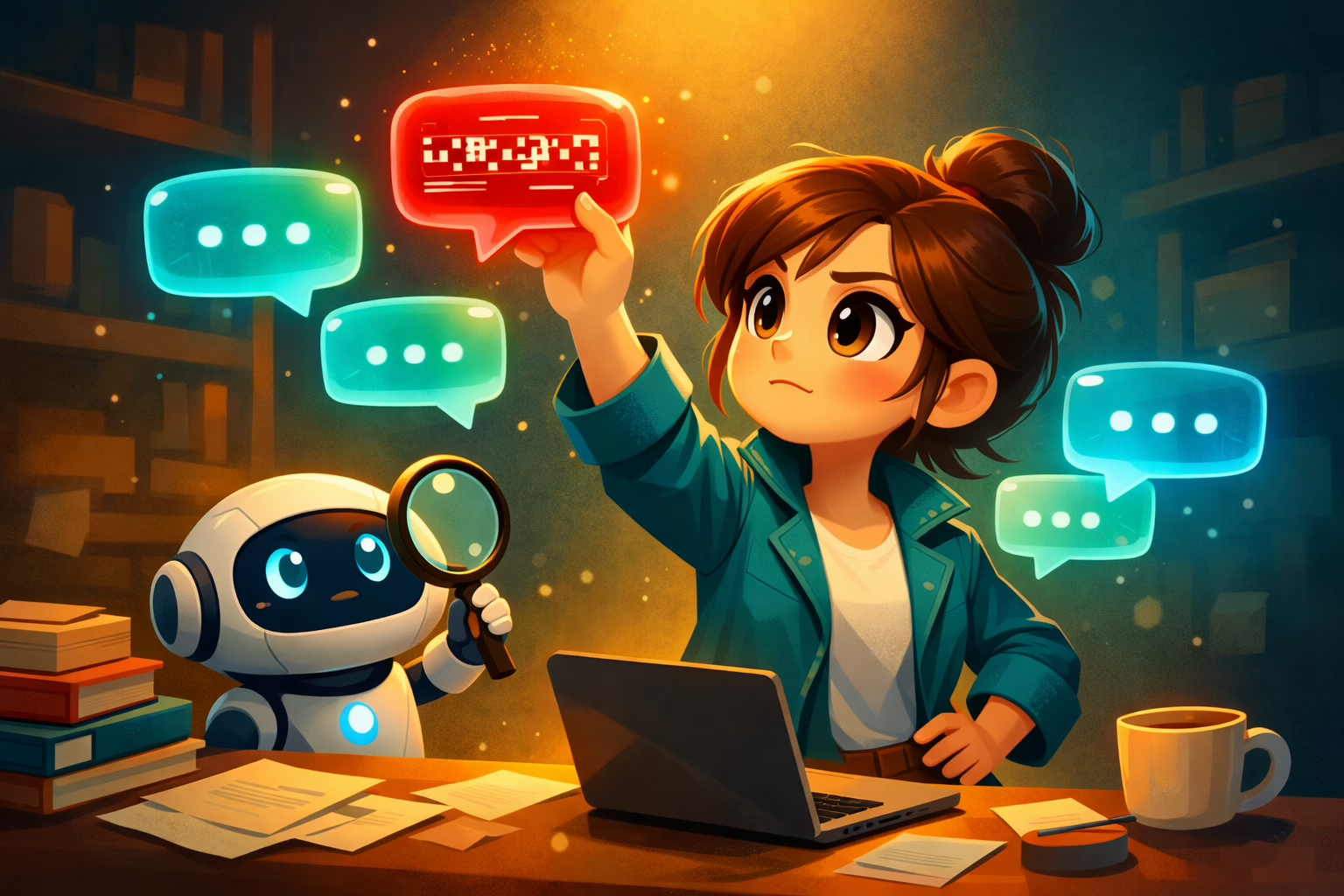
AI agent safety keeps your business protected. These tools can make mistakes that cost money. You need to know what can go wrong. This guide shows you how to stay safe while using AI agents. You will learn how to spot risks before they hurt your business.
AI agents handle tasks fast. But they need supervision. Without proper safety rules, they can damage your reputation. They might send wrong messages to clients. Or they could expose sensitive data. Smart business owners build guardrails first.
I built Uplify after generating $25M for clients. AI agent safety matters more than speed. We built our platform with safety controls from day one. This guide gives you the same framework we use. You will get clear steps to protect your business while using AI.
Table of Contents
- What Is AI Agent Safety and Why It Matters
- Common AI Agent Risks Every Business Faces
- Key Safety Controls You Need Today
- How to Implement AI Agent Safety Fast
- Building Your AI Agent Monitoring System
- Frequently Asked Questions
What Is AI Agent Safety and Why It Matters
AI agent safety means protecting your business from AI mistakes. AI agents work without constant human input. They make decisions based on training data. Sometimes those decisions go wrong. Safety controls catch problems before customers see them.
Think of AI agent safety like insurance. You hope you never need it. But when something breaks, you’re glad it’s there. AI agents handle customer emails, create content, and manage data. One bad output can damage client relationships. Safety systems prevent that damage.
The Real Cost of Unsafe AI Agents
Businesses lose customers when AI agents fail. A wrong price quote costs sales. An inappropriate social media post damages your brand. Exposed customer data leads to lawsuits. These risks are real and growing. According to SBA compliance guidelines, business owners must protect customer information.
AI hallucinations create fake information. The AI sounds confident but gives wrong answers. Clients trust your business, not your AI. You remain responsible for every AI output. That’s why safety controls matter so much.
Core Components of AI Agent Safety
AI agent safety has four main parts. First, input validation checks what data enters the system. Second, output review catches mistakes before they go live. Third, access controls limit what AI agents can touch. Fourth, audit logs track everything AI agents do.
Each component works together. Input validation stops bad data early. Output review catches AI errors. Access controls prevent unauthorized actions. Audit logs help you learn from mistakes. When you understand how AI agents work in business, you can build better safety systems.
Key Takeaway: AI agent safety protects your reputation and revenue from AI mistakes.
Common AI Agent Risks Every Business Faces
Every AI agent carries specific risks. Understanding these risks helps you build better defenses. The most common problems hit businesses hard. But they’re all preventable with the right approach.
AI Hallucinations and False Information
AI hallucinations happen when AI invents facts. The AI creates realistic but completely wrong information. It might invent customer names, product features, or pricing details. The output looks professional and sounds confident. But it’s fiction.
Small businesses get hurt most by hallucinations. A fitness studio AI might promise equipment they don’t have. A salon AI could quote services they don’t offer. Customers show up expecting what the AI promised. Then they leave disappointed and angry.
You catch hallucinations with human review checkpoints. Never let AI send customer communications without approval. Test AI outputs against your actual offerings. Build templates with correct information that AI can reference. Research on business fundamentals shows accuracy builds trust.
Privacy and Data Security Breaches
AI agents access sensitive business data. Customer emails, payment information, and personal details all flow through these systems. One configuration mistake exposes everything. AI agents might accidentally share private data in public responses.
Data breaches destroy small businesses. The average breach costs $200,000 for small companies. Most can’t recover from that financial hit. Plus, you lose customer trust forever. Once data leaks, the damage is permanent.
Protect data with strict access controls. AI agents should only see data they absolutely need. Encrypt sensitive information at rest and in transit. Regular security audits catch vulnerabilities early. Build your defenses now, not after a breach.
Bias and Discrimination Issues
AI learns from training data. If that data contains biases, the AI adopts them. Your AI agent might treat customers differently based on names, locations, or communication styles. This creates legal liability and ethical problems.
A hiring AI might screen out qualified candidates unfairly. A customer service AI could provide worse service to certain groups. These biases are often invisible until someone complains. By then, damage is done.
Test AI outputs across diverse scenarios. Review decisions for patterns of unfair treatment. Get feedback from team members with different backgrounds. Fix bias problems immediately when you find them. Your business values should guide AI behavior.
Over-Reliance and Loss of Human Judgment
AI agent safety includes protecting against over-reliance. Teams start trusting AI completely. They stop questioning outputs. They skip quality checks. This creates blind spots that grow over time.
Human judgment remains essential for business success. AI provides suggestions, not final decisions. Important client relationships need human touch. Strategic choices require business context AI can’t understand. Keep humans in the loop for critical functions.
Key Takeaway: AI agent risks are real but manageable with proper safety controls.
Key Safety Controls You Need Today
Building AI agent safety requires specific controls. These aren’t optional nice-to-haves. They’re essential protections every business needs. Start with these core safety mechanisms first.
Human Review Gates
Human review gates stop AI outputs before they go live. The AI completes its work. Then a human checks the output. Only approved content reaches customers. This simple step prevents most AI disasters.
Set review gates at critical points. Customer-facing communications always need review. Financial information requires double-checking. Legal documents demand expert oversight. Marketing content should match your brand voice.
Make review processes fast but thorough. Create checklists of what to verify. Train team members on common AI mistakes. Build review into your workflow, not as an afterthought. Speed matters, but accuracy matters more.
Access Control and Permissions
AI agents should have minimum necessary access. Don’t give AI agents full database access. Limit what files they can read. Restrict which systems they can modify. The principle of least privilege protects your business.
Different AI agents need different permissions. A content-writing AI doesn’t need payment data. A scheduling AI doesn’t need customer email histories. Map out what each AI agent truly requires. Then grant exactly that much access, nothing more.
Review permissions quarterly. As your business changes, so do AI agent needs. Remove access that’s no longer necessary. Add new permissions carefully and deliberately. Document why each AI agent has specific access rights.
Output Validation Rules
Output validation rules catch AI mistakes automatically. These rules check AI outputs against business requirements. They verify formats, check ranges, and confirm logic. Bad outputs get flagged before causing problems.
Build validation rules for your specific business. Email outputs should include required elements. Pricing outputs must fall within acceptable ranges. Scheduling outputs can’t create double bookings. Each rule prevents a specific type of error.
Validation rules work alongside human review. They catch obvious mistakes instantly. Humans catch subtle problems that need context. Together, they create strong safety nets. Our AI tools at Uplify include built-in validation rules.
Audit Trails and Logging
Audit trails track everything AI agents do. They record inputs, outputs, decisions, and changes. When something goes wrong, audit trails show exactly what happened. This helps you fix problems and prevent repeats.
Good audit trails include timestamps and user information. They show what data the AI accessed. They capture the reasoning behind AI decisions. They note when humans overrode AI suggestions. Complete records enable accountability.
Review audit logs regularly. Look for patterns of errors. Identify training opportunities. Catch security issues early. Audit trails turn mistakes into learning opportunities. They help your AI agent safety improve over time.
Key Takeaway: Layer multiple safety controls to protect against different types of AI failures.
Expert Insight from Kateryna Quinn, Forbes Next 1000:
“I’ve seen businesses lose $50K from a single AI mistake. Safety isn’t about being paranoid. It’s about being smart. Every AI agent needs guardrails. Build them before you need them.”
How to Implement AI Agent Safety Fast
Implementing AI agent safety doesn’t take months. You can build basic protections in days. Start with high-risk areas first. Then expand coverage systematically. Speed matters, but so does doing it right.
Step 1: Inventory Your AI Agents
List every AI agent your business uses. Include obvious ones like chatbots. Don’t forget hidden AI in software tools. Email assistants, scheduling tools, and content generators all count. You can’t protect what you don’t track.
Document what each AI agent does. Note what data it accesses. Record who uses it and why. Understand which agents face customers directly. This inventory becomes your safety roadmap.
Step 2: Risk Assessment by Agent
Rate each AI agent’s risk level. Customer-facing agents are high risk. Internal tools might be lower risk. Financial systems are always high risk. Data-handling agents need special attention.
Consider potential damage from mistakes. What’s the worst thing this AI agent could do? How would that mistake hurt your business? How likely is that mistake to happen? Risk assessment guides where to focus first.
High-risk agents get maximum controls. Medium-risk agents need standard protections. Even low-risk agents require basic safety measures. No AI agent should run completely unsupervised. The latest business growth strategies emphasize technology risk management.
Step 3: Design Safety Controls
Match safety controls to risk levels. High-risk agents need multiple review gates. They require strict access controls. They demand comprehensive audit logging. Don’t skimp on protection for critical systems.
Design controls that fit your workflow. Safety shouldn’t break productivity. Create simple review processes people will actually use. Build validation rules that catch real problems. Make audit logs easy to understand and search.
Step 4: Implement and Test
Roll out safety controls gradually. Start with one AI agent. Test thoroughly before expanding. Fix problems you discover. Learn from early implementation challenges.
Testing reveals gaps in your safety design. Try to break your own system. Ask team members to test edge cases. Run scenarios where things go wrong. Better to find problems in testing than production.
Step 5: Train Your Team
Team training makes safety controls work. Explain why each control exists. Show how to use review processes. Teach people to spot common AI mistakes. Build a culture of AI safety awareness.
Training should be ongoing, not one-time. Update training when you add new agents. Share lessons from mistakes. Celebrate team members who catch AI errors. Make safety everyone’s responsibility.
Step 6: Monitor and Improve
AI agent safety requires continuous improvement. Monitor how controls perform. Track what mistakes still slip through. Measure how often humans override AI. Use data to strengthen weak points.
Schedule regular safety reviews. Monthly is good for most businesses. Check if controls are being followed. Verify audit logs are being reviewed. Update processes based on what you learn.
Key Takeaway: Start AI agent safety implementation with high-risk agents and expand systematically.
Building Your AI Agent Monitoring System
Monitoring turns safety controls into active protection. Good monitoring catches problems early. It shows trends before they become crises. Your monitoring system should be simple but comprehensive.
Key Metrics to Track
Track error rates for each AI agent. How often do outputs fail validation? How frequently do humans reject AI suggestions? Rising error rates signal problems. They might mean the AI needs retraining.
Monitor response times and system performance. Slow AI agents frustrate users. They might indicate technical issues. Performance problems often precede failures. Catch them early through monitoring.
Measure override rates by team members. When humans constantly override AI, something’s wrong. The AI might not understand your business needs. Or it might be poorly configured. High override rates demand investigation.
Alert Systems and Escalation
Build alerts for critical failures. When AI agent safety controls trigger, someone must know immediately. Don’t rely on someone checking dashboards. Push notifications ensure fast response to problems.
Design escalation procedures for different alert types. Minor issues might go to team leads. Major problems should alert business owners. Critical failures require immediate action from everyone. Clear escalation prevents confusion during emergencies.
Regular Safety Audits
Schedule comprehensive safety audits quarterly. Review all AI agents and their controls. Check if permissions are still appropriate. Verify validation rules catch current mistakes. Update audit logs and review processes.
Audits should include external perspectives when possible. Fresh eyes catch blind spots. Consider bringing in outside experts annually. They provide objective assessment of your AI agent safety. Investment in professional audits prevents expensive mistakes.
Incident Response Planning
Plan for AI agent failures before they happen. Create response procedures for common scenarios. Document who to contact and what actions to take. Practice incident response with your team. When real problems hit, you’ll respond faster and better.
Every incident should generate a written report. What happened? What was the impact? How was it fixed? What will prevent repeats? These reports become training materials and process improvements.
Key Takeaway: Active monitoring and incident planning turn AI agent safety from theory into practice.
AI Agent Safety in Practice: Real Scenarios
Understanding AI agent safety through examples helps. These scenarios show how safety controls work in real situations. Each example teaches specific lessons you can apply.
Scenario 1: Customer Service Chatbot
A fitness studio uses an AI chatbot. The chatbot handles membership inquiries and class bookings. One day, it starts offering a non-existent “unlimited premium” membership. Customers sign up online. The studio has no such plan.
The problem: The AI hallucinated a product. It combined features from different memberships. The output sounded professional and consistent. But it was completely made up.
The solution: A human review gate catches the issue. Before any new offering goes live, staff verify it exists. The studio adds validation rules. The AI can only mention documented membership levels. Output templates limit what the AI can promise.
Scenario 2: Email Marketing Agent
A salon uses AI to write marketing emails. The AI accesses customer purchase history for personalization. One email accidentally includes another customer’s private information. The recipient sees someone else’s appointment history and services.
The problem: Access controls were too broad. The AI could see all customer data simultaneously. Poor output validation missed the data leak. Privacy rules weren’t enforced by the system.
The solution: Strict data access permissions. The AI now accesses one customer record at a time. Output validation checks for unexpected personal information. All emails go through privacy review before sending. Audit logs track all data access.
Scenario 3: Scheduling AI Agent
A consulting firm uses AI for appointment scheduling. The AI creates double bookings during peak times. Clients arrive for meetings that can’t happen. The firm loses credibility and revenue. Trust suffers significantly.
The problem: The AI lacked real-time calendar integration. It worked from cached data that was outdated. Validation rules didn’t check for conflicts. No human reviewed schedules before confirmation.
The solution: Real-time calendar synchronization. Validation rules verify no conflicts exist. High-value appointments require human approval. The AI suggests times but humans confirm. Regular monitoring catches booking errors early.
These scenarios prove AI agent safety isn’t optional. Every business using AI faces similar risks. But proper controls prevent disasters. When you use AI agents for outreach or other tasks, build safety in from the start.
Key Takeaway: Real-world AI failures teach valuable lessons about specific safety controls you need.
Choosing Safe AI Tools for Your Business
Not all AI tools prioritize safety equally. Some platforms build security and reliability in from the start. Others add safety features as afterthoughts. Choosing the right tools matters as much as implementing safety controls.
Questions to Ask AI Tool Providers
Ask providers about their AI agent safety features. What validation happens automatically? How do they prevent hallucinations? What access controls are built in? Can you customize safety rules? These questions reveal their commitment to safety.
Inquire about audit and logging capabilities. Can you track all AI actions? Do they provide detailed activity reports? Can you export logs for analysis? Good providers offer comprehensive monitoring tools.
Request information about incident response. What happens when their AI fails? How quickly do they respond to problems? Do they notify customers of security issues? Have they had major failures before? Past performance indicates future reliability.
Built-in Safety Features to Look For
Look for output validation in the platform. The AI should check its own work. Validation rules should be customizable to your business. You need control over what’s acceptable and what’s not.
Seek tools with configurable human review workflows. The platform should make review easy, not bypass it. Look for approval chains and version control. Review processes should feel natural, not burdensome.
Prioritize platforms with role-based access control. Different team members need different permissions. AI agents themselves need limited access. Good platforms make permission management simple. They default to restrictive access, not open access.
The Uplify Approach to AI Safety
At Uplify, we built AI agent safety into every tool. Our AI agents include automatic validation rules. Human review checkpoints are standard. Access controls protect your business data. We believe safety enables speed, not slows it down.
Our platform provides comprehensive audit trails. You see exactly what every AI agent does. Monitoring dashboards show error rates and performance. Alerts notify you of issues immediately. We make AI agent safety visible and manageable.
We design AI tools that business owners can trust. Safety isn’t buried in settings. It’s central to how our tools work. When you explore our AI marketing strategy builder or other tools, you’ll see safety controls throughout.
Key Takeaway: Choose AI platforms that prioritize safety as much as capability.
The Future of AI Agent Safety
AI agent safety keeps evolving. New risks emerge as AI capabilities grow. But safety tools improve too. Understanding trends helps you prepare for what’s coming.
Emerging Safety Technologies
New AI safety tools detect hallucinations automatically. They compare outputs against known facts. They flag suspicious or unlikely information. These tools will become standard in business AI agents.
Advanced monitoring uses AI to watch AI. Meta-AI systems analyze patterns in AI behavior. They predict failures before they happen. They recommend safety improvements automatically. This makes AI agent safety more proactive.
Regulatory Changes on the Horizon
Governments are writing AI safety regulations. Europe leads with the AI Act. The US follows with industry-specific rules. These regulations will require specific safety controls. Business owners who build safety now will adapt easier.
Regulations will likely mandate human oversight. They’ll require audit trails and transparency. They’ll hold businesses accountable for AI decisions. Getting ahead of regulations protects you from rushed compliance efforts.
Best Practices Evolution
AI agent safety best practices mature constantly. Industry standards are emerging. Professional certifications are launching. Training programs teach safety frameworks. Staying current protects your competitive advantage.
Join industry groups focused on AI safety. Follow thought leaders in business AI. Attend conferences and workshops. Share your experiences with peers. Collective learning makes everyone safer. Resources from organizations like the U.S. Chamber of Commerce provide ongoing guidance.
Key Takeaway: AI agent safety will become more sophisticated and regulated over time.
Conclusion and Next Steps
AI agent safety protects your business from expensive mistakes. It keeps customer data secure. It maintains your reputation and trust. Every business using AI needs safety controls in place today.
Start with your highest-risk AI agents. Implement basic controls this week. Build human review gates for customer-facing outputs. Add validation rules that catch common errors. Create audit trails for accountability.
AI agent safety isn’t a one-time project. It’s an ongoing commitment to excellence. Regular monitoring catches new problems. Continuous improvement strengthens your defenses. Team training keeps safety top of mind.
The good news: AI agent safety doesn’t slow you down. It enables confidence. You can move faster when you know safety nets exist. You can try new AI applications without excessive risk. Safety and innovation work together.
At Uplify, we help small business owners use AI safely and effectively. Our platform includes built-in safety controls. Our tools make AI agent safety simple and automatic. You get the speed of AI with the protection you need.
Take action now. Review your AI tools today. Identify gaps in your safety approach. Implement controls for your highest risks. Don’t wait for a disaster to prioritize AI agent safety.
Ready to use AI safely in your business? Explore how Uplify builds safety into every AI tool. Start with our AI business coach that includes human oversight checkpoints. Or check our Profit Amplifier that validates all financial recommendations. Safety and results can coexist.
Frequently Asked Questions
What is AI agent safety?
AI agent safety protects businesses from AI mistakes. It includes controls that catch errors before they cause damage. Safety systems verify AI outputs, limit AI access, and track all AI actions. These controls prevent data breaches, hallucinations, and other AI failures. Every business using AI needs agent safety measures.
How do I know if my AI agents are safe?
Test your AI agents regularly for common failures. Check if outputs match reality. Verify customer data stays private. Review audit logs for suspicious activity. Ask team members about AI mistakes they’ve caught. If problems appear frequently, your agent safety needs improvement.
Why does AI agent safety matter for small businesses?
Small businesses have less margin for error. One bad AI mistake can lose major clients. Data breaches destroy small business budgets and reputations. AI agent safety prevents expensive disasters. It protects the reputation you’ve built over years. Prevention costs far less than recovery.
When should I implement AI agent safety controls?
Implement AI agent safety before deploying any AI tool. Don’t wait until after problems occur. Start with basic controls on day one. Expand safety measures as you add more AI agents. The best time for safety is always now.
Can I use AI agents safely without technical expertise?
Yes, with the right tools and processes. Choose AI platforms with built-in safety features. Follow simple review procedures for AI outputs. Use validation checklists that don’t require technical knowledge. Many effective safety controls involve common sense, not coding. However, complex implementations may need professional help.
How to Implement AI Agent Safety: Step-by-Step
Follow these ten steps to build comprehensive AI agent safety for your business. Each step builds on the previous one. Complete them in order for best results.
- List all AI agents currently used in your business operations.
- Assess the risk level of each AI agent based on potential damage.
- Implement human review gates for all customer-facing AI outputs.
- Configure strict access controls limiting AI to necessary data only.
- Build validation rules that catch common AI errors automatically.
- Enable comprehensive audit logging for all AI agent actions.
- Train team members on AI safety procedures and error spotting.
- Create monitoring dashboards showing AI performance and errors.
- Establish incident response procedures for AI failures.
- Schedule quarterly safety audits to improve controls continuously.
Quick Reference: AI Agent Safety Definition
AI agent safety encompasses the policies, processes, and technologies that protect businesses from AI-related risks. It includes preventive controls like access restrictions and validation rules, detective controls like monitoring and audit logs, and corrective controls like incident response procedures. Effective AI agent safety balances automation benefits with risk management, ensuring AI agents enhance business operations without creating unacceptable vulnerabilities or liabilities.

Kateryna Quinn is an award-winning entrepreneur and founder of Uplify, an AI-powered platform helping small business owners scale profitably without burnout. Featured in Forbes (NEXT 1000) and NOCO Style Magazine (30 Under 30), she has transformed hundreds of service-based businesses through her data-driven approach combining business systems with behavior change science. Her immigrant background fuels her mission to democratize business success.