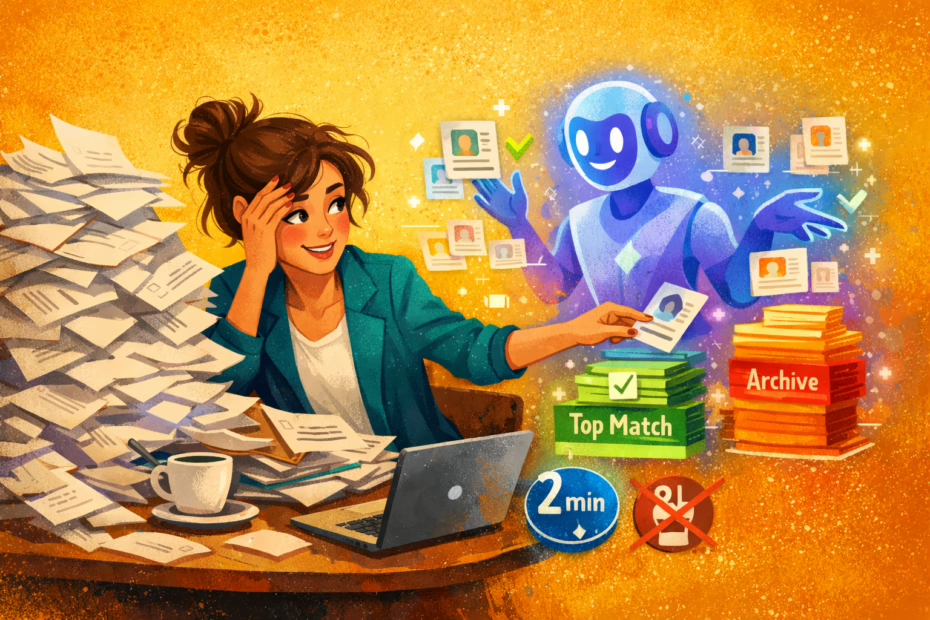
You spend hours reading resumes for one hire. AI HR agents change that. They screen candidates and save you time.
Small business owners need fast hiring. AI HR agents automate recruiting and reduce effort. You focus on growth instead.
I’m Kateryna Quinn, founder of Uplify. I built a Forbes-honored platform after generating $25M for clients. These AI HR agents work for real businesses today.
Table of Contents
- What Are AI HR Agents?
- How AI HR Agents Work
- Benefits for Small Business Owners
- Common Use Cases for AI HR Agents
- Choosing the Right AI HR Agent Tool
- Step-by-Step Implementation Process
- Frequently Asked Questions
What Are AI HR Agents?
AI HR agents are software tools that handle recruiting tasks. They read resumes and schedule interviews automatically. These agents use artificial intelligence to work faster than humans.
Think of them as virtual recruiters. They never sleep or take breaks. AI HR agents process hundreds of applications in minutes.
The Core Components
Every AI HR agent has three main parts. First, it screens resumes using keywords. Second, it ranks candidates by fit. Third, it sends automated messages to applicants.
Resume screening AI reads job descriptions first. Then it matches skills to requirements. The system flags top candidates for you.
AI recruiting automation connects these steps. One agent handles the entire early hiring process. You review only qualified candidates at the end.
How They Differ from Regular HR Software
Traditional HR software stores data. AI HR agents make decisions. They learn from your past hires and improve over time.
Regular tools require manual input for each step. AI agents complete workflows without human oversight. This distinction matters for busy owners.
HR workflow agents adapt to your business needs. They suggest interview questions based on role requirements. Standard software cannot do this alone.
Key Takeaway: AI HR agents automate recruiting from application to interview scheduling.
How AI HR Agents Work
AI HR agents follow a clear process. They receive job requirements from you. Then they scan incoming applications automatically.
The agent compares resume text to job descriptions. It assigns scores to each candidate. High scores mean better matches for your role.
Natural Language Processing in Action
These agents use natural language processing technology. NLP helps computers understand human writing. The AI reads resumes like you would.
It identifies skills, experience, and education instantly. AI HR agents spot keywords that matter most. They also recognize synonyms and related terms.
For example, the agent knows “customer service” matches “client support.” This understanding improves candidate matching accuracy significantly.
Machine Learning Gets Smarter
AI recruiting automation improves with each hire. The system tracks which candidates succeed in your company. It learns your preferences over time.
Machine learning algorithms adjust their scoring models. They give more weight to factors you value. This means better candidate recommendations each month.
Resume screening AI also learns industry-specific terms. It understands what “proficient in Python” means for developers. Context awareness makes matching more accurate.
Integration with Existing Systems
Most AI HR agents connect to your current tools. They pull job postings from your website automatically. They sync with your email and calendar too.
The agent sends interview invitations through your email platform. It updates candidate status in your applicant tracking system. Everything stays synchronized without manual data entry.
This integration saves hours each week. You avoid duplicate work across multiple platforms. HR workflow agents handle the connections for you.
Expert Insight from Kateryna Quinn, Forbes Next 1000:
“Small business owners waste 40% of their time on admin tasks. AI HR agents give you those hours back. Use them to build your business instead.”
Key Takeaway: AI HR agents use NLP and machine learning to screen resumes faster.
Benefits for Small Business Owners
AI HR agents save you serious time. Manual resume review takes 5-10 minutes per application. AI does it in seconds.
For a role with 100 applicants, you save 8-16 hours. That’s two full workdays freed up. You can focus on revenue-generating activities instead.
Reduced Hiring Costs
Hiring the wrong person costs 30% of annual salary. AI recruiting automation improves candidate quality. Better matches mean fewer bad hires.
You also spend less on recruiter fees. AI HR agents replace expensive external recruiters for initial screening. The cost savings add up quickly.
According to the SBA guide on hiring employees, proper screening reduces turnover. AI agents provide consistent screening every time.
Faster Time to Hire
Speed matters in competitive markets. Top candidates get multiple offers within days. AI HR agents accelerate your hiring timeline significantly.
Resume screening AI processes applications as they arrive. It ranks candidates immediately. You can reach out to great applicants the same day.
Traditional hiring takes 6-8 weeks on average. AI recruiting automation cuts that to 3-4 weeks. Faster hiring means less revenue loss from open positions.
Improved Candidate Experience
Job seekers appreciate quick responses. AI agents send acknowledgment emails instantly. They provide status updates throughout the process.
Automated communication keeps candidates engaged. They know where they stand at all times. This professionalism enhances your employer brand.
HR workflow agents also reduce unconscious bias. They evaluate candidates based on qualifications only. This creates fairer hiring outcomes for everyone.
Scalability for Growing Businesses
As your business grows, hiring needs increase. AI HR agents scale effortlessly with you. They handle 10 or 1,000 applications equally well.
You don’t need to hire additional HR staff immediately. The AI manages increased application volume automatically. This flexibility supports sustainable business growth.
Many small businesses struggle with seasonal hiring spikes. Resume screening AI handles these fluctuations without extra cost. You maintain quality even during busy periods.
Key Takeaway: AI HR agents save time, reduce costs, and speed up hiring for small businesses.
Common Use Cases for AI HR Agents
AI HR agents excel at high-volume hiring. Retail and hospitality businesses hire frequently. These agents screen dozens of applicants daily with ease.
They work well for remote position recruiting too. Geographic restrictions don’t limit AI agents. They evaluate candidates from anywhere instantly.
Screening Entry-Level Candidates
Entry-level roles attract many applicants. Resume screening AI filters them by basic qualifications quickly. It checks for required education and skills.
The agent removes unqualified candidates from your pipeline. You review only those who meet minimum requirements. This improves your hiring efficiency dramatically.
AI recruiting automation also standardizes screening criteria. Every candidate gets evaluated the same way. Consistency ensures fairness in your process.
Managing Seasonal Hiring
Seasonal businesses face hiring surges. AI HR agents handle hundreds of applications simultaneously. They maintain quality despite increased volume.
The system processes peak-season applications without delays. You fill positions faster when you need them most. Customer service quality stays high during busy periods.
HR workflow agents also track seasonal worker performance. They help you identify top performers for rehire. This builds a reliable seasonal workforce over time.
Reducing Admin Work
Scheduling interviews consumes hours each week. AI agents automate this tedious task completely. They check your calendar and candidate availability automatically.
The system sends interview invitations with time options. Candidates select their preferred slot. Confirmations go out without your involvement.
This automation extends to follow-up communications too. AI HR agents send reminder emails before interviews. They notify candidates about next steps after each stage.
Building Talent Pipelines
Not every good candidate fits current openings. AI recruiting automation stores promising profiles for future roles. It creates a talent pipeline you can tap later.
The agent tags candidates by skills and experience. When new positions open, it suggests existing applicants. This reduces time-to-fill for future hires significantly.
Resume screening AI also tracks candidate engagement. It identifies who remains interested in your company. You build relationships with potential future employees.
If you’re looking to streamline your entire hiring process, explore comprehensive AI agents for business that work across multiple departments.
Key Takeaway: AI HR agents handle high-volume hiring, seasonal recruitment, and talent pipeline building.
Choosing the Right AI HR Agent Tool
Not all AI HR agents offer the same features. Some focus only on resume screening. Others handle the entire recruiting workflow.
Start by listing your biggest hiring pain points. Do you struggle with application volume? Or does interview scheduling take too much time?
Must-Have Features
Every good AI HR agent needs resume parsing capability. This reads resumes in any format automatically. It extracts relevant information into structured data.
Look for customizable screening criteria. You set the qualifications that matter most. The AI recruiting automation applies your rules consistently.
Integration with your existing tools matters too. The agent should connect to your email and calendar. It should sync with any applicant tracking system you use.
Pricing Models to Consider
AI HR agents typically charge per user or per hire. Per-user pricing works for ongoing recruiting needs. Per-hire pricing suits occasional or seasonal hiring better.
Calculate your expected hiring volume annually. Compare costs across both pricing models. Choose the option that saves you the most money.
Some platforms offer free trials or demo accounts. Test the system with real job postings first. This reveals whether it fits your workflow properly.
Compliance and Data Security
HR data includes sensitive personal information. Your AI agent must comply with privacy regulations. Check for GDPR and CCPA compliance at minimum.
Data encryption protects candidate information. The platform should encrypt data in transit and at rest. This prevents unauthorized access to applications.
Ask about data retention policies too. How long does the system store candidate information? Clear policies help you meet legal requirements.
Support and Training
Implementation support matters for smooth adoption. Good vendors provide onboarding training for your team. They help you configure the system correctly.
Ongoing support ensures you maximize value. Look for email, chat, and phone support options. Response time commitments matter when hiring urgently.
Some platforms offer self-service resources too. Video tutorials and knowledge bases help you troubleshoot independently. This reduces wait times for common issues.
User Experience Matters
A complicated interface slows you down. Test the platform’s user experience during trials. Can you navigate it intuitively?
The candidate experience matters just as much. Apply to your own test job posting. See what applicants experience when they interact with your AI.
Mobile compatibility helps candidates apply easily. Most job seekers use phones to search roles. A mobile-friendly application process improves completion rates.
For a broader view of how AI tools can transform your business operations, check out AI tools for business owners that integrate seamlessly with HR functions.
Expert Insight from Kateryna Quinn, Forbes Next 1000:
“Don’t buy tools because they’re trendy. Buy them because they solve a real problem. Test AI HR agents with your actual job postings before committing.”
Key Takeaway: Choose AI HR agents based on features, pricing, compliance, and user experience.
Step-by-Step Implementation Process
Implementing AI HR agents doesn’t require technical expertise. Most platforms guide you through setup in under an hour. Follow these steps for smooth adoption.
Step 1: Define Your Hiring Goals
Write down what you want to achieve. Do you want to cut screening time by half? Or do you need to hire faster?
Set specific, measurable targets for your AI recruiting automation. Example: “Screen 100 applicants in under 2 hours.” Clear goals help you measure success later.
Step 2: Document Your Current Process
Map out your existing hiring workflow. List every step from job posting to offer letter. Note how much time each step takes now.
This baseline helps you quantify improvements later. It also reveals which tasks to automate first. Focus on the most time-consuming activities.
Step 3: Select Your AI HR Agent Platform
Use the criteria from the previous section. Request demos from your top three choices. Test them with real job descriptions.
Compare how each platform handles your specific needs. Check integration with your existing tools. Choose the one that fits best.
Step 4: Configure Screening Criteria
Input your job requirements into the AI system. Specify must-have qualifications and nice-to-have skills. Set minimum experience levels and education requirements.
The AI HR agent uses these criteria to score candidates. More specific criteria lead to better matches. Update them as you learn what works.
Step 5: Integrate with Existing Systems
Connect the AI agent to your email and calendar. Link it to your job board accounts. Sync it with your applicant tracking system if you have one.
Most platforms offer pre-built integrations. They require just a few clicks to activate. Technical support can help with complex setups.
Step 6: Create Message Templates
Write email templates for common communications. Include acknowledgment emails, interview invitations, and rejection notices. Keep them brief and professional.
The AI agent sends these automatically at appropriate times. Personalization tokens add candidate names and job titles. This maintains a human touch.
Step 7: Test with a Practice Job Posting
Create a test job posting to verify everything works. Submit a few fake applications yourself. Check that the AI screens them correctly.
Review the automated emails candidates receive. Ensure they reflect your brand voice properly. Fix any issues before going live.
Step 8: Launch with a Real Role
Start with one job posting. Monitor the AI’s performance closely. Check that it ranks candidates appropriately.
Review the top-ranked candidates manually at first. This builds your confidence in the system. It also helps you refine screening criteria.
Step 9: Train Your Team
Show your team how to use the platform. Explain how the AI scores candidates. Demonstrate how to review recommendations and schedule interviews.
Create a simple guide for common tasks. This helps team members use the tool independently. Consistent usage maximizes your investment.
Step 10: Monitor and Optimize
Track key metrics weekly. Measure time saved and candidate quality improvements. Note which candidates the AI ranks highest.
Adjust screening criteria based on hiring outcomes. If good candidates score low, refine your requirements. Continuous optimization improves results over time.
Use AI job description tools to create better postings that attract qualified candidates your AI agent can screen effectively.
Key Takeaway: Implement AI HR agents gradually, test thoroughly, and optimize based on results.
Quick Reference: AI HR Agents Definition
AI HR agents are automated software systems that use artificial intelligence to handle human resources tasks. They screen resumes, rank candidates, schedule interviews, and communicate with applicants without human intervention. These agents use natural language processing to understand job requirements and candidate qualifications. They apply machine learning to improve matching accuracy over time. Small business owners use AI HR agents to save time, reduce hiring costs, and fill positions faster than manual recruiting processes.
Frequently Asked Questions
What is an AI HR agent?
An AI HR agent is software that automates recruiting tasks. It screens resumes and ranks candidates automatically. The agent uses AI to match applicants to job requirements. It saves time and improves hiring efficiency for businesses. AI HR agents handle hundreds of applications in minutes.
How do AI HR agents improve recruiting?
AI recruiting automation processes applications faster than humans. It eliminates manual resume review completely. The system ranks candidates by fit instantly. You review only qualified applicants. This speeds up hiring and improves candidate quality significantly.
Are AI HR agents expensive?
Costs vary by platform and features. Many tools charge $50-$300 per month. Some use per-hire pricing instead. Most save more money than they cost. They reduce recruiter fees and bad hires. Calculate ROI based on your hiring volume.
Can small businesses use AI HR agents?
Yes, AI HR agents work perfectly for small businesses. They scale to any hiring volume easily. Small teams benefit most from the time savings. You don’t need technical skills to use them. Most platforms offer simple interfaces and support.
Do AI HR agents replace human recruiters?
No, they complement human judgment. Resume screening AI handles repetitive tasks. You still conduct interviews and make final decisions. The agent saves time on admin work. This lets you focus on candidate relationships. Think of it as a helpful assistant.
How accurate is resume screening AI?
Accuracy depends on your screening criteria. Well-configured systems match 90%+ of time. They improve as they learn your preferences. The AI evaluates candidates consistently every time. This reduces bias compared to manual screening. Review top recommendations to verify accuracy.
What happens to candidate data?
Reputable platforms encrypt all candidate information. They comply with data privacy regulations. Most store data securely in the cloud. You control who accesses applicant information. Check each platform’s privacy policy carefully. Data security matters for legal compliance.
Conclusion: Your Next Steps with AI HR Agents
AI HR agents transform hiring for small businesses. They save time, reduce costs, and improve candidate quality. You now understand how they work and why they matter.
Start by evaluating your current hiring process. Identify which tasks consume the most time. Those are your best automation opportunities.
Research AI recruiting automation platforms next. Request demos from three vendors. Test them with real job postings before deciding.
Implement gradually with one role first. Monitor results and adjust screening criteria. Optimize based on what you learn.
The businesses that adopt AI HR agents now gain a competitive advantage. They hire faster and build better teams. Your competitors are already exploring these tools.
Don’t let hiring slow your growth. AI agents give you hours back each week. Use that time to focus on strategy and revenue.
Explore how AI automation can streamline other parts of your business beyond recruiting.
Ready to transform your business with AI? Uplify offers 40+ AI tools designed for small business owners like you. Our platform includes AI agents, automated workflows, and personalized coaching. Start with our free tier today and see how AI can grow your profits.

Kateryna Quinn is an award-winning entrepreneur and founder of Uplify, an AI-powered platform helping small business owners scale profitably without burnout. Featured in Forbes (NEXT 1000) and NOCO Style Magazine (30 Under 30), she has transformed hundreds of service-based businesses through her data-driven approach combining business systems with behavior change science. Her immigrant background fuels her mission to democratize business success.