Your sales copy falls flat. Clients scroll past without reading. You lose revenue every single day.
The AIDA formula fixes this fast. AIDA copywriting turns browsers into buyers with a proven formula that works.
I built $25M in client revenue before founding Uplify. This AIDA formula system works for every service business owner ready to write copy that converts.
Table of Contents
- What Is the AIDA Formula?
- How the AIDA Copywriting Formula Works
- Attention: Stop Your Reader Cold
- Interest: Keep Them Reading
- Desire: Make Them Want Your Offer
- Action: Tell Them What to Do
- AIDA Formula Examples for Service Businesses
- Step-by-Step AIDA Copywriting Process
- Frequently Asked Questions
What Is the AIDA Formula?
The AIDA formula guides your sales copy through four stages. Each AIDA stage moves your reader closer to buying.
AIDA stands for Attention, Interest, Desire, and Action. The AIDA copywriting formula helps service business owners write copy that converts strangers into paying clients.
This sales copy formula dates back over 100 years. Yet the AIDA formula still works today because it matches how people actually buy.
Why the AIDA Formula Works
The AIDA marketing formula follows the buyer journey. Your copy must grab attention first. Next, build interest in your solution. Then, create desire for your specific offer. Finally, push for action with a clear next step.
Most service business owners skip straight to action. They ask for the sale without building attention, interest, or desire first. That kills conversions fast.
The AIDA copywriting formula forces you to earn the sale. Each AIDA stage prepares your reader for the next stage. So they arrive at your call to action ready to buy.
Service businesses using the AIDA formula see higher conversion rates. The SBA marketing guide emphasizes clear messaging that addresses customer needs at each decision stage.
AIDA Formula vs Other Sales Frameworks
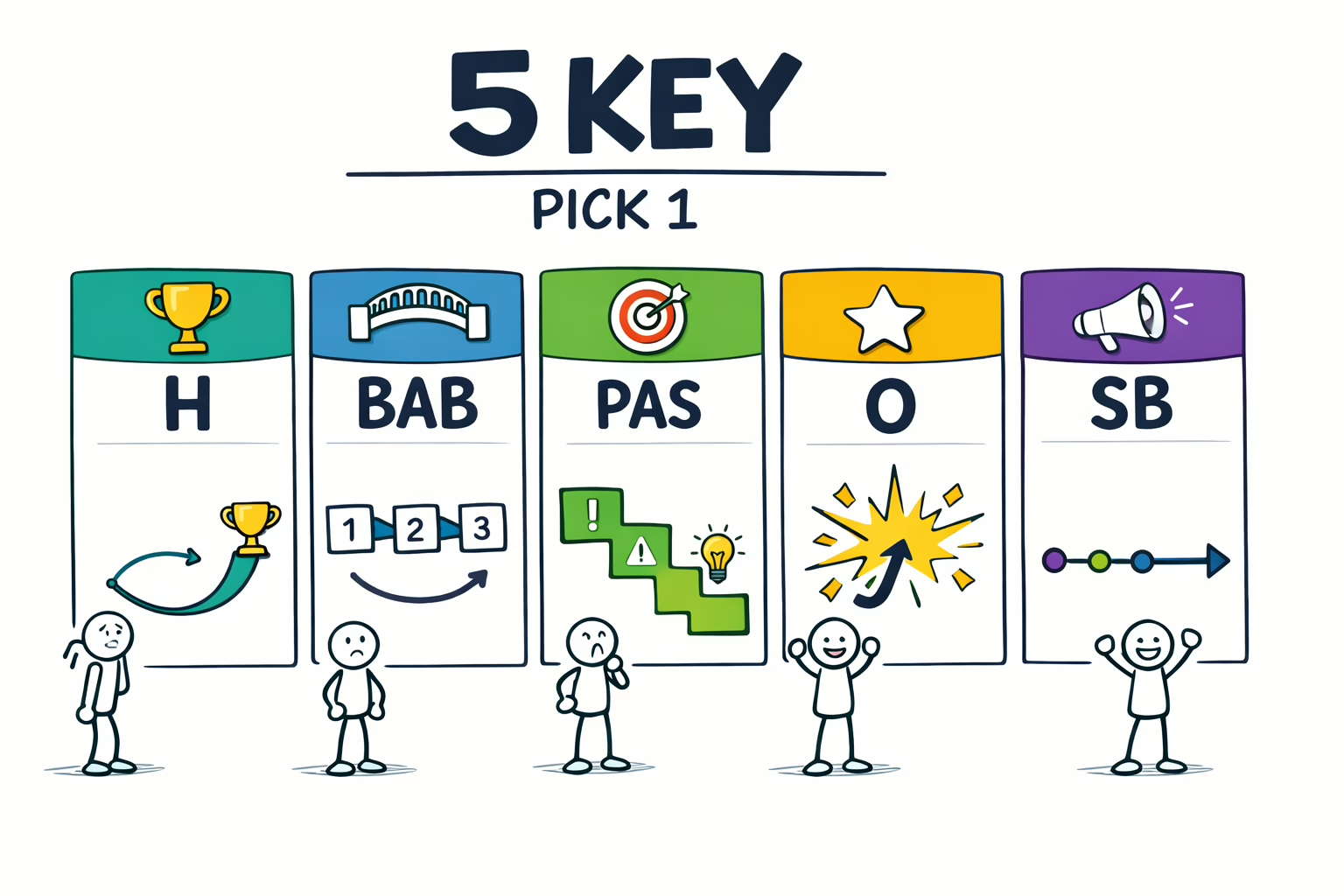
The AIDA formula beats other copywriting frameworks for service businesses. The AIDA sales copy formula is simpler than PAS (Problem-Agitate-Solution) or FAB (Features-Advantages-Benefits).
AIDA copywriting works for any sales copy format. Use the AIDA formula for emails, landing pages, sales pitches, proposals, and social media posts. The same AIDA structure works everywhere.
Other copywriting formulas require specific pain points or product features. But the AIDA formula adapts to any service business offering. That makes AIDA copywriting the best starting point for business owners new to sales copy.
Expert Insight from Kateryna Quinn, Forbes Next 1000:
“I tested every copywriting formula building my agency. AIDA won every time. It’s simple, repeatable, and works for any service offer.”
How the AIDA Copywriting Formula Works
The AIDA formula breaks sales copy into four clear stages. Each AIDA stage has one job. Master each stage, and your copy converts.
Stage one: Attention. Stop your reader from scrolling past. Stage two: Interest. Keep them reading with relevant details. Stage three: Desire. Make them want your specific solution. Stage four: Action. Tell them exactly what to do next.
The Psychology Behind AIDA
The AIDA copywriting formula works because it matches brain science. Your reader’s brain filters out most messages. So your AIDA sales copy must pass three mental tests.
First test: Is this relevant to me? That’s the attention stage. Second test: Can this solve my problem? That’s interest and desire. Third test: What’s the risk if I act? That’s where your action stage removes friction.
Service business owners who use the AIDA formula see this play out. Attention gets clicks. Interest builds trust. Desire creates urgency. Action converts browsers into buyers.
The AIDA marketing formula also forces you to write copy in the right order. Most business owners write backwards. They start with features (interest), then add a headline (attention), and tack on a call to action (action). But they forget desire entirely.
When to Use the AIDA Formula
Use the AIDA copywriting formula for any sales message. The AIDA formula works for short copy and long copy. It scales to fit your format.
Short AIDA formula examples include social media posts and email subject lines. Long AIDA copywriting includes landing pages, sales letters, and video scripts. Each format uses all four AIDA stages.
Apply the AIDA sales copy formula to proposals, pitch decks, and cold outreach. Any time you ask someone to buy, the AIDA formula structures your message for maximum conversions.
For faster copywriting that follows the AIDA formula automatically, try the AI sales pitch generator built specifically for service business owners.
Attention: Stop Your Reader Cold
The attention stage is your first AIDA copywriting test. You have two seconds to stop your reader from scrolling past.
Your AIDA formula headline must shock, intrigue, or promise value. Generic headlines kill attention fast. “Our Services” doesn’t grab attention. “Triple Your Revenue in 90 Days” does.
How to Write AIDA Formula Headlines
Strong AIDA copywriting headlines use numbers, questions, or bold claims. Numbers create curiosity. Questions engage the brain. Bold claims promise transformation.
Test these AIDA formula attention patterns for your service business. Pattern one: “How to [result] in [timeframe].” Pattern two: “[Number] Ways to [solve problem].” Pattern three: “The [adjective] Secret to [desired outcome].”
Avoid vague headlines in your AIDA sales copy. “Quality Services” means nothing. “Close 67% More Deals with This Pitch” means everything.
AIDA Attention Examples
Here’s how service businesses apply the AIDA formula attention stage. A fitness trainer writes: “Lose 20 Pounds in 12 Weeks Without Starving.” A marketing consultant writes: “Generate 50 Qualified Leads This Month.”
Each AIDA copywriting headline speaks to a specific result. The AIDA formula forces you to name the transformation upfront. That grabs attention immediately.
Use power words in your AIDA formula headlines. Words like “proven,” “guaranteed,” “secret,” and “fastest” boost attention. Test different AIDA copywriting headlines to see which grabs the most attention from your target audience.
According to Entrepreneur’s guide to headline writing, headlines with numbers and clear benefits outperform generic headlines by 73%.
Interest: Keep Them Reading
The interest stage of your AIDA copywriting builds trust. Your reader stopped scrolling. Now prove you understand their problem.
AIDA formula interest copy explains the problem clearly. Show you know exactly what they’re facing. Use specific details only an expert would know.
Building Interest with the AIDA Formula
Strong AIDA copywriting interest sections name the pain. Don’t say “Business is hard.” Say “You’re working 60-hour weeks but still can’t hit your revenue goals.”
The AIDA sales copy formula requires specificity here. Vague problem statements lose interest fast. Detailed problem descriptions build credibility and keep readers engaged.
Add proof in your AIDA formula interest stage. Share statistics, client results, or industry research. Proof shows you’re credible. That increases interest in your solution.
AIDA Interest Examples for Services
A business coach using the AIDA formula writes: “Most service businesses waste 40% of their time on tasks that don’t drive revenue. You’re stuck in delivery while new client acquisition stalls.”
A web designer applying AIDA copywriting writes: “Your current website loads in 7 seconds. Research shows 53% of mobile users leave sites that take over 3 seconds to load. That’s thousands in lost revenue monthly.”
Each AIDA formula example names a specific problem. The reader thinks: “That’s exactly my situation.” Interest grows. They keep reading your sales copy.
Link interest to your sales strategy framework to show how addressing core problems systematically drives business growth.
Desire: Make Them Want Your Offer
The desire stage separates good AIDA copywriting from great AIDA copywriting. This AIDA formula stage sells your specific solution.
AIDA formula desire copy paints a picture of life after the problem is solved. Show the transformation. Make them feel what success looks like.
Creating Desire with AIDA Copywriting
The AIDA sales copy formula uses benefits here, not features. Don’t list what your service includes. Describe what your client gains.
Bad AIDA copywriting: “Our coaching includes weekly calls and monthly reports.” Good AIDA formula copy: “Imagine knowing exactly which marketing channel drives profit. You stop wasting money on ads that don’t work. You invest only in strategies that pay back 5X.”
Use sensory language in your AIDA formula desire stage. Help readers see, feel, and experience the outcome. That emotional connection creates desire fast.
AIDA Desire Formula Examples
A fitness coach applying the AIDA copywriting formula writes: “Picture yourself walking into that reunion 30 pounds lighter. Everyone asks what you did. You feel confident, energized, and proud.”
A bookkeeper using AIDA formula sales copy writes: “Imagine tax season without panic. Your books are clean. Your CPA files fast. You get your refund in weeks, not months.”
Each AIDA copywriting example shows the after state. The reader wants that outcome. Desire builds. They’re ready for your call to action.
Stack multiple benefits in your AIDA formula desire section. Show the ripple effects. A cleaner website means more leads. More leads mean more revenue. More revenue means hiring help. Hiring help means freedom. The AIDA copywriting formula amplifies desire through benefit stacking.
Expert Insight from Kateryna Quinn, Forbes Next 1000:
“Desire is where most service owners fail. They sell the service, not the transformation. The AIDA formula forces you to sell outcomes.”
Action: Tell Them What to Do
The action stage closes your AIDA copywriting. This final AIDA formula stage converts interest and desire into revenue.
Your AIDA sales copy action must be crystal clear. Tell your reader exactly what to do next. Remove all confusion.
Writing Clear AIDA Formula Calls to Action
Strong AIDA copywriting action stages use direct commands. “Book your free consultation now.” “Download the checklist today.” “Schedule your strategy call this week.”
The AIDA formula requires one action per message. Don’t give readers multiple options. That kills conversions. Pick the most important next step for your AIDA sales copy.
Add urgency to your AIDA formula action stage. Limited spots, expiring bonuses, or time-sensitive offers push readers to act now instead of later.
AIDA Action Examples That Convert
A consultant using the AIDA copywriting formula writes: “Book your 30-minute revenue roadmap call this week. Only 5 spots available this month. Click here to choose your time.”
A designer applying the AIDA formula writes: “Get your website audit before Friday. We’re reviewing 10 sites this week for free. Enter your URL below to claim your spot.”
Each AIDA copywriting action example tells readers exactly what to do. The AIDA sales copy removes friction. Conversions increase.
Reducing Friction in AIDA Copywriting
The best AIDA formula action stages address objections. “No credit card required.” “Cancel anytime.” “100% money-back guarantee.” These phrases remove hesitation.
Make your AIDA copywriting action physically easy. Use big buttons. Keep forms short. The fewer clicks required, the higher your conversion rate.
Test different AIDA formula calls to action. Some audiences respond to soft asks like “Learn more.” Others convert better with direct asks like “Buy now.” Your AIDA sales copy should match your audience’s buying behavior.
Ready to write AIDA formula copy fast? The AI sales pitch generator creates complete AIDA copywriting in minutes, customized for your service business.
AIDA Formula Examples for Service Businesses
Real AIDA copywriting examples show exactly how the AIDA formula works. These AIDA sales copy samples demonstrate each stage clearly.
AIDA Formula Email Example
Subject line (Attention): You’re leaving $10K on the table every month
Body (Interest): Most service businesses waste 30% of their marketing budget on channels that don’t convert. You run ads, post on social media, and send emails. But you don’t track which channel actually brings in clients.
Body (Desire): Imagine knowing exactly where every client comes from. You stop spending on Facebook ads because you see LinkedIn drives 80% of your revenue. You double down on what works. Your profit jumps 40% in 60 days.
Body (Action): Get your free marketing ROI audit this week. I’ll show you which channels waste money and which drive profit. Book your 20-minute call now.
AIDA Copywriting Landing Page Example
Headline (Attention): Close 50% More Deals Without Discounting
Subheadline (Interest): Your sales pitch sounds like everyone else’s. Prospects nod politely, then ghost you. You’re losing deals to cheaper competitors because your pitch doesn’t show unique value.
Body copy (Desire): Picture this: You present your pitch. The prospect leans forward. They ask how fast you can start. No price objections. No “let me think about it.” Just “Where do I sign?” That’s what happens when your sales copy follows a proven formula.
CTA button (Action): Get Your Custom Sales Pitch in 10 Minutes
AIDA Formula Social Media Post Example
Hook (Attention): Your website is losing you 5 clients every week. Here’s why.
Context (Interest): Most service business websites load too slowly, have unclear messaging, and hide the call to action. Visitors leave in seconds.
Value (Desire): A fast, clear website turns visitors into leads automatically. You wake up to consultation requests in your inbox. No more chasing cold prospects.
CTA (Action): Drop “AUDIT” below and I’ll send you a free website review.
Each AIDA copywriting example follows the same AIDA formula structure. Attention stops the reader. Interest builds credibility. Desire shows transformation. Action drives conversion.
Need more AIDA marketing examples? Study top-performing sales copy in your industry. Notice how the best AIDA formula sales pages use all four stages in order.
Step-by-Step AIDA Copywriting Process
Follow this AIDA formula process to write sales copy that converts. Each step builds on the previous AIDA stage.
- Identify your target audience for the AIDA copywriting. Know who you’re writing for. Vague audiences produce weak AIDA sales copy. Specific audiences produce strong AIDA formula results.
- Research your audience’s biggest pain point. Read reviews, survey clients, and join forums. Your AIDA copywriting must address real problems, not assumed problems.
- Write your AIDA formula attention headline. Test five different headlines. Pick the one that makes your ideal client stop scrolling immediately.
- Build interest by naming the problem specifically. Use exact words your clients use. The AIDA copywriting formula works best when it mirrors how your audience describes their problem.
- Create desire by painting the after picture. Show exactly what life looks like after they buy. The AIDA formula desire stage must feel real and achievable.
- Write one clear action command. Tell readers exactly what to do next. The AIDA sales copy action stage converts desire into revenue.
- Add urgency or scarcity to your AIDA copywriting action. Time limits, quantity limits, or bonus deadlines push readers to act now instead of later.
- Remove friction from your AIDA formula action step. Make it easy to say yes. Short forms, no credit card required, and money-back guarantees increase conversion rates.
- Test your AIDA copywriting with real prospects. Send your AIDA formula sales copy to 10 people. Ask if it’s clear and compelling. Revise based on feedback.
- Track which AIDA formula version converts best. Write multiple AIDA copywriting versions. Test headlines, desire statements, and calls to action. Keep the winner, kill the losers.
This AIDA copywriting process takes 30 minutes once you master it. The AIDA formula becomes faster with practice. After writing 10 AIDA sales copy pieces, the structure becomes automatic.
For help applying the AIDA formula to your specific service business, explore Uplify’s marketing resources designed for service-based businesses.
Quick Reference: AIDA Formula Definition
The AIDA formula is a four-stage copywriting framework that guides readers from awareness to action. AIDA stands for Attention, Interest, Desire, and Action. Service business owners use the AIDA copywriting formula to structure sales messages that convert browsers into buyers. Each AIDA stage serves a specific purpose: Attention stops the reader, Interest builds credibility, Desire creates urgency, and Action drives conversion. The AIDA formula works for emails, landing pages, social media posts, proposals, and any sales copy format.
The AIDA marketing formula has been used for over 100 years because it matches how people naturally make buying decisions. Modern AI tools now automate AIDA copywriting, making it faster for business owners to create high-converting sales copy without hiring expensive copywriters.
Frequently Asked Questions
What is the AIDA formula in copywriting?
The AIDA formula is a copywriting framework with four stages. AIDA stands for Attention, Interest, Desire, and Action. Each AIDA stage moves your reader closer to buying. The AIDA copywriting formula helps service business owners write sales copy that converts.
How do I use the AIDA formula for sales copy?
Start with an attention-grabbing headline using the AIDA formula. Next, build interest by naming your reader’s problem clearly. Then create desire by showing the transformation your service delivers. Finally, end with one clear action command. This AIDA copywriting structure works for any sales message.
Why does the AIDA marketing formula work so well?
The AIDA formula matches how people actually buy. Your brain filters messages in stages. First, something must grab attention. Then you need proof it’s relevant. Next, you must want the outcome. Finally, you need a clear next step. AIDA copywriting follows this natural decision process.
Can AI write AIDA formula copy for my business?
Yes, AI tools create AIDA copywriting in minutes. The best AI sales copy generators follow the AIDA formula automatically. They ask about your service, audience, and offer. Then they output complete AIDA sales copy you can use immediately or customize further.
What’s the difference between AIDA and PAS formulas?
AIDA focuses on four buying stages: Attention, Interest, Desire, Action. PAS focuses on three emotional stages: Problem, Agitate, Solution. The AIDA formula works better for logical service buyers. PAS works better for emotional impulse buyers. Most service businesses get better results with AIDA copywriting.
How long should each AIDA formula stage be?
Attention takes one sentence or headline in AIDA copywriting. Interest needs 2-3 sentences to build credibility. Desire requires 3-5 sentences to paint the transformation. Action needs one clear command. The entire AIDA formula can fit in 10 sentences for short copy or expand to 1000 words for long sales pages.
Do I need to use the AIDA formula in order?
Yes, the AIDA copywriting formula only works in sequence. You can’t create desire before building interest. You can’t ask for action before creating desire. The AIDA stages follow the buyer journey. Skip a stage and your sales copy fails to convert.
Start Writing AIDA Formula Copy Today
The AIDA formula gives you a proven copywriting structure that works. Every service business owner can master AIDA copywriting with practice.
Start by writing one AIDA formula email this week. Use the AIDA copywriting process above. Test your AIDA sales copy with real prospects. Refine based on results.
The AIDA formula isn’t magic. But it forces you to write copy that follows how people actually buy. That’s why AIDA copywriting still works after 100 years.
Most service business owners waste months learning copywriting. The AIDA sales copy formula shortens that timeline dramatically. You can write converting copy today, not next year.
For faster AIDA copywriting results, use AI tools built specifically for service businesses. Uplify’s AI sales pitch generator creates complete AIDA formula sales copy in under 10 minutes. Enter your service details, and get proven AIDA copywriting customized for your business.
The AIDA formula works. Your job is to apply it consistently. Write AIDA sales copy for every client touchpoint. Test. Refine. Repeat. Your conversion rates will climb.

Kateryna Quinn is an award-winning entrepreneur and founder of Uplify, an AI-powered platform helping small business owners scale profitably without burnout. Featured in Forbes (NEXT 1000) and NOCO Style Magazine (30 Under 30), she has transformed hundreds of service-based businesses through her data-driven approach combining business systems with behavior change science. Her immigrant background fuels her mission to democratize business success.