MARKETING Focus
How to Create Case Studies That Build Trust and Convert Clients Faster
Most businesses struggle to prove their value. Case studies transform your results into powerful marketing assets that showcase real transformations, build instant credibility, and convert skeptical prospects into paying clients. Learn how to create case studies that document results, demonstrate expertise, and drive revenue.
What Is a Case Study and Why It Matters for Your Business
A case study is a detailed examination of how your service or product helped a specific client achieve measurable results. Unlike testimonials that offer brief praise, case studies provide the complete story from challenge to solution to transformation.
Case studies matter because they address the number one barrier to sales: trust. When prospects see documented proof that you've solved problems similar to theirs, their skepticism drops dramatically. Research shows that case studies increase conversion rates by 185% compared to generic marketing content.
Every service business needs case studies because they serve multiple functions simultaneously. They educate prospects about your process, demonstrate your expertise through real examples, justify premium pricing with documented ROI, and reduce the perceived risk of hiring you.
The Difference Between Case Studies and Testimonials
Testimonials are valuable but limited. A testimonial might say "Great service, highly recommend!" A case study tells the complete story with specific details, quantifiable results, and the methodology you used to achieve those outcomes.
Case studies include the client's situation before working with you, the specific challenges they faced, why they chose your solution, the process you implemented, measurable results with numbers and percentages, and unexpected benefits they discovered. This depth builds credibility that no testimonial can match.
Quick Example: Instead of "John loved our coaching," a case study shows how John increased revenue from $80K to $240K in 18 months using your specific frameworks, includes his initial hesitations, details the exact strategies implemented, and features his own words about the transformation.
How Case Studies Impact Your Bottom Line
Case studies accelerate sales cycles by answering objections before prospects ask them. When your case study addresses budget concerns, implementation timelines, and expected results, sales conversations shift from "Can you help me?" to "When can we start?"
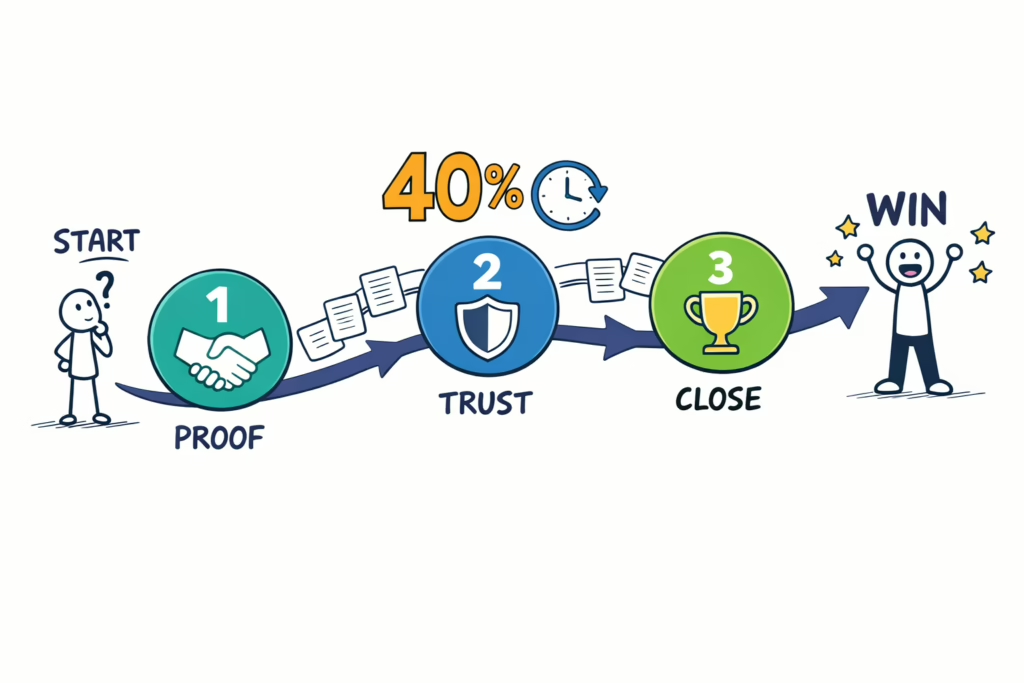
Businesses with comprehensive case study libraries close deals 40% faster than competitors without them. The documented proof shortens the decision-making process because prospects can visualize their own success through your previous client transformations.
Case studies also justify higher prices. When you demonstrate $500K in revenue increase from a $50K investment, price objections disappear. The value proposition becomes undeniable when backed by real numbers and real clients.
The Anatomy of a High-Converting Case Study
Every powerful case study follows a proven structure that takes prospects on an emotional journey from problem to solution to transformation. Understanding this structure ensures your case studies convert skeptics into believers.
The Client Background Section
Start with context that helps prospects identify with your client. Include the industry they operate in, the size of their business or operation, how long they've been in business, their primary market or audience, and what they tried before finding you.
This section creates immediate connection. When prospects read about a client similar to themselves, they think "That's exactly my situation." This identification is crucial for engagement.
Keep background sections concise but specific. Instead of "small business owner," write "fitness studio owner with two locations generating $400K annually." Specificity builds credibility and helps the right prospects self-identify.
The Problem Statement
Describe the specific challenges your client faced before working with you. Effective problem statements include the primary pain point driving their search, how long the problem had persisted, previous failed solutions they attempted, the cost of not solving the problem, and the emotional impact on the business owner.
Use the client's own words when describing problems. Direct quotes like "We were working 80-hour weeks with nothing to show for it" create authenticity that paraphrasing cannot match.
Quantify problems whenever possible. Instead of "struggling with marketing," specify "spending $3,000 monthly on ads with only 2 new clients." Numbers make problems concrete and measurable.
The Solution and Process
Explain what you did to solve the client's problem without giving away every proprietary detail. Include your initial assessment and diagnosis, the strategy you recommended and why, the specific frameworks or methodologies applied, the timeline from start to finish, and how you customized the approach for their situation.
This section demonstrates expertise while maintaining some mystery about your exact methods. You want prospects to understand your competence without enabling DIY attempts.
Focus on the "what" and "why" more than the "how." Explain that you implemented a content strategy focused on long-tail keywords, but you don't need to reveal every keyword or optimization technique.
The Results Section
Results are the heart of your case study. Present multiple types of outcomes to appeal to different decision-making styles. Include quantitative results with specific numbers, percentages showing relative improvement, timeframes indicating speed of results, unexpected bonuses beyond the original goals, and comparative data showing before vs after states.
Always use real numbers. "Increased revenue by 127%" is more powerful than "significantly increased revenue." Specificity signals honesty and builds trust.
If you can't share exact numbers due to client confidentiality, use ranges or percentages. "Revenue increased from low six figures to mid six figures in 14 months" works when exact numbers aren't available.
Pro Tip: Include at least three different types of results. For example: revenue increase (quantitative), time savings (efficiency), and stress reduction (emotional). Different prospects value different outcomes.
Client Testimonial Within the Case Study
Include a powerful quote from your client that captures the transformation in their own words. The best testimonials within case studies describe how they felt before (skeptical, overwhelmed, frustrated), what changed during the process (clarity, momentum, confidence), and how they feel now (empowered, successful, grateful).
Request specific testimonials that address common objections. If prospects worry about implementation difficulty, ask your client to speak to how smooth the process was. If pricing is an objection, get quotes about ROI and value received.
Video testimonials embedded in case studies increase trust by 80%. Seeing and hearing your client describe their transformation carries more weight than text alone. Use tools from Uplify's free AI business tools to create supporting content around video case studies.
Step-by-Step Process for Creating Powerful Case Studies
Creating effective case studies requires a systematic approach that ensures you capture the right information and present it compellingly. This process works for any service business regardless of industry.
Step 1: Choose the Right Client Success Story
Not every client success makes a good case study. Select clients whose results were exceptional and measurable, who represent your ideal target audience, who are willing to share specific details and numbers, whose transformation happened relatively recently, and who can articulate the value they received.
Prioritize case studies that address your prospects' most common objections. If clients worry about timeline, feature a case study showing quick wins. If pricing is a barrier, showcase ROI that dwarfs your fees.
Diversity in case studies matters. Create case studies covering different industries, business sizes, challenges solved, and solution types. This breadth allows every prospect to find a relatable example.
Step 2: Conduct a Thorough Client Interview
Schedule a focused interview with your client to gather case study material. Prepare questions that extract the full story including what their business looked like before working with you, specific problems they needed to solve, why they chose you over alternatives, what the implementation process felt like, measurable results achieved with exact numbers, unexpected benefits or surprises, and what they would tell others considering hiring you.
Record the interview and get permission to use quotes. Clients often articulate value in ways you never would, and their authentic language resonates with prospects.
Dig for specific details. Instead of accepting "We saw great results," ask "What specific numbers did you see? How much did revenue increase? What was your best month?" Specificity transforms generic praise into compelling proof.
Step 3: Gather Supporting Data and Metrics
Collect quantifiable data that validates your client's transformation. Include revenue numbers showing before and after states, percentage increases in key metrics, time savings documented in hours or days, cost reductions with dollar amounts, customer acquisition improvements, and efficiency gains measured objectively.
Screenshots, graphs, and charts make data more digestible and credible. Visual proof that shows upward trends or dramatic improvements reinforces your narrative.
If possible, access the client's analytics, CRM data, or financial reports. First-hand data carries more weight than client-reported numbers, though always get explicit permission before including any sensitive information.
Step 4: Structure Your Case Study Using a Proven Format
Organize your case study using the framework covered earlier. Create a compelling headline that includes the result, write an executive summary for quick skimmers, detail the background to establish context, describe problems with emotional resonance, explain your solution and process logically, present results with impressive specificity, include powerful client quotes throughout, and end with a clear call-to-action.
Keep most case studies between 800 and 1,500 words. Longer than 1,500 words loses attention. Shorter than 800 words feels superficial. Find the sweet spot where you provide enough detail without overwhelming readers.
Use the AI Case Study Builder to structure your content quickly while maintaining the proven format that converts.
Step 5: Get Client Approval Before Publishing
Always have your client review and approve the case study before publication. Send them the draft with a clear deadline for feedback, ask them to verify all facts and numbers are accurate, request any additional quotes if needed, ensure they're comfortable with the level of detail shared, and get written permission to use their name and company.
Some clients may want to remain anonymous. Use "A [industry] business" instead of company names if needed. While named case studies carry more weight, anonymous case studies still provide valuable proof.
Consider creating two versions: a detailed internal version with all metrics, and a public version with sensitive numbers removed or ranges used instead. This protects client confidentiality while still demonstrating results.
Different Types of Case Studies for Different Purposes
Not all case studies serve the same function. Understanding different case study formats helps you create the right asset for each stage of your marketing funnel and sales process.
The Traditional Long-Form Case Study
Long-form case studies provide comprehensive detail perfect for late-stage prospects who are seriously evaluating your service. These typically run 1,200 to 2,000 words and include extensive background information, detailed methodology explanation, multiple data points and metrics, several client quotes throughout, and implementation challenges overcome.
Use long-form case studies on your website's dedicated case study page, in proposals for high-value clients, as downloadable PDFs for lead generation, and in sales presentations during final decision stages.
The thoroughness of long-form case studies justifies premium pricing and complex solutions. When you need to demonstrate sophisticated problem-solving, go long.
The One-Page Visual Case Study
One-page case studies condense the story into a scannable format ideal for social media, email campaigns, and sales collateral. These include a bold headline with the primary result, key metrics displayed as large numbers, a brief client quote, before-and-after comparison, and a clear call-to-action.
Visual case studies work brilliantly on platforms like LinkedIn and Instagram where attention spans are short. The quick-hit format generates interest that drives prospects to longer content.
Design matters significantly for one-page case studies. Invest in professional layout that highlights numbers and quotes prominently. Poor design undermines credibility even with strong results.
Video Case Studies and Client Stories
Video case studies let prospects see and hear your client's transformation, creating emotional connection that text alone cannot achieve. Effective video case studies run 2 to 4 minutes maximum and show the client in their actual business environment, include specific results displayed as text overlays, demonstrate authentic emotion and enthusiasm, and feature clear audio and professional editing.
You don't need expensive production. Clean smartphone video with good lighting and audio outperforms poorly executed professional video. Authenticity matters more than polish.
Use video case studies on your homepage, in email nurture sequences, at live presentations and webinars, and throughout your social media channels. Video generates 120% more engagement than text-only case studies.
Before-and-After Transformation Stories
Transformation stories emphasize the dramatic change from starting point to end result. These work particularly well for businesses with visual outcomes or clear quantifiable metrics. Include side-by-side comparisons showing the contrast, specific numbers highlighting the improvement gap, the timeframe showing speed of transformation, and emotional statements about how the change felt.
Transformation stories excel in paid advertising because the dramatic contrast captures attention quickly. Facebook ads, Google ads, and LinkedIn sponsored content perform exceptionally well with this format.
Physical transformations (home renovations, landscaping, design work) naturally lend themselves to this format. Service businesses can use before-and-after revenue charts, time utilization graphs, or efficiency metrics visualized dramatically.
Mini Case Studies for Social Media
Mini case studies distill your story into 150 to 300 words perfect for social media posts. These include the client's main problem in one sentence, your key solution in 1-2 sentences, the standout result as a big number, a short client quote, and a call-to-action link to the full case study.
Post mini case studies consistently to build social proof over time. Share different aspects of the same case study across multiple posts to maximize content leverage.
Mini case studies also work as email snippets that drive clicks to your website. The brevity respects inbox attention spans while still demonstrating value.
How to Use Case Studies Throughout Your Marketing and Sales
Case studies aren't just website content. Strategic deployment of case studies across every customer touchpoint amplifies their impact and accelerates conversion at every stage.
Case Studies on Your Website
Your website needs a dedicated case studies page featuring your strongest success stories. Organize case studies by industry so prospects can quickly find relevant examples, by challenge solved to address specific pain points, by result type to appeal to different goals, and by service offered to demonstrate breadth.
Feature your best case study prominently on your homepage. Above-the-fold placement of a compelling success story with impressive numbers immediately builds credibility.
Embed mini case studies throughout your service pages. When describing what you offer, include a 2-3 sentence example of results achieved. This provides proof at the moment of highest interest.
Link to relevant case studies from your positioning strategy and value proposition pages to reinforce your claims with evidence.
Case Studies in Your Sales Process
Share relevant case studies early in sales conversations to establish credibility. After understanding a prospect's situation, send 1-2 case studies featuring similar clients who achieved the results they want.
Include case studies in every proposal. The presence of documented proof increases proposal acceptance rates by 33%. Place the most relevant case study immediately after your recommended solution.
Address objections with specific case studies. When a prospect says "I'm worried about the timeline," share a case study showing quick implementation. When they mention budget, share ROI-focused case studies demonstrating value far exceeding cost.
Create a case study library organized by objection type. This allows your sales team to quickly pull the perfect example for any concern that arises during conversations.
Case Studies in Email Marketing
Email sequences should feature case studies at strategic points. In nurture campaigns, share a different case study every 3-4 emails. After prospects download lead magnets, send your most impressive case study within 24 hours. Before major sales pushes, warm up your list with success stories that build excitement.
Subject lines mentioning specific results generate 45% higher open rates. "How [Client] Increased Revenue 127% in 8 Months" outperforms generic "New Case Study Available."
Use case study snippets as email content rather than just linking to them. Include the key result and a compelling quote directly in the email, then invite readers to "See the full story" via link.
Case Studies in Social Media Content
Turn each case study into 6-10 social media posts. Share the primary result as an eye-catching statistic, post pull quotes from the client testimonial, create before-and-after graphics showing the transformation, share lessons learned during the process, and discuss common mistakes you helped them avoid.
LinkedIn performs exceptionally well with detailed case study posts. The professional audience appreciates specificity and methodology more than other platforms.
Instagram and Facebook favor visual transformation stories. Create carousel posts walking through the journey from problem to solution to results.
Tag clients in social posts (with permission) to leverage their networks. Their shares amplify your reach to audiences already similar to your ideal clients.
Case Studies in Paid Advertising
Ads featuring specific client results outperform generic benefit claims by 215%. Use case study data in headlines like "How We Helped [Industry] Client Grow Revenue 180% in 12 Months."
Create lead magnet offers based on your case studies. "Download the Complete [Client Name] Case Study" converts exceptionally well because prospects want to learn the full story behind impressive numbers.
Retarget website visitors who viewed case studies with ads highlighting different success stories. If someone read your fitness studio case study, show them your personal training case study next.
Use case study video clips as video ads. A 15-second highlight of your client sharing their transformation creates authentic emotional impact that static ads cannot match.
Common Mistakes That Weaken Your Case Studies
Many businesses create case studies that fail to convert because they make critical errors that undermine credibility or fail to engage readers. Avoid these common pitfalls.
Mistake 1: Vague or Generic Results
Saying "We helped them grow their business" means nothing. Specificity creates credibility. Instead of vague claims, use exact numbers, specific timeframes, percentage improvements, and comparative data.
The difference between "significant revenue increase" and "revenue grew from $240K to $680K in 18 months (183% increase)" is the difference between skepticism and belief.
If you truly cannot share specific numbers, explain why and provide ranges instead. "Due to NDA restrictions, we can only share that revenue increased from mid-six figures to seven figures in under two years." This maintains credibility while respecting client confidentiality.
Mistake 2: Focusing on Your Process Instead of Client Transformation
Your case study should focus 70% on the client and their results, 30% on your methods. Many businesses flip this ratio, spending paragraphs explaining their methodology while barely mentioning client outcomes.
Prospects care about results first, process second. Lead with transformation, then explain just enough about your approach to demonstrate competence without revealing all proprietary methods.
Every section should answer the prospect's question "What does this mean for me?" If you're explaining process, connect it directly to outcomes. "We implemented weekly strategy sessions (process) which resulted in 40% faster decision-making and $180K in new revenue (outcome)."
Mistake 3: Writing in Boring, Corporate Language
Case studies aren't academic papers. Use conversational language that maintains energy and engagement. Replace "The client experienced quantifiable improvements in operational efficiency" with "The client cut wasted time by 15 hours per week—that's 780 hours per year back in their schedule."
Include emotion and personality. How did the client feel during their transformation? What surprised them? What made them nervous? Real stories include real emotions.
Read your case study aloud. If it sounds like a robot wrote it, rewrite using simpler words, shorter sentences, and more natural phrasing. The AI Blog Post Writer can help you maintain engaging tone while covering all necessary details.
Mistake 4: No Clear Call-to-Action
Every case study should end with a clear next step. After reading about impressive results, prospects need to know how to experience similar outcomes. Include a specific call-to-action like "Schedule a strategy call to discuss your situation," "Download our complete methodology guide," or "See how we can achieve similar results for your business."
Don't bury your CTA in the conclusion. Make it visually prominent with a button or highlighted text. Many readers skim to the results section—place a secondary CTA there too.
Match your CTA to the case study context. If the case study addresses a specific challenge, your CTA should offer help with that exact problem. "Struggling with the same client acquisition challenges? Let's talk about solutions that work."
Mistake 5: Poor Design and Formatting
Dense blocks of text make case studies unreadable. Break content into short paragraphs, use subheadings frequently, highlight key numbers visually, include pull quotes for emphasis, and add white space generously.
Visual elements increase engagement by 94%. Include before-and-after images, graphs showing growth trends, screenshots of results, photos of the actual client, and branded graphics highlighting key metrics.
Mobile optimization is critical. More than 60% of case study readers access content on mobile devices. Ensure your formatting remains readable on small screens with single-column layouts, large enough text, and touch-friendly buttons.
Industry-Specific Case Study Strategies
Different industries require tailored approaches to case study creation because what constitutes proof varies across business types. Here's how to adapt case studies for your specific field.
Case Studies for Professional Services (Consulting, Coaching, Legal)
Professional services case studies must demonstrate expertise through methodology while protecting client confidentiality. Focus on the intellectual capital and strategic thinking you provided, the frameworks or systems you implemented, specific decision points where your expertise made the difference, measurable business outcomes, and the client's experience of working with you.
Many professional service clients require anonymity. Use "A mid-size SaaS company" instead of company names. This actually broadens appeal because more prospects can imagine themselves as "that company."
Emphasize ROI heavily. When a consulting project costs $50K but generates $400K in value, that 8X return justifies the investment and overcomes price objections instantly.
Case Studies for Home Services (Contractors, Landscaping, Cleaning)
Home services benefit enormously from visual before-and-after case studies. Include multiple high-quality photos showing the transformation, specific problems solved with visual proof, timeline from start to completion, cost breakdown showing value, and homeowner testimonial about the experience.
Before photos should clearly show the problem. Don't pretty them up. The worse the "before" looks, the more impressive your "after" appears.
Include unexpected value-adds. "We finished 3 days ahead of schedule and discovered a potential foundation issue early, saving the homeowner $15K in future repairs." These extras build trust and differentiate your service.
Case Studies for Creative Services (Design, Marketing, Branding)
Creative services must showcase both aesthetic excellence and business results. Feature visual work prominently, explain the strategic thinking behind creative decisions, show metrics like engagement rates or conversion improvements, and include client feedback on the collaborative process.
Business outcomes matter more than you think. A beautiful website that increased conversions by 145% beats a beautiful website with no mention of results. Always tie creative work to business impact.
Process matters for creative services because clients fear endless revisions and scope creep. Include a section on how smoothly the project ran, how few revision rounds were needed, and how clearly you communicated throughout.
Case Studies for Health and Wellness (Fitness, Nutrition, Mental Health)
Health and wellness case studies must balance impressive results with ethical claims and privacy considerations. Include measurable physical results with photos if permitted, quality of life improvements and emotional benefits, specific program elements that drove results, sustainable lifestyle changes achieved, and appropriate disclaimers about individual results.
Emotional transformation often matters more than physical metrics. "I finally feel confident in my body" resonates as powerfully as "Lost 45 pounds."
Address safety and sustainability. Emphasize that results came from healthy methods, not extreme or unsustainable approaches. This builds trust with prospects worried about harmful practices.
Case Studies for B2B Services and Technology
B2B case studies require enterprise-level credibility and emphasis on systems, scalability, and integration. Feature implementation complexity handled smoothly, integration with existing systems and processes, employee adoption and change management, ROI calculated across multiple metrics, and scalability from pilot to full deployment.
B2B buyers need to justify purchases to multiple stakeholders. Provide a case study section specifically addressing how the solution satisfied different departments or decision-makers.
Long-term results matter in B2B. "Results sustained for 3+ years" or "Still using our solution 5 years later" demonstrates lasting value beyond initial implementation.
How to Get More Clients to Agree to Case Studies
Many businesses struggle to get client permission for case studies. These strategies increase your success rate from request to published case study.
Build Case Study Agreements into Your Onboarding
The best time to secure case study permission is before work begins. Include a case study clause in your service agreement that gives you rights to share results, allows you to use company names and photos, permits testimonials and quotes, and lets you create marketing materials from the project.
Offer a "case study discount" of 10-20% off your fee in exchange for participation. This creates a win-win where clients save money and you gain valuable marketing assets.
Make participation opt-out rather than opt-in. Your agreement grants permission by default, but clients can decline. Most clients won't object, especially if you've delivered great results.
Wait for Exceptional Results Before Asking
Don't ask for case study participation until results are undeniable. When a client has just experienced a major win—revenue milestone reached, big problem solved, impressive metrics achieved—they're excited and willing to share their story.
Time your request for maximum emotional enthusiasm. "Now that you've hit $1M for the first time, would you be willing to share your story? Your success could inspire other business owners facing similar challenges."
Frame the request as helping others, not helping you. Most successful people want to give back and help those coming up behind them. Positioning your case study as an opportunity to mentor others through their story increases agreement rates.
Offer Different Levels of Anonymity
Some clients want full attribution, others need complete anonymity, and many fall somewhere in between. Offer options like full name and company, first name and industry only, "A [industry] business owner," or complete anonymity with results only.
Explain that anonymous case studies still provide tremendous value. While named case studies carry more weight, any documented proof beats no proof at all.
Create multiple versions: a full version for internal use and proposals, and a sanitized public version with sensitive details removed. This lets you use the content broadly while respecting confidentiality.
Make the Process Easy for Your Client
Busy clients hesitate to commit to time-consuming processes. Promise minimal time investment—one 30-minute call maximum. Offer to write everything and just need their review. Provide the questions in advance so they can prepare. Handle all photos, graphics, and design yourself.
Use the AI Case Study Builder to draft the initial version quickly based on your records and minimal client input. Then have them review and refine rather than starting from scratch.
Follow through fast. If you promise a 30-minute call, keep it to 30 minutes. If you say review will take 5 minutes, make sure it does. Respecting their time increases their willingness to participate again or refer others to work with you.
Measuring the Impact of Your Case Studies
Case studies should drive measurable business results. Track these metrics to understand which case studies perform best and inform future creation.
Website Engagement Metrics
Monitor how visitors interact with your case studies. Track time on page (longer is better), scroll depth (how far people read), bounce rate (lower is better), click-through rate on CTAs, and traffic sources bringing readers to case studies.
Set up goal tracking in Google Analytics to measure conversions that start with case study views. You'll discover which case studies generate the most leads, calls, or consultations.
Use heatmaps to see where readers pay most attention. This reveals which elements—numbers, quotes, images—capture attention most effectively, informing future case study design.
Sales Cycle Impact
Compare deals where prospects engaged with case studies versus those who didn't. Track close rate differences, average sales cycle length, deal size variations, and objection frequency during sales conversations.
Ask new clients which case study influenced their decision. Include this question in onboarding surveys or initial calls. You'll identify your most persuasive success stories.
Monitor how sales teams use case studies. If certain case studies get shared constantly while others collect dust, you know which resonate most with your target audience.
Lead Generation Performance
When using case studies as lead magnets, track download rates, email list growth, lead quality scores, and conversion from lead to customer. Compare performance across different case study topics to identify which challenges your audience cares about most.
Test different case study formats as lead magnets. Compare PDF downloads versus video views versus interactive web versions. Let data guide your content format decisions.
Track secondary conversions. Someone might download a case study, return later to read a blog post, and finally schedule a call weeks later. Attribution modeling reveals the full customer journey impact.
Social Media and Content Performance
Measure engagement when sharing case studies on social platforms. Track likes, shares, comments, and clicks. Note which platforms perform best for different case study types.
Monitor hashtag performance and tag engagement. When clients share your case studies or get tagged in posts, you reach new audiences pre-qualified by social proof.
Compare case study posts to other content types. If case studies consistently outperform generic tips or promotional content, adjust your content strategy accordingly.
Advanced Case Study Strategies for Maximum Impact
Once you've mastered basic case study creation, these advanced strategies amplify results and differentiate your marketing.
Create Case Study Series Showing Progressive Wins
Document client progress over time with quarterly or annual case study updates. "6 Month Update: Revenue Hits $500K" followed by "12 Month Update: Scaling to $1.2M" shows sustained results and ongoing relationship.
Series format demonstrates that your solutions deliver lasting value, not just quick wins. It also shows you maintain client relationships long-term, building trust with prospects worried about being abandoned post-purchase.
Use series case studies to upsell existing clients. When they see their own documented progress, they remember the value you've delivered and feel motivated to continue or expand services.
Build Interactive Case Study Experiences
Create interactive case studies where prospects input their own numbers to see projected results. "If Client A achieved 127% growth, here's what that could mean for your business based on your current revenue."
Interactive elements increase engagement time by 300% and improve information retention. Prospects who calculate their own potential outcomes become emotionally invested in working with you.
Tools like calculators, quizzes, or comparison sliders make case studies memorable and shareable. Interactive content gets shared 2X more than static content.
Leverage Case Studies for PR and Media
Pitch your most impressive case studies to industry publications and media outlets. Frame them as data-driven insights about industry trends. "How One Fitness Studio Increased Member Retention 85% Using This Strategy" interests editors because it provides value to their audience.
Include expert commentary positioning yourself as the thought leader who drove results. Media coverage amplifies your case study reach exponentially beyond your own audience.
Create press-ready case study summaries with journalist-friendly formats: attention-grabbing headline, key statistics prominently displayed, quotes ready for publication, and high-resolution images available for download.
Turn Case Studies into Multi-Format Content
Extract maximum value from each case study by creating multiple content pieces. From one case study, generate a detailed blog post, 10-15 social media posts, email sequence highlighting different aspects, presentation slide deck, podcast episode interviewing the client, webinar teaching the methodology, and infographic visualizing the transformation.
This content multiplication approach means investing in one thorough case study yields months of marketing materials across every channel.
The AI Blog Post Writer can help you repurpose case study content into SEO-optimized blog posts that drive organic traffic to your website while the content strategy hub provides frameworks for planning your repurposing strategy.
Use Case Studies to Train Your Sales Team
Case studies become powerful sales training tools. Train team members on which case study addresses which objection, how to identify when prospects need case study examples, how to transition naturally from conversation to case study sharing, and how to use case studies to overcome price resistance.
Role play sales scenarios using your case study library. Reps practice identifying client concerns and pulling the perfect example to address each one.
Create a case study selection guide. When prospects say [objection], share [this case study]. When they mention [goal], send [that case study]. This ensures consistent, strategic use across your team.
Case Study Best Practices for Service Businesses
These practices ensure your case studies maintain credibility, effectiveness, and ethical standards while maximizing conversion impact.
Always Tell the Truth
Never exaggerate results or fabricate case studies. The short-term gain isn't worth the long-term reputation damage. Honest case studies build trust. Dishonest ones destroy businesses when discovered.
If results were good but not exceptional, still create the case study. "We helped them increase efficiency by 18% in 6 months" is valuable proof even if it's not "240% revenue explosion in 90 days."
Acknowledge when results took longer than expected or required more effort. Transparency about challenges builds more trust than claiming everything was effortless.
Update Case Studies Regularly
Case studies with dates older than 3 years lose credibility. Update or retire old case studies to keep your library fresh. Add "Updated [Date]" tags to recently refreshed content.
Contact past case study clients annually to gather updated results. Often, the results have improved significantly over time, giving you even better proof to share.
When updating, keep the original version archived. You might want to reference initial results while also showcasing long-term sustained outcomes.
Make Case Studies Easy to Find
Your case studies have no value if prospects can't find them. Create a dedicated case studies page in your main navigation menu, link to relevant case studies from every service page, include case studies in your blog sidebar, feature them in email signatures, and tag and categorize by industry, challenge, and result type.
Optimize case study pages for SEO using relevant keywords. Target phrases like "[industry] case study," "[service] results," or "[problem] solution." This drives organic traffic from prospects researching solutions.
Use internal linking strategically. Every time you mention a concept in a blog post or page that's demonstrated in a case study, link to that case study. This distributes traffic and reinforces your expertise throughout your site.
Maintain Client Relationships Post-Publication
After publishing a case study, continue nurturing that client relationship. Send them the final published version, thank them publicly with their permission, share any media coverage or engagement the case study receives, tag them appropriately when sharing on social media, and provide them with the content to share themselves.
Happy case study clients become your best referral sources. They've already vouched for you publicly, making them natural advocates for your business.
Ask featured clients to participate in webinars, podcasts, or panels where they can speak about their experience. This expands the case study beyond written content into live interaction.
Common Questions About Creating and Using Case Studies
Most effective case studies run between 800 and 1,500 words. This provides enough detail to tell the complete story without losing reader attention. Shorter case studies (400-600 words) work for social media or quick website features. Longer case studies (2,000+ words) suit complex B2B solutions or high-value services.
The key is matching length to complexity. A simple service with clear before-and-after results needs less explanation than a multi-phase consulting engagement solving interconnected business problems.
Use percentage improvements and ranges instead of exact figures. Say "revenue increased by 180%" rather than specifying dollar amounts. Use qualifiers like "from mid-six figures to seven figures" or "from struggling with profitability to consistent $50K+ monthly profit."
Focus on transformation descriptions when numbers aren't available. "Went from working 70 hours weekly to 40 hours while growing the business" demonstrates value without revealing sensitive financial data.
Start with 3-5 strong case studies covering your main service offerings and target industries. This provides enough variety that prospects find relevant examples while remaining manageable to create and maintain.
Expand your library over time aiming for 10-15 case studies covering different industries, business sizes, challenges solved, service types, and result categories. This comprehensive library lets every prospect find multiple relatable examples.
Only feature clients with genuinely positive outcomes. Case studies are proof of your effectiveness. Weak results undermine rather than support your credibility. Every case study should showcase results you're proud to claim.
That said, you don't need miraculous transformations for every case study. Solid, consistent results that solved real problems make excellent case studies even if they're not record-breaking.
Aim to publish one new case study every quarter minimum, more frequently if possible. Regular case study publication demonstrates ongoing client success and keeps your content fresh and relevant.
Prioritize quality over quantity. One exceptional case study quarterly beats four rushed, mediocre case studies. The goal is building a library of compelling proof over time, not overwhelming yourself with constant content creation.
Create both when possible. Written case studies provide searchable, detailed content that performs well for SEO and allows readers to consume at their own pace. Video case studies create emotional connection and trust that text alone cannot achieve.
Start with written case studies since they're easier and less expensive to produce. Add video once you have 3-5 written case studies published and can invest in quality production.
Focus on creating case studies from beta clients, pro bono work, or services you provided in previous roles. Even if these aren't perfect, some proof beats no proof.
Offer discounted services specifically in exchange for detailed case study participation. Make the value exchange clear: reduced price for access to their story and metrics.
Once you have even 2-3 solid case studies, your credibility increases dramatically. The gap between zero case studies and a few case studies is wider than the gap between a few and many.
Use superior specificity with exact numbers and detailed timelines. Include unexpected insights or bonus outcomes beyond the primary goal. Feature authentic client personality and voice throughout. Add visual elements that illustrate transformation clearly. Tell the emotional journey, not just the business facts.
Most case studies are boring because they're written for the business, not the reader. Focus every sentence on what prospects care about: Can you solve my problem? Will I get results? Is the process reasonable?
AI Tools for Small Business Owners
Free AI Tools That Make Case Study Creation 10× Easier
Creating professional case studies doesn’t have to take days. These free AI tools help you document results, structure compelling stories, and convert prospects faster.

Irresistible Offer Builder
Create offers and packages so good that customers can't say no.

Value Proposition Builder
Write a clear message that instantly shows customers why you're better than everyone else they're considering

Blog Post Writer
Write blog posts that get found on Google and turn readers into customers.

Case Study Builder
Create professional case studies that show exactly how you solved problems and got results.

Success Story Writer
Make quick success stories from reviews that you can share everywhere online

Client Check-In Email Writer
Keep clients happy and buying more with check-ins that show you really care.
Together, these AI tools create a complete system for documenting success and converting prospects.
You focus on delivering results. Uplify handles capturing and communicating them.
Related Resources to Help You Master Case Studies and Social Proof
Dive deeper into creating compelling proof, mastering storytelling, and building unshakeable credibility with these comprehensive guides.

How to Build Credibility Fast as a Service Business
How to Shorten the Sales Cycle with Customer Evidence
How to Overcome Sales Objections Using Case Studies

Start Creating Case Studies That Convert Today
You’ve learned how to create case studies that build trust, demonstrate expertise, and convert skeptical prospects into enthusiastic clients. Now it’s time to document your client successes and turn them into your most powerful marketing assets.
Stop letting your best results go unnoticed. Start capturing success stories that prove your value, justify premium pricing, and make sales conversations easier from the first contact.
The AI Case Study Builder makes professional case study creation fast and simple. Answer a few questions about your client’s transformation, and get a complete, compelling case study ready to share across every marketing channel.