Your service business has a story worth telling. Most owners skip business storytelling and lose sales. Stories sell faster than facts alone.
Business storytelling turns your work into proof. Prospects trust stories more than promises. A strong story helps you sell without pressure.
I built a marketing agency generating over $25M in client revenue. Business storytelling drove most of that growth. These methods work for service businesses ready to sell.
Table of Contents
- What Is Business Storytelling?
- Why Business Storytelling Sells
- Storytelling for Sales
- How to Build a Brand Narrative
- Story Selling Examples
- AI Story Writer Tool
- Quick Reference
- Frequently Asked Questions
- Step-by-Step Process
What Is Business Storytelling?
Business storytelling means sharing real client wins. You show how your business solved problems. Storytelling for sales works because people buy results they can see.
Your story proves you deliver. Business storytelling connects your service to real outcomes. Prospects need proof before they buy from your business.
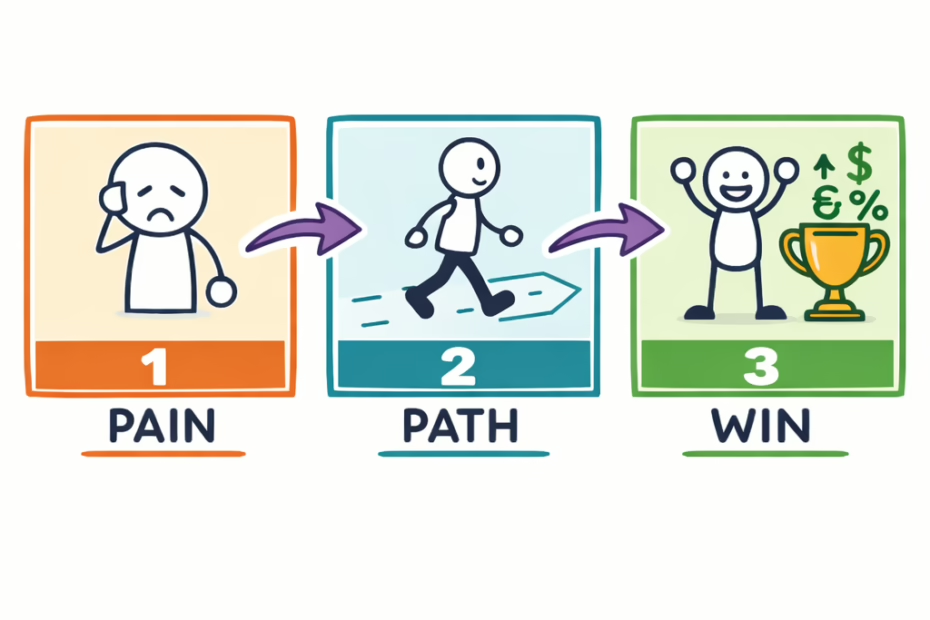
A strong business storytelling approach includes three parts. First, you show the client problem. Second, you explain how your business helped. Third, you share the result they got.
Why Stories Work in Business
Stories stick in memory longer than stats. Business storytelling creates trust fast. When prospects hear a story, they picture themselves in it.
Your business storytelling should feel real. Use names, numbers, and timelines. Specific details make your story believable and help you sell.
Most service businesses skip storytelling. They list features instead of sharing stories. Business storytelling separates you from competitors who only sell specs.
Business Storytelling vs Features
Features tell what you offer. Business storytelling shows what you deliver. Storytelling for sales moves people to act because they see themselves winning.
Your business needs both facts and stories. Start with business storytelling to build trust. Then add features to support the story you tell.
Business storytelling works for any service. Coaches, consultants, and agencies all sell better with stories. Your business should use storytelling at every touchpoint.
Why Business Storytelling Sells
Business storytelling reduces buyer fear. Prospects worry they will waste money. A story proves your business delivers real results.
Story selling works because humans trust stories. Your business storytelling gives prospects a vision of success. They see the path from problem to solution.
Business storytelling also shortens sales cycles. When prospects read your story, they qualify themselves. They know if your business fits their need before they call.
The Psychology of Business Storytelling
Stories trigger emotion faster than logic. Business storytelling activates the brain differently than data. Emotion drives buying decisions in service businesses.
Your business storytelling should focus on transformation. Show where the client started and where they ended. The gap proves your business creates change.
According to Harvard Business Review research on storytelling, narratives create neural coupling between speaker and listener. Business storytelling makes your message memorable and persuasive for prospects.
Business Storytelling Builds Authority
Every story you tell adds proof. Business storytelling positions you as the expert. Prospects see you have solved problems like theirs.
Your business should collect stories constantly. Ask clients for permission to share their wins. Business storytelling requires a library of real results to sell effectively.
Story selling becomes easier with volume. The more stories your business shares, the more trust you build. Prospects choose businesses with proven storytelling track records.
Storytelling for Sales
Storytelling for sales means using stories at every stage. Your business storytelling should appear in emails, calls, and proposals. Stories help you sell without sounding pushy.
Start every sales conversation with business storytelling. Share a quick client win that matches their situation. Storytelling for sales creates instant connection and credibility.
Your business storytelling should be brief. Aim for 90 seconds or less in live conversations. Long stories lose attention during sales calls.
Where to Use Business Storytelling
Use business storytelling in cold outreach. Your first email should include a story. Storytelling for sales gets replies because it proves results.
Add business storytelling to your website. Feature client stories on your home page. Prospects visit your site to see if your business delivers.
Include storytelling for sales in proposals. Start with a story that matches their goal. Business storytelling makes your proposal feel personalized and relevant.
Also use business storytelling in follow-ups. Share a new story in each email. Storytelling for sales keeps prospects engaged until they buy.
Business Storytelling in Discovery Calls
Discovery calls need business storytelling early. After you understand their problem, share a relevant story. Storytelling for sales helps prospects see the solution.
Your business storytelling should mirror their situation. Use details that match their industry or challenge. Close alignment makes your story feel made for them.
End discovery calls with business storytelling too. Recap their problem, then tell how your business solved it before. Storytelling for sales creates confidence to move forward.
How to Build a Brand Narrative
A brand narrative is your business story. It explains why you started and what you stand for. Brand narrative creates emotional connection beyond services you sell.
Your brand narrative should be authentic. Share real challenges you faced in business. Business storytelling works best when it feels human and honest.
Brand narrative also positions your business uniquely. It shows what makes you different from competitors. Storytelling for sales becomes easier when your brand narrative is clear.
Elements of Strong Brand Narrative
Every brand narrative needs origin. Explain why you started your business. Business storytelling begins with your founding story and mission.
Your brand narrative should include values. What does your business stand for? Story selling connects better when values align with prospects.
Brand narrative must show transformation. Explain how your business evolved and grew. Business storytelling proves you adapt and improve over time.
Include proof points in brand narrative. Share key wins and milestones. Business storytelling gains credibility with numbers and achievements.
Using Brand Narrative to Sell
Your brand narrative should appear everywhere. Add it to your About page and bio. Business storytelling through brand narrative builds trust before sales conversations.
Share brand narrative in content marketing. Write blog posts about your business journey. Storytelling for sales works when prospects know your story before they call.
Use brand narrative in speaking and networking. Your elevator pitch should tell your story. Business storytelling helps you stand out in crowded markets.
For more on connecting your brand narrative to your overall marketing storytelling strategy, explore proven frameworks that align business storytelling with business growth.
Story Selling Examples
Story selling examples help you see what works. Real business storytelling follows a simple structure. Each story selling example includes problem, solution, and result.
Look at how successful service businesses use storytelling. They share client wins on websites and social media. Business storytelling becomes proof you can sell with confidence.
Your business should study story selling examples. Notice the details they include and language they use. Business storytelling improves when you model proven examples.
Business Storytelling Example 1
A fitness coach used business storytelling to sell memberships. She shared how a client lost 40 pounds in six months. The story included the client’s starting weight and exact timeline.
Her business storytelling highlighted specific workouts and meal changes. She showed photos and quoted the client. Story selling worked because prospects saw real proof.
This business storytelling example closed 30% more sales. Prospects trusted her because they saw documented results. Storytelling for sales works when details feel real and specific.
Business Storytelling Example 2
A marketing consultant used story selling in proposals. He opened each proposal with a case from a similar business. His business storytelling included revenue numbers and timelines.
He showed how he grew one client from $10K to $50K monthly. The business storytelling detailed exact strategies he used. Prospects saw the path to their own success.
His business storytelling approach doubled close rates. Story selling eliminated doubt before objections arose. Business storytelling made the decision easy for prospects.
Business Storytelling Example 3
A salon owner used business storytelling on social media. She posted before-and-after photos with client stories. Her business storytelling included client quotes and service details.
Each story showed transformation in hair or skin. Business storytelling built trust with new prospects daily. Story selling brought 20 new clients per month from her posts.
Her business storytelling felt authentic and personal. Prospects booked because they saw real people with real results. Storytelling for sales works best when it showcases actual clients.
Expert Insight from Kateryna Quinn, Forbes Next 1000:
“Business storytelling drove my agency to $25M in client revenue. Stories sell because they remove doubt. Share real wins and watch your close rate climb.”
AI Story Writer Tool
An AI story writer tool speeds up business storytelling. You input client details and get a polished story. AI tools help service businesses create storytelling for sales content fast.
Your business storytelling needs volume to work. An AI success story writer generates multiple stories in minutes. You can sell faster when you have stories ready.
AI story writer tools follow proven storytelling formulas. They structure your business storytelling for maximum impact. Story selling becomes easier when AI handles the writing.
How AI Story Writer Tools Work
You enter client name and problem details. The AI story writer tool asks for results and metrics. Then it creates business storytelling in your brand voice.
Your AI success story writer can generate variations. Test different business storytelling angles to see what sells best. AI tools let you scale storytelling for sales without extra time.
Most AI story writer tools include templates. They guide your business storytelling with proven structures. Story selling improves when you use tested frameworks consistently.
Best Practices for AI Story Writer Tools
Always add human details to AI-generated business storytelling. Edit the output to match your voice. Story selling feels authentic only when you personalize the content.
Use an AI story writer tool for first drafts. Then refine the business storytelling with specific client quotes. AI speeds up the process but you control the final story.
Your business should use an AI success story writer to build a story library. Generate business storytelling for every major client win. Story selling works when you have stories ready for any situation.
Test your business storytelling across channels. Share AI-generated stories in emails and social posts. Track which storytelling for sales content drives the most leads.
According to Entrepreneur’s guide on storytelling for business growth, companies that use storytelling see higher engagement and conversion rates. Business storytelling backed by AI tools helps you scale success stories efficiently.
Choosing an AI Story Writer Tool
Look for AI tools built for business storytelling. Generic AI writers miss key storytelling for sales elements. Choose tools designed for service businesses that sell.
Your AI success story writer should integrate with your workflow. It should save stories for reuse across platforms. Business storytelling scales when your tool organizes content well.
Test the AI story writer tool with real client data. See if the business storytelling feels natural and persuasive. Story selling only works if the output sounds authentic.
For additional tools to support your business storytelling, explore the AI case study generator to create detailed client success stories that sell.
Quick Reference: Business Storytelling
Business storytelling is the practice of sharing real client transformations to build trust and sell services. It combines problem, solution, and result into a narrative that proves your business delivers outcomes.
Effective business storytelling includes specific details like client names, numbers, and timelines. Story selling works because prospects see themselves in the success story. Business storytelling reduces buyer fear and shortens sales cycles.
Service businesses use business storytelling in emails, proposals, calls, and content. Storytelling for sales appears at every customer touchpoint. Business storytelling scales with AI tools that generate stories fast while maintaining authenticity.
Frequently Asked Questions
What is business storytelling?
Business storytelling means sharing real client wins to build trust. You show how your business solved problems with specific examples. Storytelling for sales proves you deliver results that matter to prospects.
How do I use storytelling for sales?
Use business storytelling in every sales conversation and touchpoint. Share a client story in emails, calls, and proposals. Story selling works because it shows proof before prospects ask for it.
Why does business storytelling work?
Business storytelling works because stories trigger emotion and memory. Prospects trust stories more than claims or features. Storytelling for sales helps buyers see themselves achieving similar results with your business.
When should I share business storytelling?
Share business storytelling early in sales conversations and marketing. Use stories in cold outreach, discovery calls, and follow-ups. Story selling works best when prospects hear proof before objections arise in the sales process.
Can AI tools help with business storytelling?
Yes, an AI story writer tool speeds up business storytelling creation. AI generates draft stories you can edit and personalize. Business storytelling scales faster when AI handles the structure and you add authentic details.
How to Create Business Storytelling That Sells
- Identify your best client wins with measurable results.
- Ask clients for permission to share their business storytelling.
- Document the problem they faced before hiring your business.
- Explain the solution your business provided in clear steps.
- Highlight the specific result they achieved with numbers and timelines.
- Write the business storytelling in a simple, engaging style.
- Add a client quote to make your story selling more authentic.
- Test business storytelling across emails, proposals, and social media.
- Use an AI story writer tool to scale your storytelling for sales.
- Track which business storytelling examples close the most deals.
Conclusion: Start Selling with Business Storytelling
Business storytelling separates your service business from competitors. Stories prove you deliver real results to real clients. Storytelling for sales closes deals faster than features alone.
Your business needs a library of stories. Collect client wins and document them with details. Business storytelling becomes easier when you have proof ready to share.
Start using business storytelling today in every sales conversation. Share a client story in your next email or call. Story selling works when you commit to it consistently.
Use an AI success story writer to speed up your business storytelling. Generate professional stories in minutes and sell with confidence backed by proof.

Kateryna Quinn is an award-winning entrepreneur and founder of Uplify, an AI-powered platform helping small business owners scale profitably without burnout. Featured in Forbes (NEXT 1000) and NOCO Style Magazine (30 Under 30), she has transformed hundreds of service-based businesses through her data-driven approach combining business systems with behavior change science. Her immigrant background fuels her mission to democratize business success.