“`html
You need proof that your service works. But should you use a case study or testimonial? Most business owners pick wrong.
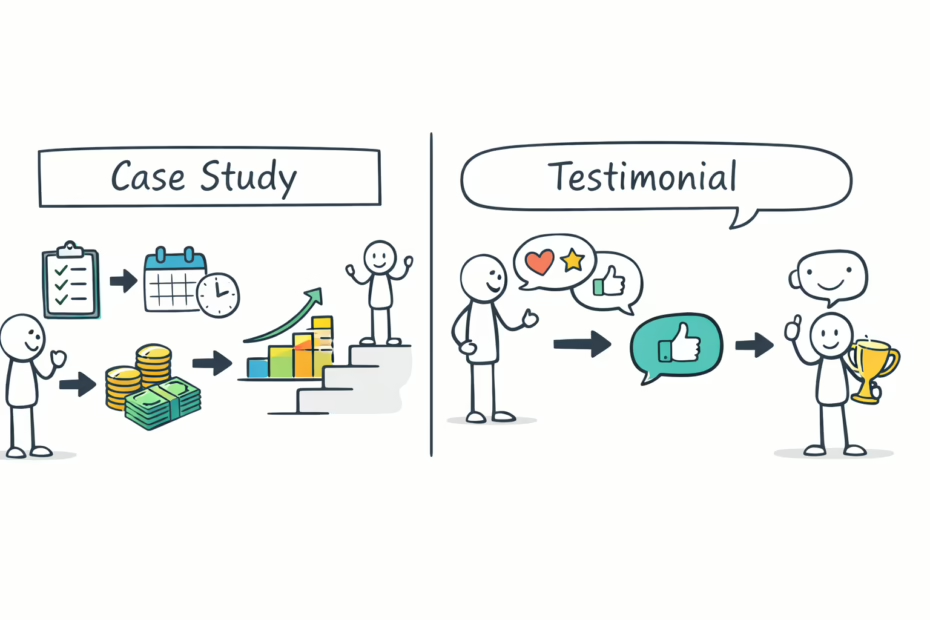
A case study tells the full story with data. A testimonial shares a quick client win. Both build trust for your business.
I built Uplify after generating $25M for clients. The case study vs testimonial comparison matters for every service business. Here’s how to choose right.
Table of Contents
- What Is a Case Study?
- What Is a Testimonial?
- Case Study vs Testimonial: Key Differences
- When to Use Each Type of Social Proof
- How to Create Both Case Studies and Testimonials
- Best Practices for Maximum Impact
What Is a Case Study?
A case study shows how your service solved a real problem. It tells the full story from start to finish.
The case study format follows a clear path. First, you show the problem your client faced. Then, you explain what you did. Finally, you share the results with numbers.
Case studies work best for complex services. When prospects need to see your full process, a case study comparison shows every step.
Core Elements of a Strong Case Study
Every case study needs these parts to work. The client background sets the stage. The problem section shows what went wrong.
Your solution explains your process in detail. The results prove your work with data. Testimonial quotes add the human touch to the case study.
Numbers make the case study vs testimonial comparison clear. A case study includes metrics like revenue growth or cost savings.
Expert Insight from Kateryna Quinn, Forbes Next 1000:
“A case study turns skeptics into buyers. When I show $25M in client results, prospects stop asking if it works.”
Types of Case Studies for Service Businesses
Different case study types serve different goals. The problem-solution case study shows before and after states clearly.
The process case study walks through your method step by step. The transformation case study highlights the total business change.
Video case studies bring stories to life better. Written case studies work for SEO and long-form content marketing.
Your AI case study generator helps you create any case study type fast. Enter your client details and get a full case study draft.
When Case Studies Drive the Most Sales
Case studies close high-value deals better than testimonials. When your service costs over $5,000, buyers need proof of your process.
B2B clients want to see case study data before signing. They need to justify the cost to their team.
Complex services require case study detail that testimonials can’t provide. The case study vs testimonial comparison shows this gap clearly.
What Is a Testimonial?
A testimonial is a short client review of your service. It captures one strong feeling or result in a few sentences.
Testimonials build trust fast without long reading time. Your prospect sees the testimonial and knows someone like them succeeded.
The testimonial format stays simple and focused. One problem, one solution, one win. That’s the power of testimonial social proof.
What Makes a Testimonial Effective
Strong testimonials include specific details about the client win. Vague praise doesn’t help in the case study vs testimonial comparison.
The best testimonial names the client and their business. It shares one clear result with a number if possible.
Short testimonials work better than long paragraphs. Three to five sentences hit the sweet spot for testimonial impact.
Video testimonials carry more weight than text alone. Seeing and hearing your client builds instant testimonial credibility.
Types of Testimonials That Convert
Result-focused testimonials share the outcome first. They start with “We increased revenue by 40%” or similar wins.
Experience testimonials describe working with your team. They highlight your process and communication style in the testimonial.
Comparison testimonials show the before state. They explain how your service changed their business reality.
Your AI review generator turns client feedback into polished testimonials. It structures their words for maximum testimonial impact.
Where to Display Testimonials
Testimonials work on every page of your website. Your homepage needs testimonials above the fold for instant proof.
Service pages need testimonials that match that specific offer. The case study vs testimonial comparison shows testimonials work for quick scanning.
Landing pages convert better with three to five testimonials. Checkout pages benefit from testimonials that reduce buying fear.
According to research on customer testimonials and trust, social proof increases conversion rates by up to 34%.
Case Study vs Testimonial: Key Differences
The case study vs testimonial comparison comes down to depth. A case study tells the full story. A testimonial shares the quick win.
Case studies need time to read and create. Testimonials take minutes to read and collect from clients.
Both case study and testimonial formats build trust differently. Understanding the comparison helps you choose the right proof type.
Length and Detail Comparison
Case studies run 800 to 2,000 words on average. They include sections for problem, solution, and results with supporting data.
Testimonials stay under 100 words typically. They capture one key point without extra background or process detail.
The case study vs testimonial length comparison affects where you use each. Case studies work for dedicated pages. Testimonials fit everywhere.
Creation Time and Effort
Creating a case study takes 3 to 6 hours. You need to interview the client and gather all performance metrics.
Writing the case study story requires skill and structure. You must present the case study comparison between before and after states.
Collecting a testimonial takes 15 to 30 minutes total. You ask one question and edit the client’s response.
The case study vs testimonial effort comparison matters for busy business owners. Start with testimonials, then create case studies for top clients.
Impact on Different Buyer Stages
Testimonials work best for early awareness stage prospects. They quickly prove your service works without requiring focus time.
Case studies convert consideration stage buyers who need details. The case study vs testimonial comparison shows case studies answer deeper questions.
Decision stage prospects read both testimonials and case studies. They want quick validation and thorough proof before buying your service.
Expert Insight from Kateryna Quinn, Forbes Next 1000:
“I use testimonials to grab attention fast. Case studies close the deal when stakes are high.”
Comparison Table: Case Study vs Testimonial
| Factor | Case Study | Testimonial |
|---|---|---|
| Length | 800-2,000 words | 50-100 words |
| Creation Time | 3-6 hours | 15-30 minutes |
| Detail Level | Full story with data | One key result |
| Best For | Complex services | Quick trust building |
| Use Case | High-value sales | All marketing |
This case study vs testimonial comparison table shows when to use each proof type. Match the format to your sales process.
When to Use Each Type of Social Proof
The case study vs testimonial decision depends on your service and buyer. Both work, but timing and placement matter for results.
Service businesses need both case studies and testimonials. The comparison shows they serve different marketing goals.
Understanding your buyer’s needs guides the case study vs testimonial choice. Match the proof type to their question.
Use Case Studies When
Your service costs over $5,000 per engagement. Buyers need to see the full case study process before committing.
The buying decision involves multiple stakeholders at once. A case study gives them proof to share internally.
Your service process is complex or unfamiliar to buyers. The case study vs testimonial comparison shows case studies educate prospects.
You need SEO content that ranks for your service terms. Case studies attract organic traffic when optimized for search.
You’re entering a new market or industry vertical. Case studies prove you understand their specific business challenges.
Use Testimonials When
You need quick social proof across all marketing channels. Testimonials fit on every page and platform easily.
Your service is straightforward and familiar to buyers. A testimonial provides enough proof without case study detail.
You’re building trust with first-time website visitors. Testimonials work faster than case studies for awareness stage.
You want to highlight different client types or results. Multiple testimonials show range better than case study examples.
Your sales cycle is short and emotional decisions matter. Testimonials connect emotionally faster in the case study vs testimonial comparison.
Research from the SBA on marketing small businesses shows customer proof significantly increases buyer confidence.
Using Both Together
The smartest approach combines case studies and testimonials. The case study vs testimonial comparison shows they complement each other.
Use testimonials on your homepage and service pages. Add case studies as dedicated resources for serious buyers.
Pull testimonial quotes from your full case studies. This maximizes the value of each client success story.
Link from short testimonials to full case study pages. This lets prospects choose their depth level.
Create a case study library and testimonial wall together. The comparison shows your range of client success.
How to Create Both Case Studies and Testimonials
Creating effective case studies and testimonials follows a clear process. The case study vs testimonial comparison shows different creation paths.
Start with happy clients who saw real results. Both case studies and testimonials need measurable client wins.
Your case study strategy should include both proof types from the start. Plan your approach before you need the content.
How to Create a Winning Case Study
First, identify your best client success story. Look for clear problems and measurable case study results.
Contact the client and explain the case study benefit. Most clients say yes when you show how it helps them too.
Interview the client using a structured case study template. Ask about their situation before, your solution, and their results.
Gather all performance data and metrics for the case study. Numbers make the case study vs testimonial comparison clear.
Write the case study following the problem-solution-results structure. Keep each section focused and include a testimonial quote.
Add visuals like charts, before-after images, or process diagrams. Visual case studies hold attention better than text alone.
Get client approval before publishing your case study anywhere. Always respect their privacy and brand guidelines.
How to Collect Powerful Testimonials
Ask for testimonials right after delivering strong results. Timing matters for authentic testimonial enthusiasm.
Make the testimonial request specific and easy to answer. Ask “What result did you see?” instead of “How was it?”
Offer to write a draft testimonial for client approval. Many busy clients appreciate this help with their testimonial.
Request permission to use their name and business name. Anonymous testimonials carry less weight in the case study vs testimonial comparison.
Ask if they’ll record a short video testimonial too. Video adds credibility that text testimonials can’t match.
Follow up if you don’t hear back within a week. Most clients want to help but forget about the testimonial request.
Tools That Speed Up Creation
AI tools transform how you create case studies and testimonials. The case study vs testimonial comparison shows AI helps with both.
Your AI case study generator turns raw client data into a polished case study. Enter the details and get a structured draft.
The AI review generator helps polish client testimonials. It reformats their words for maximum testimonial impact.
Interview recording tools capture client stories for case studies. Transcription services turn those recordings into editable case study text.
Template systems ensure every case study follows your brand style. Templates save hours on the case study vs testimonial creation comparison.
Step-by-Step Process for Both
- Identify clients with strong results for case studies or testimonials
- Reach out and explain the benefit to them clearly
- Schedule interviews for case studies or send testimonial questions
- Gather all data, metrics, and background for case study comparison
- Write the case study or edit the testimonial response
- Add visuals to case studies and format testimonials properly
- Send draft to client for approval and edits
- Publish approved case study or testimonial on your site
- Share the case study or testimonial across all marketing channels
- Track performance to improve future case study and testimonial efforts
This process works for both proof types in the case study vs testimonial comparison. Adjust the depth based on format.
Best Practices for Maximum Impact
Following best practices makes your case studies and testimonials more effective. The case study vs testimonial comparison shows different optimization strategies.
Both proof types need authenticity to build trust. Fake-sounding case studies or testimonials destroy credibility fast.
Strategic placement and formatting increase the impact of your case study and testimonial library.
Case Study Best Practices
Start your case study with the result first. Hook readers before diving into background and process details.
Use real numbers and specific metrics throughout the case study. Vague claims weaken your case study vs testimonial comparison strength.
Include direct client quotes in every case study section. These testimonial elements humanize your case study data.
Keep case study paragraphs short and scannable for busy readers. Break up long sections with subheadings and bullet points.
Add a clear call-to-action at the end of each case study. Tell readers what to do next after seeing your proof.
Optimize case studies for SEO with relevant keywords naturally. Your case study pages can rank and drive organic traffic.
According to Harvard Business Review research on customer proof, detailed case studies increase perceived expertise and trustworthiness.
Testimonial Best Practices
Keep testimonials under 100 words for maximum reading rates. Short testimonials get read in the case study vs testimonial comparison.
Always include the client’s name and business for testimonial credibility. Anonymous testimonials raise skepticism among prospects.
Add a photo of the client to every testimonial when possible. Photos increase testimonial authenticity and connection.
Place testimonials near relevant service descriptions on your site. Match the testimonial context to the page content.
Rotate different testimonials to show range of client types. Variety in testimonials proves you serve multiple markets.
Update your testimonial collection every 3 to 6 months. Fresh testimonials show current success better than old ones.
Expert Insight from Kateryna Quinn, Forbes Next 1000:
“I test every case study and testimonial placement. Small changes to proof location can double conversion rates.”
Common Mistakes to Avoid
Don’t create case studies or testimonials without client permission. Always get written approval before publishing proof content.
Avoid vague language in both case studies and testimonials. Specific details make the case study vs testimonial comparison stronger.
Never fabricate or exaggerate results in any case study. One fake case study destroys all your credibility permanently.
Don’t bury case studies or testimonials on hidden pages. Make your social proof easy to find across your site.
Avoid using only text in your case study library. Add images, videos, and data visualizations for case study impact.
Don’t ignore negative feedback when collecting testimonials. Address concerns honestly and show how you improved.
Measuring Success
Track how many people read your full case studies. Low case study completion rates signal the need for better structure.
Monitor conversion rates on pages with testimonials versus control pages. This case study vs testimonial comparison shows real ROI.
Survey new clients about which proof influenced their decision. Most will mention specific case studies or testimonials.
Count how many prospects request additional case study examples. High requests indicate you need more case study content.
Test different testimonial placements and formats to optimize results. Small tests improve testimonial performance over time.
Your AI marketing ROI calculator helps you measure the return on case study and testimonial creation time.
Quick Reference: Case Study vs Testimonial
A case study is a detailed client success story. It shows the full process from problem to solution to results.
A testimonial is a brief client review statement. It captures one key benefit or result in a few sentences.
The case study vs testimonial comparison shows case studies work for complex services. Testimonials work for quick trust building everywhere.
Use case studies for high-value sales and decision-stage buyers. Use testimonials for awareness and consideration stage prospects.
Both case study and testimonial formats build essential social proof. Service businesses need both types for maximum trust and conversions.
Next Steps: Build Your Proof Library
Start collecting testimonials from your happy clients today. Send a simple request with one specific question about their results.
Choose your best client story for your first case study. Interview them this week while the results are fresh.
Create a case study and testimonial collection system now. Make proof gathering part of your regular business process.
Your AI case study generator makes creating professional case studies fast and easy. Turn client wins into compelling proof today.
Don’t let your best results go unshared. Every case study and testimonial you create builds trust and drives more sales for your business.
Frequently Asked Questions
What is the main difference between case study vs testimonial?
A case study tells the full client story with data. It shows problem, solution, and results in detail. A testimonial shares a quick client win in a few sentences. The case study vs testimonial comparison shows case studies need more time to read and create. Both build trust for your service business.
When should I use a case study instead of testimonial?
Use a case study for complex services over $5,000. Case studies work when buyers need to see your full process. They work best for B2B sales and decision-stage prospects. The case study vs testimonial comparison shows testimonials work for quick trust building everywhere else.
How long should a case study or testimonial be?
A case study should run 800 to 2,000 words typically. Include sections for problem, solution, and results with data. A testimonial should stay under 100 words for best reading rates. The case study vs testimonial length comparison affects where you use each type.
Can I create case studies and testimonials from the same client?
Yes, pull testimonial quotes from your full case studies. This maximizes value from each client success story. Use the short testimonial on service pages and homepage. Link to the full case study for prospects who want details. The case study vs testimonial comparison shows they work together perfectly.
How do I ask clients for case studies or testimonials?
Ask right after delivering strong results for best response. Make your request specific and easy to answer quickly. Explain how the case study or testimonial helps them too. Offer to write a draft for their approval. The case study vs testimonial effort comparison shows testimonials take less client time.
“`

Kateryna Quinn is an award-winning entrepreneur and founder of Uplify, an AI-powered platform helping small business owners scale profitably without burnout. Featured in Forbes (NEXT 1000) and NOCO Style Magazine (30 Under 30), she has transformed hundreds of service-based businesses through her data-driven approach combining business systems with behavior change science. Her immigrant background fuels her mission to democratize business success.