You need clients now. So you prep your elevator pitch or your sales pitch. But which one works better?
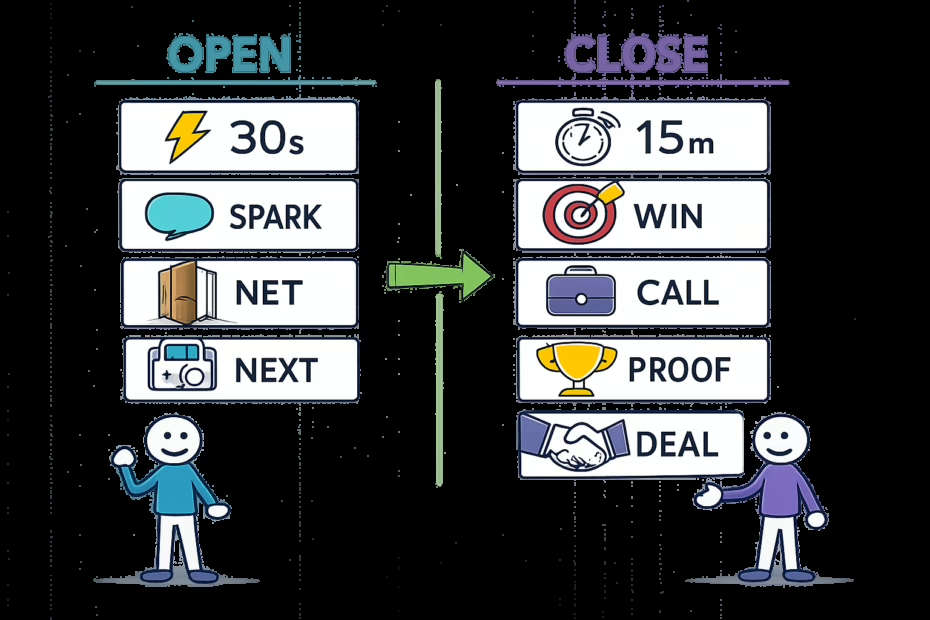
Here’s the truth: an elevator pitch and a sales pitch serve different roles. One opens doors. The other closes deals.
I built a million-dollar agency and generated $25M for clients. I’ve tested both pitch types hundreds of times. Now I’ll show you exactly when to use each pitch.
Table of Contents
- What Is an Elevator Pitch?
- What Is a Sales Pitch?
- Elevator Pitch vs Sales Pitch: Key Differences
- When to Use Each Pitch
- How to Create Your Elevator Pitch
- How to Create Your Sales Pitch
- Common Pitch Mistakes to Avoid
What Is an Elevator Pitch?
An elevator pitch is a brief introduction. It explains what you do in 30 seconds or less. The elevator pitch creates curiosity.
Your elevator pitch answers one question: “What do you do?” So it must be clear and memorable. Most service business owners need an elevator pitch for networking events.
The best elevator pitch follows a simple formula. First, state your target client. Then, describe the problem you solve. Finally, share your unique solution.
Elevator Pitch Structure
Your elevator pitch needs three core parts. Each part builds interest quickly. Also, each part keeps your pitch focused.
Here’s the elevator pitch framework I teach:
- Who: Name your ideal client in one sentence.
- Problem: State the pain point you solve.
- Solution: Explain how you help them win.
For example, a fitness studio owner might say: “I help busy moms lose weight without giving up family time. We offer 30-minute workouts that fit any schedule.”
That elevator pitch is clear. It’s short. And it makes people want to know more.
Why Your Elevator Pitch Matters
Your elevator pitch opens doors. It gets you invited to follow-up conversations. But an elevator pitch doesn’t close the sale.
Think of your elevator pitch as your first impression. You want people to remember you. You want them to ask for more details.
Service business owners use elevator pitches at networking events, conferences, and introductions. The goal is simple: start a conversation. Build curiosity. Get the next meeting.
Expert Insight from Kateryna Quinn, Forbes Next 1000:
“Your elevator pitch should create one outcome: interest. Don’t try to sell in 30 seconds. Just make them want to hear your full pitch.”
What Is a Sales Pitch?
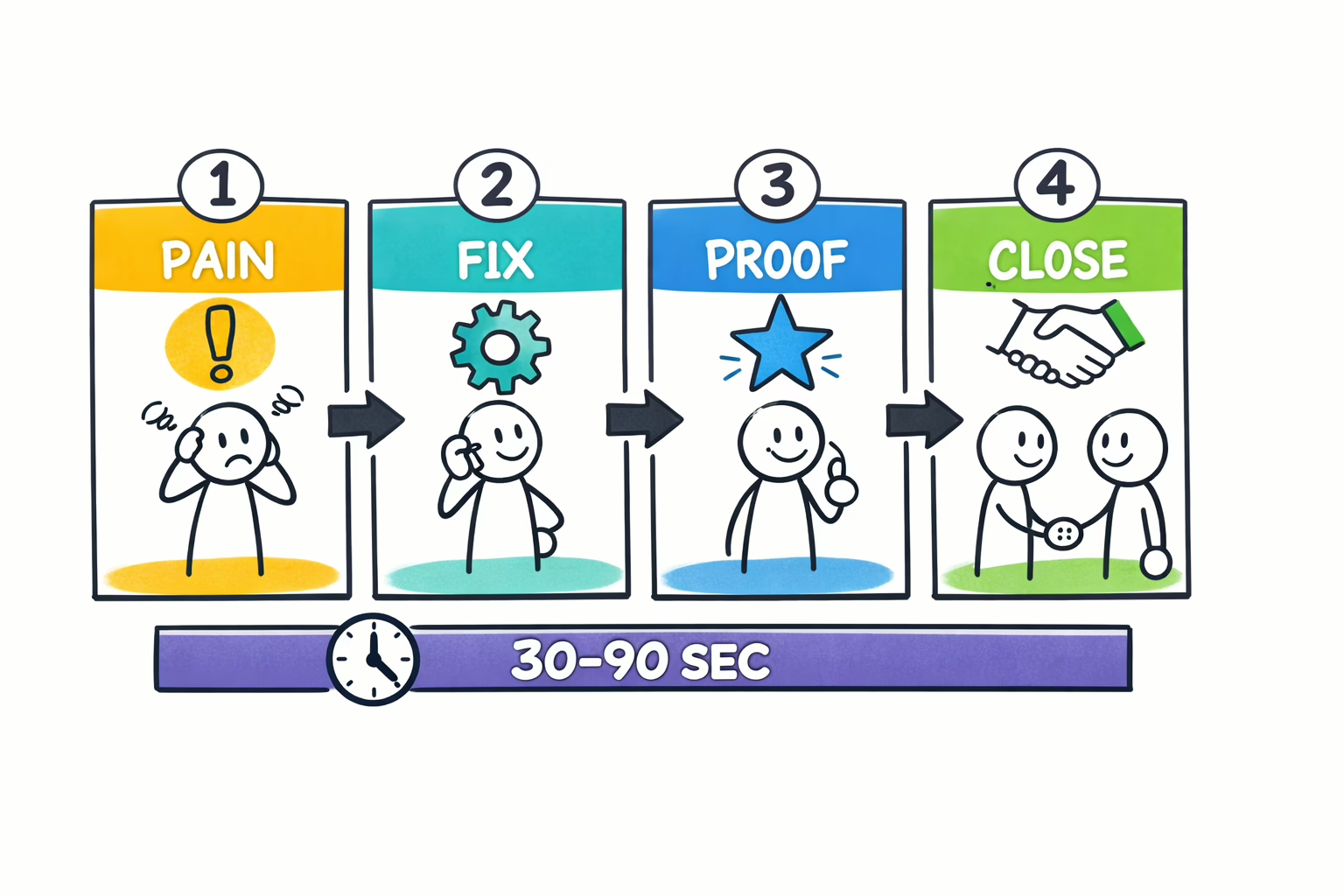
A sales pitch is a detailed presentation. It explains your offer, benefits, and proof. The sales pitch closes deals.
Your sales pitch answers this question: “Why should I buy from you?” So it must include facts, results, and a clear call to action.
Service business owners use a sales pitch during discovery calls, proposals, and client meetings. The goal is to convert interest into revenue.
Sales Pitch Structure
Your sales pitch needs five main sections. Each section builds trust and urgency. Also, each section moves the prospect closer to “yes.”
Here’s the AI sales pitch generator framework that converts:
- Hook: Open with a pain point they feel right now.
- Value: Explain the result you deliver and why it matters.
- Proof: Share case studies, testimonials, or client results.
- Offer: Detail your service, price, and what’s included.
- Close: Give a clear next step and a reason to act now.
For example, a marketing consultant might say: “Last quarter, I helped a salon owner increase bookings by 40%. I’ll do the same for you by optimizing your Google ads and local SEO. My package costs $2,000 per month. Let’s start next week.”
That sales pitch is specific. It shows proof. And it asks for the sale.
Why Your Sales Pitch Matters
Your sales pitch turns conversations into contracts. It moves prospects from interested to committed. But a sales pitch takes longer than an elevator pitch.
Think of your sales pitch as your closing argument. You want people to trust you. You want them to see the value. And you want them to take action.
Service business owners deliver sales pitches during one-on-one calls, proposal meetings, and follow-up emails. The goal is clear: close the deal. Win the client. Generate revenue.
According to the SBA’s business marketing guide, small business owners who master their sales pitch see higher conversion rates and faster growth.
Elevator Pitch vs Sales Pitch: Key Differences
The elevator pitch and the sales pitch serve different roles. So you need both pitch types in your business. But you use each pitch at different times.
Here’s a quick pitch comparison chart:
| Factor | Elevator Pitch | Sales Pitch |
|---|---|---|
| Length | 30 seconds | 5–15 minutes |
| Goal | Create curiosity | Close the deal |
| Content | Who you help, what problem, how you solve | Value, proof, offer, price, next step |
| When to Use | Networking, introductions, cold outreach | Discovery calls, proposals, client meetings |
| Outcome | Follow-up meeting | Signed contract |
Length and Timing
Your elevator pitch takes 30 seconds. Your sales pitch takes 5 to 15 minutes. So the elevator pitch fits quick conversations. The sales pitch fits scheduled meetings.
Also, your elevator pitch happens first. It opens the door. Then your sales pitch happens later. It closes the sale.
Service business owners often confuse these two pitch types. They try to sell during an elevator pitch. Or they give a short pitch during a sales call. Both mistakes cost you clients.
Content and Focus
Your elevator pitch focuses on who you help and what you solve. It’s high-level. It creates interest. But it doesn’t include pricing or details.
Your sales pitch focuses on value, proof, and action. It’s detailed. It builds trust. And it includes pricing, timelines, and next steps.
For example, an elevator pitch might say: “I help gyms fill their classes with AI-powered marketing.” A sales pitch would add: “Last month, I helped a local gym increase class attendance by 50%. Here’s how I’ll do the same for you.”
Audience and Context
Your elevator pitch works for strangers. You use it at networking events, conferences, or social media introductions. The audience is cold. They don’t know you yet.
Your sales pitch works for warm prospects. You use it during discovery calls, proposal meetings, or follow-up conversations. The audience has shown interest. They want to learn more.
So, the elevator pitch starts the relationship. The sales pitch closes it. Both pitch types are essential for service business sales success.
When to Use Each Pitch
Knowing when to use an elevator pitch versus a sales pitch changes everything. So let’s break down the right pitch for each situation.
When to Use Your Elevator Pitch
Use your elevator pitch in quick, casual settings. These are moments where you have 30 seconds or less. The goal is to spark interest.
Here are five situations where your elevator pitch works best:
- Networking events: When someone asks, “What do you do?”
- Social media bios: Your LinkedIn or Instagram profile summary.
- Cold outreach: Your opening line in a cold email or DM.
- Referral introductions: When a friend connects you to a potential client.
- Conference booths: When attendees stop by your table.
In each case, your elevator pitch creates curiosity. It gets the other person to say, “Tell me more.” That’s when you schedule a follow-up call.
When to Use Your Sales Pitch
Use your sales pitch in scheduled, one-on-one settings. These are moments where you have 5 to 15 minutes. The goal is to close the deal.
Here are five situations where your sales pitch works best:
- Discovery calls: When a prospect books time to learn about your services.
- Proposal meetings: When you present your offer and pricing.
- Follow-up emails: After an initial conversation, when you outline next steps.
- Client consultations: When you explain how you solve their problem.
- Closing calls: When you ask for the sale directly.
In each case, your sales pitch builds trust. It shows value. And it asks for commitment. That’s when you win the client.
Pitch Comparison in Action
Here’s a real-world example. Imagine you’re a marketing consultant at a business conference.
Elevator pitch moment: You meet someone at the coffee stand. They ask what you do. You say: “I help local salons double their bookings using AI marketing tools.” They reply: “Interesting! Can we talk more?”
Sales pitch moment: You schedule a call. Now you share: “Last quarter, I helped a salon owner increase bookings by 40%. Here’s the three-step system I use. My package costs $2,000 per month and includes Google ads, social media, and email campaigns. Let’s start next Monday.”
See the difference? The elevator pitch opens the door. The sales pitch closes it. Both pitch types work together. You need both to win clients.
According to Entrepreneur’s guide to business growth strategies, small business owners who master both pitch types see faster client acquisition and higher revenue.
How to Create Your Elevator Pitch
Your elevator pitch should take 30 seconds or less. So you need to be clear and focused. Here’s the exact elevator pitch formula I use.
Step 1: Identify Your Target Client
Start by naming who you help. Be specific. Don’t say “small business owners.” Say “fitness studio owners” or “marketing agency founders.”
For example: “I work with dance studio owners.” That’s clear. That’s memorable. And it makes the right people lean in.
Step 2: State the Problem You Solve
Next, name the pain point your clients feel. What keeps them up at night? What frustrates them most?
For example: “Most dance studio owners struggle to fill their classes.” That problem resonates. It shows you understand their world.
Step 3: Explain Your Unique Solution
Finally, describe how you solve the problem. Keep it simple. Focus on the outcome, not the process.
For example: “I help them fill every class using AI-powered local marketing.” That solution is clear. It shows value. And it creates curiosity.
Short Elevator Pitch Formula
Here’s the complete elevator pitch formula:
“I help [target client] solve [pain point] by [unique solution].”
Let’s build a few elevator pitch examples:
- “I help fitness trainers attract premium clients using AI marketing tools.”
- “I help accounting firms automate bookkeeping so they save 10 hours per week.”
- “I help salons increase bookings by 40% with AI-powered Google ads.”
Each elevator pitch is clear. Each pitch is under 30 seconds. And each pitch makes people ask, “How do you do that?”
If you need help writing your elevator pitch, try the AI elevator pitch generator. It creates custom pitches in seconds.
Test Your Elevator Pitch
Once you write your elevator pitch, test it. Say it out loud. Time yourself. And watch how people respond.
Your elevator pitch should feel natural. It should roll off your tongue easily. And it should make people want to hear your full sales pitch.
Expert Insight from Kateryna Quinn, Forbes Next 1000:
“Your elevator pitch is not a sales pitch. It’s a conversation starter. Keep it short. Make it clear. And always end with a call to schedule more time.”
How to Create Your Sales Pitch
Your sales pitch should take 5 to 15 minutes. So you have time to build trust and show value. Here’s the exact sales pitch formula that closes deals.
Step 1: Open with a Hook
Start your sales pitch with a pain point your prospect feels right now. This grabs attention immediately. It shows you understand their problem.
For example: “Most salon owners lose clients because their Google ads don’t convert.” That hook hits hard. It makes them think, “Yes, that’s me.”
Step 2: Explain Your Value
Next, describe the result you deliver. Be specific. Use numbers when possible. Show the outcome they’ll get.
For example: “I help salon owners increase bookings by 40% in 90 days.” That value statement is clear. It’s measurable. And it creates desire.
Step 3: Share Proof
Now, back up your value with evidence. Share case studies, testimonials, or client results. Proof builds trust.
For example: “Last quarter, I helped a local salon go from 20 bookings per week to 32 bookings per week. Here’s what we did.” Then share the details.
According to research from Harvard Business Review on sales and marketing, prospects who see proof are 70% more likely to buy.
Step 4: Present Your Offer
Next, detail your service, pricing, and what’s included. Be clear about the investment. And show what they get for their money.
For example: “My package costs $2,000 per month. It includes Google ads management, monthly strategy calls, and weekly performance reports. We guarantee results in 90 days.”
Step 5: Close with a Call to Action
Finally, give a clear next step. Ask for the sale directly. And create urgency with a deadline or limited availability.
For example: “Let’s start next Monday. I have one open spot this month. Can you commit today?”
Sales Pitch Formula
Here’s the complete sales pitch formula:
- Hook: State the pain point.
- Value: Explain the result you deliver.
- Proof: Share case studies or testimonials.
- Offer: Detail your service and price.
- Close: Ask for the sale with urgency.
This sales pitch formula works for any service business. Use it on discovery calls, in proposals, and during client meetings.
Practice Your Sales Pitch
Your sales pitch needs practice. So rehearse it until it feels natural. Record yourself. Watch the video. And refine your delivery.
Also, your sales pitch should feel like a conversation, not a script. So stay flexible. Answer questions. And adjust based on the prospect’s needs.
If you need help writing your sales pitch, the AI sales pitch generator creates custom pitches based on your business and offer.
Common Pitch Mistakes to Avoid
Most service business owners make the same pitch mistakes. So let’s fix them now before you lose another client.
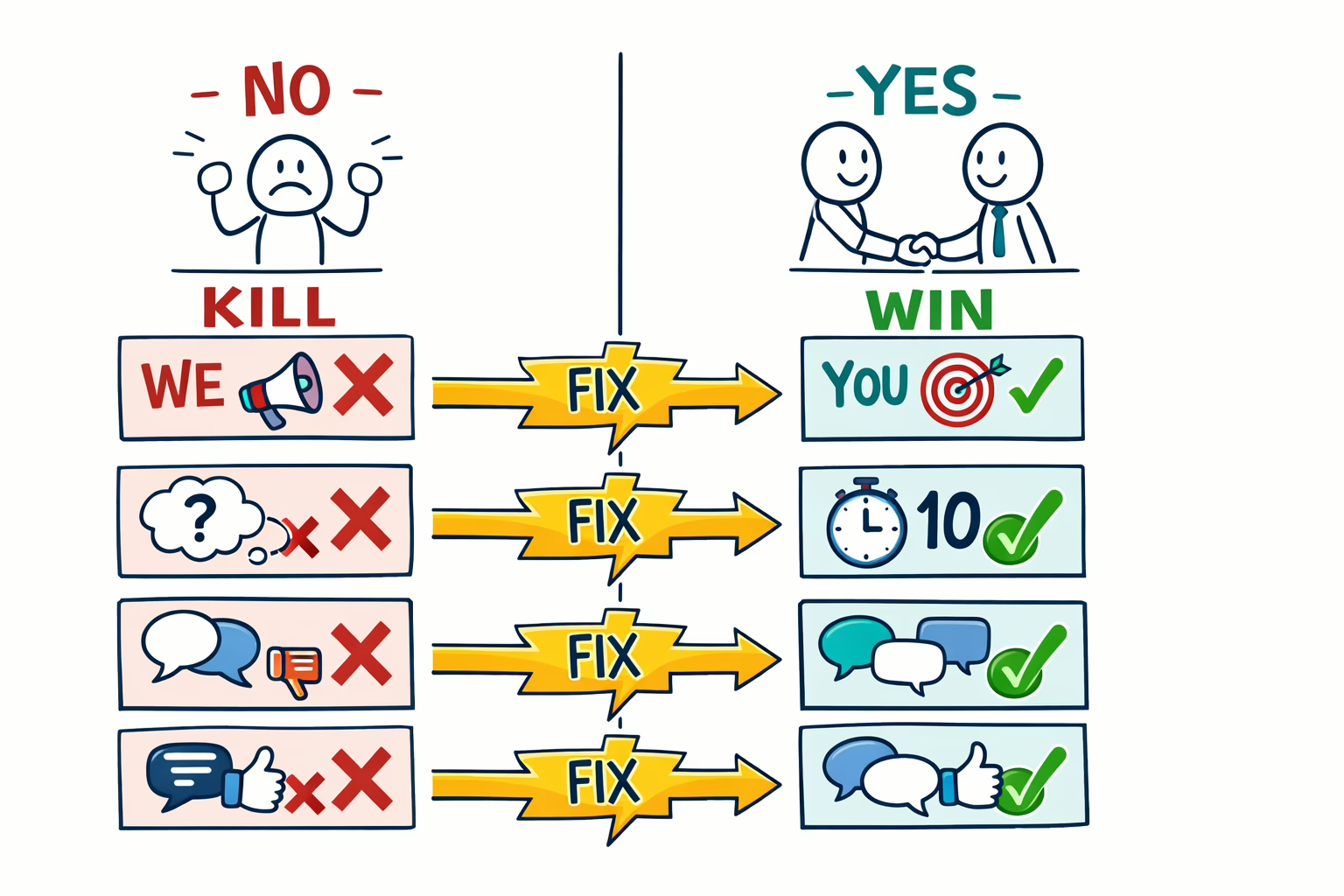
Mistake 1: Using Your Sales Pitch as an Elevator Pitch
This is the biggest pitch mistake. You meet someone at a networking event. They ask what you do. And you launch into a 10-minute sales pitch.
Stop. That’s too much too soon. Your elevator pitch should spark interest, not close the sale. Save your sales pitch for scheduled calls.
Mistake 2: Making Your Elevator Pitch Too Vague
Your elevator pitch must be specific. Don’t say, “I help businesses grow.” That’s boring. Everyone says that.
Instead, say: “I help fitness studios fill their 6 a.m. classes using AI-powered local ads.” That’s specific. That’s memorable. And that’s interesting.
Mistake 3: Forgetting Proof in Your Sales Pitch
Your sales pitch needs evidence. Don’t just say, “I can help you get more clients.” Show them how you’ve done it before.
Share case studies. Share testimonials. Share numbers. Proof builds trust. And trust closes deals.
Mistake 4: Not Practicing Your Pitch
Your pitch won’t work if you stumble through it. So practice both your elevator pitch and your sales pitch until they feel natural.
Record yourself. Listen to the playback. And refine your delivery. A smooth pitch builds confidence. And confidence wins clients.
Mistake 5: Skipping the Call to Action
Both your elevator pitch and your sales pitch need a call to action. Your elevator pitch should end with, “Let’s schedule a call.” Your sales pitch should end with, “Let’s start next week.”
Don’t leave prospects wondering what to do next. Tell them. Ask them. And close them.
Expert Insight from Kateryna Quinn, Forbes Next 1000:
“The biggest pitch mistake is trying to do too much. Your elevator pitch opens doors. Your sales pitch closes them. Know which one you need in each moment.”
Elevator Pitch vs Sales Pitch: Step-by-Step Process
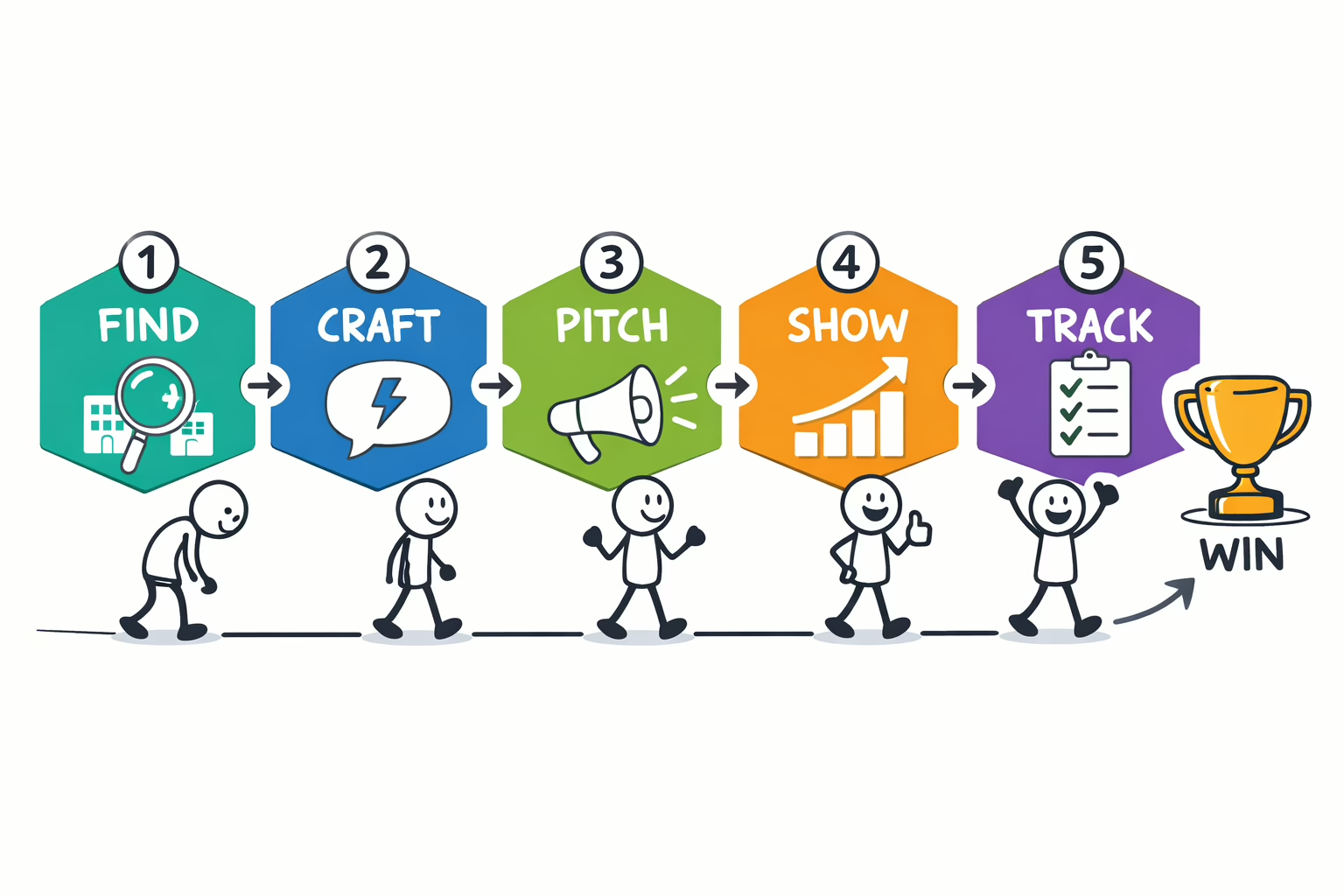
Here’s a simple 10-step process to master both your elevator pitch and your sales pitch. Follow these steps to win more clients this year.
- Write your elevator pitch: Use the formula “I help [client] solve [problem] by [solution].”
- Test your elevator pitch: Say it out loud. Time it. Aim for 30 seconds or less.
- Practice your elevator pitch: Rehearse until it feels natural and confident.
- Use your elevator pitch: Share it at networking events, on social media, and in cold outreach.
- Schedule follow-up calls: When people show interest, book a discovery call immediately.
- Write your sales pitch: Use the formula: Hook, Value, Proof, Offer, Close.
- Gather proof: Collect case studies, testimonials, and client results.
- Practice your sales pitch: Rehearse until it flows smoothly and confidently.
- Deliver your sales pitch: Use it on discovery calls, in proposals, and during client meetings.
- Ask for the sale: End every sales pitch with a clear call to action.
Follow this process. Master both pitch types. And watch your client list grow.
Quick Reference: Elevator Pitch vs Sales Pitch
An elevator pitch is a 30-second introduction that creates curiosity. A sales pitch is a 5- to 15-minute presentation that closes deals. The elevator pitch opens doors. The sales pitch closes them. Both pitch types are essential for service business success. Use your elevator pitch in quick, casual settings. Use your sales pitch in scheduled, one-on-one meetings. Master both pitch types to win more clients and grow your business faster.
Ready to Build Your Perfect Pitch?
Now you know the difference between an elevator pitch and a sales pitch. You know when to use each pitch. And you know how to create both pitch types.
So, what’s next? Start writing. Practice both pitches. And test them in real conversations. The more you use your pitch, the better it gets.
If you want help creating your perfect pitch, try the AI sales pitch generator. It builds custom pitches for your business in seconds. No guesswork. No templates. Just a pitch that works.
Also, explore more sales strategies in our sales hub. You’ll find proven systems to close more deals and grow your revenue.
Your pitch is your first impression. Make it count. Master both pitch types. And watch your business grow.
Frequently Asked Questions
What is the main difference between an elevator pitch and a sales pitch?
An elevator pitch is a brief 30-second introduction that creates curiosity. A sales pitch is a detailed 5- to 15-minute presentation that closes deals. The elevator pitch opens doors. The sales pitch closes them. Both pitch types serve different roles in your business.
When should I use an elevator pitch versus a sales pitch?
Use your elevator pitch at networking events, on social media, and in cold outreach. Use your sales pitch during discovery calls, proposal meetings, and client consultations. The elevator pitch creates interest. The sales pitch converts interest into revenue.
Can I use the same pitch for both situations?
No. Your elevator pitch and your sales pitch serve different goals. Your elevator pitch creates curiosity in 30 seconds. Your sales pitch builds trust and closes deals in 5 to 15 minutes. Use the right pitch for the right situation.
How do I create an effective elevator pitch?
Use this formula: “I help [target client] solve [pain point] by [unique solution].” Keep it under 30 seconds. Make it clear and memorable. Then practice until it feels natural. Your elevator pitch should spark interest immediately.
What should I include in my sales pitch?
Your sales pitch needs five parts: Hook, Value, Proof, Offer, and Close. Start with a pain point. Explain your result. Share case studies. Detail your service and price. Then ask for the sale directly. This formula converts prospects into clients.

Kateryna Quinn is an award-winning entrepreneur and founder of Uplify, an AI-powered platform helping small business owners scale profitably without burnout. Featured in Forbes (NEXT 1000) and NOCO Style Magazine (30 Under 30), she has transformed hundreds of service-based businesses through her data-driven approach combining business systems with behavior change science. Her immigrant background fuels her mission to democratize business success.