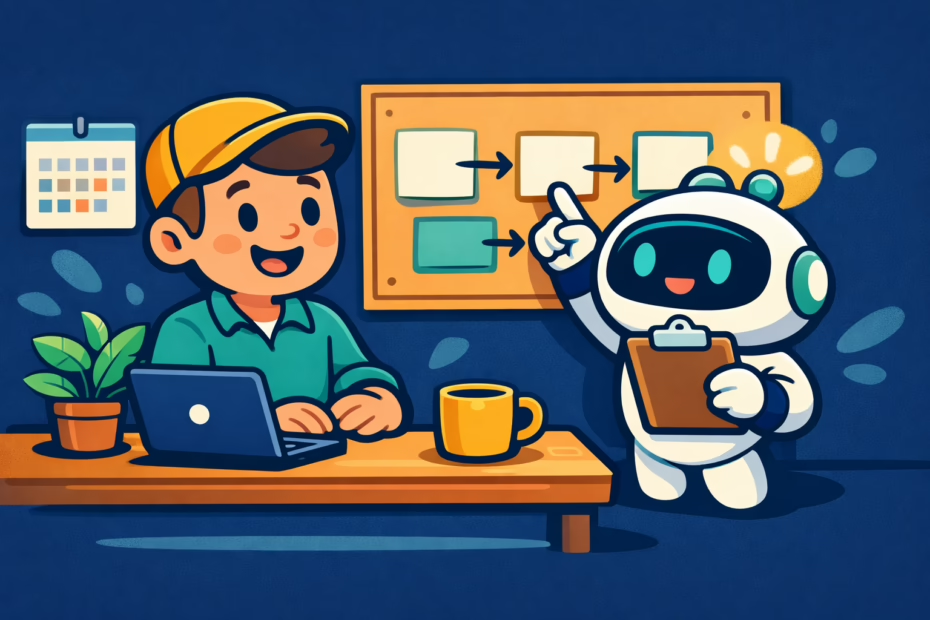
AI agents make decisions every day in your business. They choose which email to send. They pick the best ad to show. They decide when to follow up. But how do AI agents make decisions, really? Most small business owners don’t know. They use AI tools without understanding the process. This guide changes that. You’ll learn how AI agents make decisions step by step. You’ll see why it matters for your profit. You’ll discover what to watch for. I built a marketing agency that generated $25M for clients. I’ve seen AI decisions work and fail. Now I’ll show you exactly how it happens.
Understanding how AI agents make decisions helps you pick better tools. It shows you where to trust automation. It reveals when to step in yourself. This isn’t theory. It’s practical knowledge for busy business owners. You’ll learn the core concepts in plain words. You’ll get real examples from service businesses. You’ll see how Uplify applies these decision models safely. By the end, you’ll know how AI agents make decisions. You’ll spot good AI from bad. You’ll move faster with confidence in 2026.
Table of Contents
- What Are AI Agents and Why Decision-Making Matters
- How AI Agents Make Decisions: The Core Process
- Common AI Decision Models Explained
- Real Business Applications of AI Decision-Making
- How Uplify Uses AI Agents to Make Smart Decisions
- Risks, Limitations, and Safeguards
- Step-by-Step: Implementing AI Decision Systems
What Are AI Agents and Why Decision-Making Matters
AI agents are software programs that act independently. They observe your business data. They analyze patterns. They make choices. They take actions without constant human input. Think of them as smart assistants. But instead of waiting for orders, they decide what to do. This autonomy makes them powerful. It also makes understanding their decisions critical.
Decision-making separates AI agents from simple automation. Simple automation follows fixed rules. If X happens, do Y. AI agents adapt. They weigh multiple factors. They learn from outcomes. They adjust their choices over time. This flexibility helps small businesses scale. You get smart help without hiring more people.
Why Small Business Owners Need to Understand AI Decisions
You’re responsible for every action in your business. When an AI agent makes decisions, those choices represent you. They affect customer relationships. They impact revenue. They shape your brand reputation. Understanding how AI agents make decisions protects your business. It helps you set proper boundaries. It shows you where AI adds value.
Many business owners use AI tools blindly. They don’t know how decisions happen. This creates risk. An AI might choose the wrong message. It might prioritize the wrong leads. It might spend money poorly. Knowledge prevents these problems. When you understand the decision process, you configure tools correctly. You catch errors early. You use AI as a partner, not a black box.
The Business Impact of Good AI Decision-Making
Good AI decision-making saves time and increases profit. AI agents can analyze customer data faster than humans. They spot patterns you’d miss. They make choices in milliseconds. This speed creates opportunities. You respond to leads instantly. You personalize messages at scale. You optimize spending in real-time.
Research on business management best practices shows automation increases efficiency by 30-40%. But that efficiency depends on decision quality. Poor AI decisions waste resources. Good ones multiply your impact. The difference lies in understanding how AI agents make decisions. Then you can guide them properly.
Key Takeaway: AI agents make autonomous decisions that directly affect your business outcomes and customer relationships.
How AI Agents Make Decisions: The Core Process
AI decision-making follows a pattern. First, the agent perceives the environment. It collects data from your business systems. This might include customer behavior, sales data, or market signals. The agent needs accurate input. Garbage in means garbage out. Quality data creates quality decisions.
Second, the agent processes this information. It uses algorithms to find patterns. It compares current situations to past examples. It calculates probabilities. This processing happens in milliseconds. But the logic mirrors human decision-making. The agent asks: What’s happening? What worked before? What’s likely to work now?
The Perception Phase: Data Collection
AI agents make decisions based on data they can see. They don’t guess. They analyze available information. For a marketing AI, this might include email open rates. It might track click patterns. It might monitor purchase history. The agent builds a picture of each customer.
The quality of perception determines decision quality. If your data is incomplete, decisions suffer. If your tracking is wrong, the agent chooses poorly. That’s why AI agents for business need proper setup. You must connect the right data sources. You must ensure accuracy. You must update information regularly.
The Processing Phase: Analysis and Reasoning
Once an AI agent has data, it processes it. Different decision models use different methods. Some use rules. Some use probability. Some use machine learning patterns. But all processing has a goal: choose the best action.
AI reasoning systems compare options. They weigh potential outcomes. They consider constraints. A sales AI might analyze: Which lead is most likely to convert? Which message will resonate best? What time should I send it? The agent evaluates these factors simultaneously. It produces a recommendation or takes direct action.
The Action Phase: Executing Decisions
After analysis, the AI agent acts. It might send an email. It might schedule a post. It might adjust an ad bid. The action depends on the agent’s role. Some agents recommend decisions for human approval. Others execute automatically. The level of autonomy depends on your settings.
Action creates feedback. The AI observes results. Did the email get opened? Did the customer respond? Did sales increase? This feedback loops back to perception. The agent learns. It adjusts future decisions. This cycle makes AI agents improve over time. Early decisions might be basic. Later decisions become sophisticated.
Key Takeaway: AI agents make decisions through perception, processing, and action phases that create continuous learning loops.
Common AI Decision Models Explained
AI agents use different decision models. Each model fits different business needs. Understanding these models helps you pick the right AI tools. It shows you what to expect. It reveals limitations and strengths.
Rule-Based Decision Models
Rule-based models follow explicit instructions. If condition A exists, take action B. These are the simplest AI decision systems. They’re predictable. They’re transparent. You know exactly why the agent chose something. Many business workflows use rule-based models.
For example, a rule-based email agent might work like this: If a customer abandons their cart, send a reminder email. If they don’t open it in 24 hours, send a discount offer. If they still don’t respond, add them to a re-engagement campaign. These rules are clear. You set them. The AI follows them precisely.
Rule-based models work well for defined processes. They’re reliable. But they’re not adaptive. They can’t handle unexpected situations. They won’t learn from experience. They do exactly what you program. No more, no less. This makes them safe but limited.
Probabilistic Decision Models
Probabilistic models make decisions based on likelihood. They calculate the probability of different outcomes. They choose the action with the highest success chance. This adds flexibility. The AI can handle uncertainty. It can adapt to new situations.
A probabilistic marketing AI might analyze: This customer has an 80% chance of responding to offer A. They have a 40% chance with offer B. The agent chooses offer A. But if new data changes the probabilities, the agent switches. This dynamic decision-making improves results. The AI finds optimal choices as conditions change.
These models require more data. They need examples to calculate probabilities. They’re more complex than rules. But they’re still explainable. You can see why the agent chose something. You can audit the probability calculations. This transparency builds trust.
Machine Learning Decision Models
Machine learning models learn patterns from data. They don’t follow explicit rules. Instead, they identify what works. They find hidden relationships. They make predictions based on past examples. This creates powerful, adaptive AI agents.
A machine learning sales agent might analyze thousands of past deals. It spots patterns in successful conversions. It notices what messaging worked. It sees which follow-up timing closed deals. Then it applies these patterns to new leads. The agent predicts which approach will work best. It doesn’t need you to program every rule.
Machine learning excels with complex decisions. It handles multiple variables simultaneously. It adapts to changing conditions. But it’s less transparent. You might not know exactly why it chose something. It worked based on patterns, not clear logic. This requires more trust and testing.
Hybrid Decision Models
Many modern AI agents combine approaches. They use rules for core guardrails. They apply probability for optimization. They employ machine learning for pattern recognition. This hybrid approach balances predictability and adaptability. You get the best of each model.
For instance, an AI outreach agent might use rules to avoid emailing on weekends. It uses probability to choose send times. It uses machine learning to personalize messages. Each layer adds value. The combination creates sophisticated yet controllable decision-making. This is how AI agents make decisions in most business platforms today.
Key Takeaway: Different AI decision models offer varying levels of predictability, adaptability, and transparency for business needs.
Real Business Applications of AI Decision-Making
Understanding how AI agents make decisions matters most when you see real applications. Let’s explore where AI decision-making helps small businesses. These examples show practical value. They demonstrate what’s possible in 2026.
Marketing and Customer Outreach Decisions
Marketing AI agents make dozens of decisions daily. They choose which customers to target. They select the best message for each person. They decide when to send communications. They determine which channels to use. Each decision affects your marketing ROI.
A customer engagement AI analyzes behavior patterns. It sees that one customer browses at night. Another reads emails in the morning. The agent adjusts send times accordingly. It personalizes subject lines based on past opens. It segments audiences by response patterns. These decisions happen automatically. Your marketing becomes smarter without manual work.
AI agents also make budget decisions. They monitor ad performance. They shift spending to top performers. They pause underperforming campaigns. They test new variations. According to research on increasing small business revenue, automated marketing optimization can boost ROI by 20-30%. The key is letting AI handle repetitive decisions. You focus on strategy.
Sales Process and Lead Prioritization Decisions
Sales AI agents make decisions about lead quality. They score prospects based on behavior. They predict conversion likelihood. They recommend next actions. This helps small teams focus on the right opportunities. You don’t waste time on cold leads.
An AI sales agent might analyze: This lead visited your pricing page three times. They downloaded a case study. They match your ideal customer profile. The agent scores them highly. It suggests immediate follow-up. It drafts a personalized message. It schedules the outreach. These decisions move deals forward faster.
The agent also makes timing decisions. When should you follow up? What interval works best? Should you call or email? AI analyzes past successful patterns. It applies them to current opportunities. This AI outreach agent approach increases connection rates. It improves conversion without adding staff.
Content Creation and Distribution Decisions
Content AI agents decide what to create and when to publish. They analyze trending topics. They identify gaps in your content. They suggest new pieces. They optimize publishing schedules. They choose distribution channels. These decisions keep your content relevant and visible.
A content AI might notice: Your audience engages most with how-to guides. They share posts about specific problems. They ignore generic tips. The agent recommends creating more problem-solving content. It suggests publishing on Tuesday mornings. It proposes specific topics based on search data. You get a data-driven content strategy.
Distribution decisions matter too. Should you post on LinkedIn or Facebook? Should you email your list or use paid promotion? AI agents analyze past performance. They test variations. They find optimal combinations. Your content reaches more people. It drives better results. All without guessing.
Customer Service and Support Decisions
Customer service AI agents make triage decisions. They assess issue severity. They route requests appropriately. They determine response priority. They choose whether to handle something automatically or escalate to humans. These decisions improve response times and customer satisfaction.
An AI support agent receives a customer question. It analyzes the inquiry. It checks if it’s in the knowledge base. If yes, it provides an answer immediately. If no, it evaluates urgency. Critical issues go to humans. Simple requests get added to a queue. The agent decides based on context. Customers get faster help. Your team handles complex cases.
These AI reasoning systems also learn from interactions. They notice which answers satisfy customers. They track resolution rates. They identify common problems. They recommend process improvements. The decision-making gets better over time. Your support quality increases without proportional cost.
Key Takeaway: AI agents make practical decisions across marketing, sales, content, and support to increase efficiency and results.
How Uplify Uses AI Agents to Make Smart Decisions
Uplify applies AI decision-making across the platform. We use AI agents to help small business owners work smarter. Our approach balances automation with control. You get powerful assistance. You keep final authority. Let me show you how we implement decision-making AI.
Lina: AI Business Coach Decision Intelligence
Lina makes coaching decisions based on your unique situation. She analyzes your business data. She understands your goals. She knows your constraints. Then she recommends next actions. These recommendations come from processing thousands of business scenarios. Lina decides what advice fits your context.
When you ask Lina for help, she makes several decisions. What’s the core problem? What information do you need? What action will move you forward? Should she provide education or implementation steps? These decisions happen instantly. They’re personalized to you. Lina doesn’t give generic advice. She applies decision-making AI to your specific business.
Lina also decides when to challenge you. She notices patterns in your questions. She sees if you’re avoiding important work. She determines when to push versus when to support. This coaching intelligence comes from analyzing real business transformations. Lina makes decisions that help you grow. Not just feel comfortable.
AI Tool Recommendations and Workflow Decisions
Uplify’s platform makes workflow decisions for you. When you need to create something, AI agents recommend the right tool. They analyze your goal. They consider your current work. They suggest the optimal path. This saves decision fatigue. You don’t browse 40+ tools. The AI guides you directly.
For example, you want to improve lead conversion. The AI considers your situation. Do you need better messaging? A clearer offer? Stronger follow-up? The agent makes a decision. It might recommend the Irresistible Offer Builder first. Then it suggests the outreach agent. The sequence is strategic. The AI decided based on what typically works.
These workflow decisions reduce overwhelm. You don’t plan every step. The AI creates a logical sequence. It considers dependencies. It prioritizes high-impact actions. You follow a smart path. This is how AI agents make decisions to streamline your business building.
Content Personalization Decisions
Uplify AI agents make personalization decisions throughout the platform. They adapt lessons to your industry. They adjust examples to your business type. They modify language for your experience level. These decisions happen in real-time. Every user gets a slightly different experience. It matches their needs.
When you complete a lesson, AI decides what to show next. Should it reinforce this concept? Move to the next topic? Offer implementation tools? The decision depends on your progress. Your engagement level. Your completion patterns. The AI optimizes your learning path. It makes decisions that increase your success rate.
Content decisions also affect business outputs. When you use an AI tool to create marketing copy, the agent decides tone, length, and structure. It analyzes your brand voice. It considers your audience. It applies proven frameworks. Then it generates personalized content. These decisions happen instantly. You get high-quality outputs. No manual formatting needed.
Profit Amplifier Financial Decisions
The Profit Amplifier makes strategic financial decisions. It analyzes your numbers. It identifies optimization opportunities. It prioritizes recommendations. It calculates impact. These decisions guide your profit growth. They’re based on real math. Not guesswork.
When you input your business data, the AI makes several decisions. Which metric needs attention first? What change creates maximum impact? What’s a realistic target? What sequence makes sense? The Profit Amplifier decides based on financial modeling. It applies proven business principles. You get a roadmap built on smart decision-making AI.
The AI also makes tracking decisions. What should you monitor? How often? What thresholds trigger alerts? These decisions ensure you stay on track. You don’t guess what to measure. The AI knows what matters. It makes decisions that keep you focused on profit.
Key Takeaway: Uplify uses AI agents to make personalized decisions across coaching, workflows, content, and financial strategy.
Risks, Limitations, and Safeguards
AI decision-making isn’t perfect. Understanding risks protects your business. Let’s examine common problems. Then I’ll show you how to prevent them. Smart AI use requires awareness. You need to know where AI excels and where it fails.
Common AI Decision-Making Risks
AI agents can make biased decisions. If training data contains bias, decisions reflect it. For example, an AI might favor certain customer types. It might ignore others. This happens without malice. The AI learned patterns from skewed data. You must monitor for this.
Another risk is over-optimization. AI agents optimize for what you measure. But sometimes you measure the wrong thing. An email AI might maximize open rates. But open rates don’t equal sales. The agent makes decisions that boost the metric. But hurt the real goal. You need proper objectives.
AI can also make brittle decisions. It performs well in familiar situations. But unusual circumstances confuse it. The agent might choose poorly when patterns don’t match training data. It lacks human judgment. It can’t reason through truly novel situations. You need human oversight for edge cases.
Data Quality and Decision Quality
Poor data leads to poor decisions. AI agents trust their input. If your tracking is wrong, decisions will be wrong. If data is incomplete, the agent fills gaps incorrectly. If information is outdated, choices become irrelevant. Data quality determines decision quality.
You must audit your data sources. Are they accurate? Current? Complete? Representative? These questions matter for AI decision-making. Studies on business growth strategies for 2024 emphasize data-driven decision-making. But the data must be reliable. Otherwise, AI leads you astray.
Set up data validation processes. Check key metrics manually. Verify AI outputs against reality. Compare agent decisions to human judgment. This creates feedback. It catches data problems. It improves decision accuracy over time.
Transparency and Explainability Challenges
Some AI models are black boxes. You see the decision. You don’t see the reasoning. This creates problems. How do you trust a choice you don’t understand? How do you improve something you can’t explain? Lack of transparency limits AI effectiveness.
Demand explainable AI when possible. Tools should show why they chose something. What factors mattered? What weights applied? What alternatives existed? This transparency builds trust. It enables learning. It lets you refine the decision process.
When using complex models, add testing layers. Compare AI decisions to expected outcomes. Run simulations. Check edge cases. This reveals how the agent thinks. It shows decision patterns. Even if you can’t see inside the algorithm, you can understand its behavior.
Safeguards and Best Practices
Implement decision boundaries. Set limits on what AI can do autonomously. Require approval for high-stakes choices. Keep humans in the loop for critical decisions. This prevents runaway automation. You maintain control while gaining efficiency.
Use staged rollouts. Don’t turn on full AI decision-making immediately. Start with recommendations. Review them. Build confidence. Then increase autonomy gradually. This phased approach reduces risk. It lets you catch problems early.
Create feedback loops. Track AI decision outcomes. Measure results. Compare to goals. Adjust when needed. AI agents improve with feedback. Your monitoring makes them smarter. It also protects against drift. Decisions stay aligned with business objectives.
Combine AI with human expertise. AI handles volume and speed. Humans provide judgment and creativity. This partnership works best. The AI makes routine decisions. Humans handle complex ones. Together, you get efficiency and quality. This is how AI agents make decisions safely in real businesses.
Key Takeaway: AI decision risks include bias, over-optimization, and opacity; safeguards require boundaries, testing, and human oversight.
Step-by-Step: Implementing AI Decision Systems
Ready to use AI decision-making in your business? Follow this process. It works for small businesses. It reduces risk. It builds results. I’ve used these steps to implement AI across hundreds of client businesses. Now you can apply them.
Step 1: Identify Decision Points
Map your business processes. Where do decisions happen? What choices repeat daily? Which decisions take the most time? List them all. This creates your opportunity inventory. You can’t automate what you haven’t identified.
Prioritize based on frequency and impact. Some decisions happen often but matter little. Others happen rarely but affect profit significantly. Focus on high-frequency, high-impact decisions first. These give the best ROI. They’re also easier to measure.
Step 2: Define Decision Criteria
For each decision point, specify criteria. What factors matter? What goals drive the choice? What constraints exist? Write clear definitions. If you can’t define it, AI can’t automate it. Good criteria make good decisions.
Include success metrics. How will you know if the decision was good? What outcomes matter? Define these upfront. They guide AI configuration. They enable measurement. They let you improve over time.
Step 3: Assess Data Availability
AI agents need data to make decisions. Check what you have. Is it sufficient? Accurate? Accessible? If data is missing, you must collect it first. No shortcuts exist. Quality data enables quality decisions.
Identify data gaps. What information would improve decisions? Can you capture it? How? Make a plan to fill critical gaps. Sometimes you need new tracking. Sometimes you need integrations. Sometimes you need manual collection initially. Do what’s necessary.
Step 4: Choose the Right AI Decision Model
Match the model to your need. Simple, predictable decisions? Use rule-based models. Complex pattern recognition? Try machine learning. Uncertain outcomes? Apply probabilistic models. The right model improves results dramatically.
Consider your comfort level too. Do you need to understand every decision? Choose transparent models. Can you trust black boxes? More options open up. Balance sophistication with comprehension. Both matter for business success.
Step 5: Start with Recommendations, Not Automation
Don’t automate immediately. Have AI recommend decisions first. Review them. Compare to what you’d choose. Build confidence. Understand the agent’s thinking. This learning phase is critical. It prevents costly mistakes.
Track recommendation acceptance rates. Which suggestions do you follow? Which do you reject? Why? This data improves the AI. It also shows you where automation makes sense. High acceptance? Automate. Low acceptance? Keep human review.
Step 6: Set Clear Boundaries and Guardrails
Define what AI can decide alone. What requires approval? What’s completely off-limits? These boundaries protect your business. They prevent AI from making inappropriate choices. They give you peace of mind.
Include override capabilities. You should always be able to stop or reverse AI decisions. Emergency controls matter. They’re your safety net. Build them before you need them. Then you can use AI confidently.
Step 7: Implement Monitoring and Feedback
Create dashboards that track AI decisions. What did the agent choose? Why? What happened? Monitor continuously. Don’t set and forget. AI needs ongoing attention. It’s a tool, not a replacement for management.
Establish review cadences. Daily for new implementations. Weekly for stable systems. Monthly for mature processes. Regular reviews catch drift. They identify improvement opportunities. They keep AI aligned with goals.
Step 8: Measure and Optimize
Compare AI decisions to business outcomes. Did sales increase? Did costs decrease? Did quality improve? Measure real impact. Metrics tell the truth. They show whether AI decision-making works for you.
Use data to optimize. Which decisions perform best? Which need adjustment? What patterns emerge? Feed insights back to the AI. Adjust parameters. Refine rules. This continuous improvement makes AI better. Your autonomous decision models grow smarter.
Step 9: Scale Gradually
Don’t automate everything at once. Start with one process. Perfect it. Then add another. Gradual scaling reduces risk. It builds expertise. It creates wins that fund further investment. Slow and steady wins this race.
Document learnings as you go. What works? What doesn’t? Why? This knowledge speeds future implementations. It helps you make better choices. It turns experience into competitive advantage. Your AI decision systems become a real asset.
Step 10: Maintain Human Expertise
AI handles routine decisions. Humans handle strategic ones. Keep your team sharp. Invest in their skills. AI doesn’t replace judgment. It amplifies it. The best results come from human-AI collaboration. Build that partnership intentionally.
Train your team on AI capabilities. They should understand how agents make decisions. This knowledge improves oversight. It enables better delegation. It creates trust. Your people become AI-literate. This multiplies the value of both.
Key Takeaway: Successful AI decision implementation requires careful planning, gradual rollout, continuous monitoring, and human-AI partnership.
Quick Reference: What Is AI Decision-Making?
AI decision-making is the process by which software agents analyze data, evaluate options, and choose actions without human intervention. These autonomous decision models use various approaches—from simple rules to complex machine learning—to select optimal choices. AI agents make decisions by perceiving environmental data, processing it through reasoning systems, and executing actions based on programmed objectives. The quality depends on data accuracy, model sophistication, and proper configuration. Effective AI decision-making combines automation speed with human oversight, creating systems that handle routine choices while escalating complex scenarios. This enables small businesses to scale operations, personalize customer experiences, and optimize resources without proportionally increasing staff.
Conclusion: Making AI Decisions Work for Your Business
You now understand how AI agents make decisions. You’ve seen the core process. You know different models. You’ve learned real applications. You’ve discovered risks and safeguards. This knowledge transforms AI from mystery to tool. You can use it confidently.
AI decision-making helps small businesses compete. It gives you enterprise capabilities. It creates efficiency without hiring. It personalizes at scale. But only when you use it wisely. Understand the technology. Set proper boundaries. Monitor outcomes. Maintain human judgment. This balanced approach wins.
Start small. Pick one decision point. Implement AI there. Learn the process. Build confidence. Then expand. Each success funds the next. Each lesson makes you smarter. Over time, AI decision systems become your competitive edge. They free your time. They improve results. They make profit more predictable.
Uplify provides the tools and knowledge you need. Our AI agents make decisions transparently. Our platform guides implementation. Our community shares experiences. You’re not figuring this out alone. We’ve built the system. You apply it to your business. Together, we make AI decision-making practical and profitable.
The future belongs to businesses that use AI well. Not businesses that fear it. Not businesses that blindly trust it. Businesses that understand it. That use it strategically. That combine AI speed with human wisdom. Be that business. Start applying what you learned today. Your decisions will improve. Your business will grow.
Frequently Asked Questions
What is AI decision-making in simple terms?
AI decision-making is when software chooses actions based on data analysis. The AI agent observes information, processes patterns, and selects the best option. It happens without human input for each choice. Think of it as a smart assistant. But instead of asking you every time, it decides and acts. This autonomy saves time. It scales your operations. The agent learns what works. Then it applies those lessons automatically.
How do AI agents make decisions differently than humans?
AI agents make decisions faster and more consistently than humans. They process huge data volumes instantly. They don’t get tired or emotional. They apply logic systematically. But AI lacks context and creativity. It can’t handle truly novel situations well. It doesn’t understand nuance like humans do. The best approach combines both. AI handles routine, data-heavy decisions. Humans handle complex, judgment-based ones. Together, you get speed and wisdom.
Can AI make wrong decisions?
Yes, AI agents make wrong decisions regularly. Bad data leads to bad choices. Poorly defined goals create misdirection. Unfamiliar situations confuse algorithms. AI also amplifies existing biases in training data. That’s why monitoring matters. You must check outcomes. You must provide feedback. You must maintain oversight. AI improves with correction. But it needs human guidance. Never trust AI blindly. Always verify critical decisions.
What types of business decisions should I automate with AI?
Automate high-frequency, low-risk decisions first. Customer segmentation works well. Email send timing too. Basic lead scoring is ideal. Content scheduling fits perfectly. Price optimization can work. Start with decisions that happen often. That have clear criteria. That use available data. Where mistakes are recoverable. Avoid automating strategic choices. Keep human judgment on brand direction. On major investments. On relationship management. Let AI handle volume. You handle vision.
How can I tell if an AI’s decision was good?
Measure outcomes against your goals. Did the decision increase conversions? Reduce costs? Improve satisfaction? Compare AI choices to baselines. Track performance over time. Also check the reasoning. Can you explain why the AI chose that? Does the logic make sense? Good decisions have both results and rationale. If outcomes are positive but reasoning is opaque, add monitoring. If logic is sound but results poor, check your goals. Alignment between process and outcomes indicates quality AI decision-making.
Do I need technical expertise to use AI decision systems?
No, modern AI platforms handle the technical complexity. You need business knowledge, not coding skills. You must understand your processes. You should know your data. You need clear goals. The platform does the technical work. Your job is configuration and oversight. Set objectives. Define boundaries. Monitor results. Provide feedback. This is business management, not programming. Platforms like Uplify make AI accessible. You focus on strategy. The AI handles execution.
How does Uplify ensure AI makes safe decisions?
Uplify uses multiple safeguards. We set clear decision boundaries. We require human approval for critical choices. We provide transparent reasoning. You see why the AI chose something. We track all outcomes. We enable easy overrides. Our AI agents learn from your feedback. They improve over time. We also limit scope. AI handles specific tasks, not everything. This focused approach reduces risk. You maintain control. The AI amplifies your judgment. It doesn’t replace it.
How to Implement AI Decision-Making: 10-Step Process
- Map all decision points in your business processes and workflows systematically.
- Prioritize decisions based on frequency, impact, and available data quality.
- Define clear criteria and success metrics for each decision type.
- Audit your data sources to ensure accuracy, completeness, and accessibility.
- Choose appropriate AI decision models matching your needs and comfort level.
- Start with AI recommendations rather than full automation to build confidence.
- Set explicit boundaries, guardrails, and override capabilities before deployment.
- Implement monitoring dashboards and establish regular review cadences for all AI decisions.
- Measure real business outcomes and optimize based on performance data continuously.
- Scale gradually from one process to others while documenting learnings and maintaining expertise.

Kateryna Quinn is an award-winning entrepreneur and founder of Uplify, an AI-powered platform helping small business owners scale profitably without burnout. Featured in Forbes (NEXT 1000) and NOCO Style Magazine (30 Under 30), she has transformed hundreds of service-based businesses through her data-driven approach combining business systems with behavior change science. Her immigrant background fuels her mission to democratize business success.