Your business looks like every other one in your market. Potential clients can’t see what makes you different. So they choose your competitors instead.
A unique value proposition changes that. It shows clients why you’re the only choice. When done right, your unique value proposition makes price comparisons irrelevant.
I built a million-dollar agency serving hundreds of clients. The businesses that grew fastest had crystal-clear unique value propositions. The ones that struggled all sounded the same.
This guide shows you how to craft a unique value proposition that makes competitors irrelevant. You’ll learn what works, what doesn’t, and how to stand out in any market.
Table of Contents
- What Is a Unique Value Proposition
- Why Your Unique Value Proposition Matters
- Common Unique Value Proposition Mistakes
- Research Your Competitors and Market
- Build Your Unique Value Proposition
- Test and Refine Your Value Proposition
- Frequently Asked Questions
What Is a Unique Value Proposition
A unique value proposition is a clear statement. It explains why clients should choose you over competitors. Your unique value proposition answers one question: “Why you?”
Most service businesses skip this step. They list features instead of benefits. They use generic language that any competitor could claim.
A strong unique value proposition is specific. It names your ideal client. It states their problem clearly. Then it shows your unique solution.
The Three Parts of Every Unique Value Proposition
Your unique value proposition needs three elements. Each one must be clear and specific. Skip any part and your value proposition fails.
First, name who you serve. “Small businesses” is too broad. “Fitness studio owners with 50-200 members” is specific. The more specific your audience, the stronger your unique value proposition becomes.
Second, state the problem you solve. Your unique value proposition must address real pain. Generic problems create generic positioning. Specific problems attract ideal clients.
Third, explain your unique solution. This is where most businesses fail. They describe what they do instead of how they’re different. Your unique value proposition must show what competitors can’t or won’t do.
Expert Insight from Kateryna Quinn, Forbes Next 1000:
“Your unique value proposition isn’t about being better. It’s about being different. When I started my agency, I didn’t claim to be the best. I showed clients exactly what made us unique.”
What Makes a Value Proposition Unique
A unique value proposition stands out from competitors. It can’t be copied or claimed by others. Your unique positioning comes from your specific approach, process, or guarantee.
Many service businesses try to compete on price. That’s not a unique value proposition. Price is the weakest differentiator because any competitor can undercut you tomorrow.
Your unique value proposition might come from your process. For example, the AI value proposition builder helps you create positioning based on your actual business model. It identifies what makes your approach unique.
Other sources of unique positioning include your target market, your delivery method, your timeline, or your results guarantee. The key is that competitors can’t easily copy your unique value proposition.
Why Your Unique Value Proposition Matters
Without a unique value proposition, you compete on price. Clients see you as interchangeable with competitors. They choose the cheapest option because they see no difference.
A clear unique value proposition changes the buying decision. Clients stop comparing prices. They start evaluating who solves their specific problem best.
According to SBA guidance on business planning, defining your unique position is critical before launch. Yet most established businesses still lack a clear unique value proposition.
How a Unique Value Proposition Affects Your Business
Your unique value proposition impacts every part of your business. It determines which clients you attract. It shapes your marketing message. It influences your pricing power.
Businesses with strong unique value propositions close sales faster. They spend less time convincing prospects. Clients either see the fit immediately or self-select out.
Your unique value proposition also affects team clarity. When everyone knows what makes you unique, they can communicate it consistently. Your brand messaging becomes stronger across all touchpoints.
Most importantly, a unique value proposition lets you charge premium prices. Clients pay more for specialists who solve specific problems. Generic providers compete on price.
The Cost of a Weak Value Proposition
A weak unique value proposition costs you clients every day. Prospects can’t see why you’re different. So they choose competitors or delay their decision.
Without clear unique positioning, your marketing struggles. You waste money on ads that attract wrong-fit clients. Your message fails to resonate because it’s too generic.
Sales conversations take longer when your unique value proposition is unclear. Prospects ask about price first. They compare you to competitors on features alone.
The biggest cost is opportunity. Every client who chooses a competitor because they had a clearer unique value proposition is revenue you’ll never recover. Your business growth stalls because your positioning is weak.
Common Unique Value Proposition Mistakes
Most service businesses make the same mistakes with their unique value proposition. These errors kill conversion and weaken positioning. Avoid them and your unique value proposition will stand out.
Listing Features Instead of Benefits
Features describe what you do. Benefits explain why clients care. Your unique value proposition must focus on benefits, not features.
Bad example: “We offer 24/7 support and weekly reports.” That’s a feature list. Every competitor can claim the same thing. It’s not a unique value proposition.
Better example: “You’ll know exactly what’s working in your business every Monday morning, so you can make decisions with confidence.” That’s a benefit. It shows the outcome clients get.
Your unique value proposition should make clients picture their life after working with you. Features make them picture your process. Focus your unique value proposition on transformation, not transaction.
Being Too Broad or Generic
Generic language kills your unique value proposition. Words like “quality,” “professional,” and “excellent” mean nothing. Every competitor uses them. They don’t differentiate you.
A unique value proposition must be specific. Instead of “We help businesses grow,” say “We help fitness studios add 30 new members in 90 days without spending more on ads.”
The more specific your unique value proposition, the more it resonates. Yes, you might exclude some prospects. That’s the point. Your unique value proposition should attract ideal clients and repel wrong-fit ones.
Many businesses fear being too specific. They worry about limiting their market. But a narrow unique value proposition actually attracts more clients because it speaks directly to their situation.
Focusing on You Instead of Clients
Your unique value proposition isn’t about you. It’s about your clients and their problems. Yet most businesses make their unique value proposition all about themselves.
Bad example: “We have 20 years of experience and a certified team.” That’s about you. Clients don’t care about your credentials in your unique value proposition. They care about their results.
Good example: “You’ll never waste another dollar on marketing that doesn’t work.” That’s about the client. Your unique value proposition addresses their frustration directly.
Research from Harvard Business Review on value elements shows clients make decisions based on their perceived value, not your features. Your unique value proposition must speak to their needs first.
Copying Your Competitors
Looking at competitors for inspiration makes sense. Copying their unique value proposition destroys yours. If your value proposition sounds like theirs, it’s not unique.
Many service businesses use industry jargon in their unique value proposition. They assume it makes them sound professional. Instead, it makes them sound identical to competitors.
Your unique value proposition should challenge industry norms, not repeat them. Find what competitors all do the same. Then do it differently. That’s where your unique positioning lives.
For example, if every competitor promises “fast turnaround,” your unique value proposition might emphasize thoroughness instead. Stand out by standing differently, not by standing taller.
Research Your Competitors and Market
You can’t create a unique value proposition without knowing your competition. Research shows you what’s already claimed. It reveals gaps you can fill with your unique positioning.
Analyze Competitor Value Propositions
Start by listing your top five competitors. Visit each website and note their value proposition. Most will have it on their homepage or about page.
Look for patterns in competitor value propositions. Do they all emphasize speed? Do they focus on price? Whatever most competitors claim, that’s what you should avoid in your unique value proposition.
Notice what competitors don’t say. These gaps become opportunities for your unique value proposition. If no one mentions a specific client problem, that’s your chance to own that space.
Create a simple spreadsheet. List each competitor and their value proposition. Then note what makes each one similar to the others. Your unique value proposition will do the opposite.
Interview Your Best Clients
Your best clients already know your unique value proposition. They chose you for specific reasons. Ask them why they picked you over competitors.
Schedule 15-minute calls with five top clients. Ask three questions: Why did you choose us? What almost made you choose a competitor? What would you tell a friend about us?
Their answers reveal your true unique value proposition. Often it’s different from what you think makes you unique. Clients see value you overlook because you’re too close to your business.
Pay attention to the exact words clients use. Their language belongs in your unique value proposition. Don’t translate it into business jargon. Use their phrases to connect with prospects.
Identify Market Gaps
Every market has underserved segments. These gaps are perfect for building a unique value proposition. Look for problems competitors ignore or audiences they overlook.
Study industry forums and groups. What do people complain about? What needs do they mention repeatedly? If competitors aren’t addressing these issues, your unique value proposition should.
The brand messaging framework helps you identify positioning opportunities. It shows where your message can stand apart from competitors.
Consider delivery methods too. If all competitors work hourly, a unique value proposition around fixed pricing stands out. If they all require long contracts, offer flexible terms as your unique differentiator.
Build Your Unique Value Proposition
Now you’re ready to craft your unique value proposition. This process requires clear thinking and ruthless editing. Every word must earn its place in your unique value proposition.
Start with Your Ideal Client
Your unique value proposition begins with who you serve. Get specific about your ideal client. Demographics aren’t enough. You need psychographics too.
Instead of “small business owners,” try “fitness studio owners struggling to fill classes despite great instructors.” Your unique value proposition works when it describes one person perfectly, not everyone vaguely.
Write a paragraph about your ideal client. Include their biggest frustration, their failed attempts to solve it, and what success would mean to them. This clarity shapes your entire unique value proposition.
The more specific your client description, the more powerful your unique value proposition becomes. You want prospects to think “This is exactly me” when they read your unique value proposition.
Define the Transformation You Create
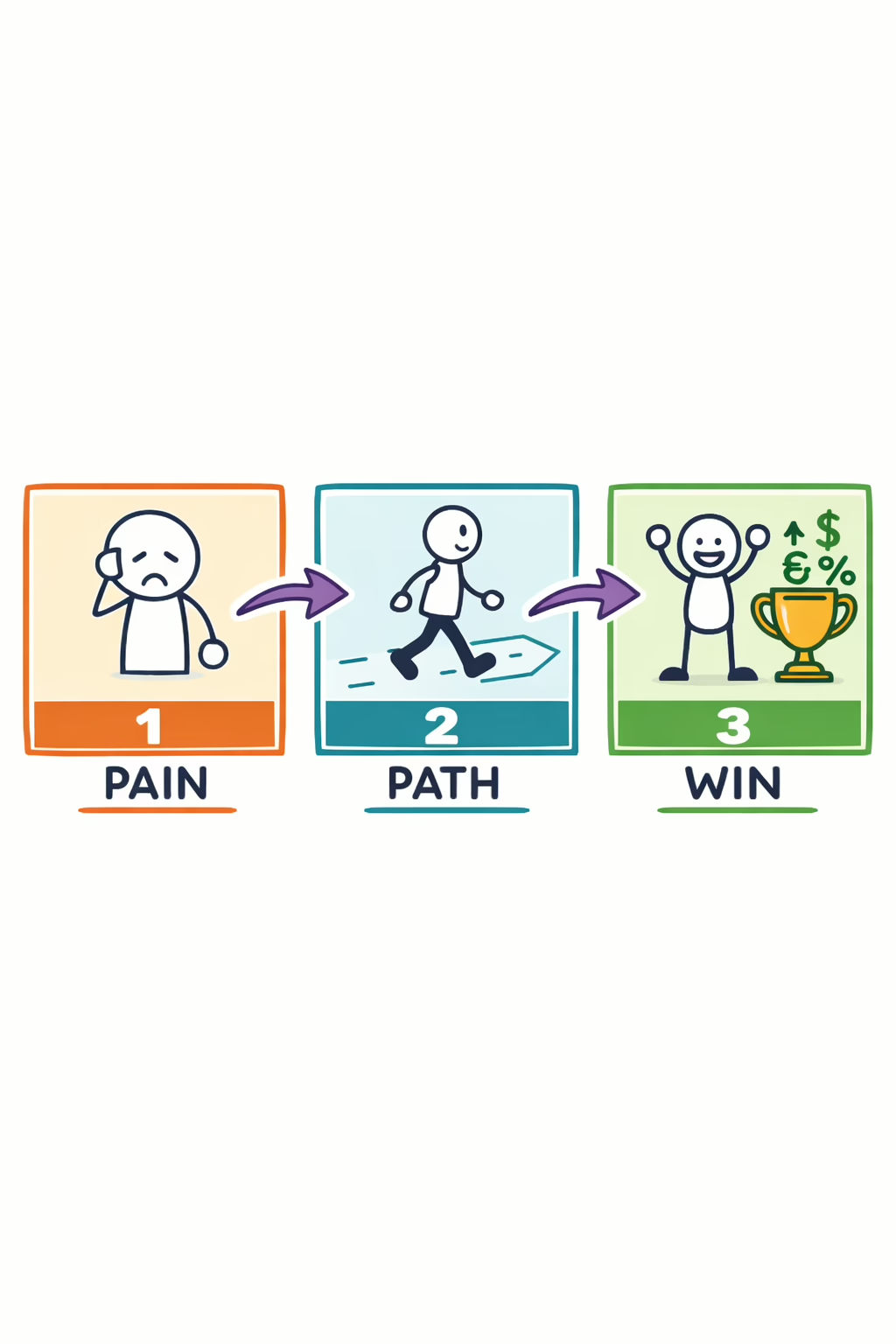
Your unique value proposition is really about transformation. Clients don’t buy your service. They buy the change your service creates in their life or business.
Describe the “before” and “after” states clearly. Your unique value proposition should paint a picture of both. The contrast between them is what sells your service.
For example: “From wondering if you’ll make payroll to confidently investing in growth.” That’s transformation. That’s what belongs in your unique value proposition.
Be specific about the outcome. Vague promises weaken your unique value proposition. Measurable results strengthen it. If possible, include numbers in your unique value proposition.
Articulate Your Unique Approach
Now explain how you create that transformation differently than competitors. This is the core of your unique value proposition. It’s what makes you the only choice, not just a good choice.
Your unique approach might be your process, your guarantee, your speed, or your specialization. Whatever it is, it must be defensible. Competitors shouldn’t be able to copy your unique value proposition easily.
Use the AI value proposition builder to test different angles. It helps you see which positioning makes your unique value proposition strongest against competitors.
Don’t just claim to be different. Explain the mechanism that makes you different. Your unique value proposition should show clients exactly why your approach produces better results.
Write Your One-Sentence Value Proposition
Distill everything into one sentence. This is your core unique value proposition. It should be clear, specific, and compelling. Every word must work hard.
Use this formula: “We help [specific client] [achieve specific outcome] by [unique approach] so [ultimate benefit].” Fill in each bracket with your specific details to create your unique value proposition.
Example: “We help fitness studio owners add 30 members per quarter without increasing ad spend by converting more trial members into long-term clients.”
Test your unique value proposition with the elevator test. Can you say it in 10 seconds? Does someone immediately understand what you do and for whom? If not, simplify your unique value proposition.
Expand into Supporting Points
Your one-sentence unique value proposition needs support. Create three bullet points that prove your claim. Each point should reinforce why your unique value proposition is credible.
These supporting points might include your process, your results, or your guarantees. They give substance to your unique value proposition without cluttering it.
Keep each supporting point short. One sentence maximum. They should expand your unique value proposition, not complicate it. Think of them as evidence that your unique value proposition is true.
For example, if your unique value proposition promises results in 90 days, your supporting points might explain the three-phase process that makes that timeline possible.
Test and Refine Your Value Proposition
Your first draft won’t be perfect. No unique value proposition is. Testing reveals what resonates and what confuses. Then you refine your unique value proposition until it converts.
Test Your Value Proposition with Real Prospects
Show your unique value proposition to people who match your ideal client profile. Watch their reaction. If they don’t immediately understand it, your unique value proposition needs work.
Ask three questions: What do you think we do? Who do you think we help? Why would someone choose us? Their answers tell you if your unique value proposition is clear.
If prospects misunderstand your unique value proposition, you need simpler language. If they can’t remember it, it’s too complex. A strong unique value proposition sticks after one reading.
Test your unique value proposition in sales calls too. Notice which parts prospects respond to. Those elements should be emphasized in your final unique value proposition.
Compare Conversion Rates
Put your new unique value proposition on your website. Track conversion rates for 30 days. Compare them to your previous performance. Numbers don’t lie about unique value proposition effectiveness.
Test different versions of your unique value proposition with A/B testing. Try different wording for the same idea. Small changes in your unique value proposition can create big conversion differences.
According to research on scaling small businesses, clear positioning drives faster growth. Your unique value proposition is the foundation of that positioning.
Pay attention to which clients your new unique value proposition attracts. If you’re getting more ideal clients, it’s working. If you’re attracting wrong-fit prospects, adjust your unique value proposition.
Gather Feedback from Your Team
Your team uses your unique value proposition daily. They know what works in conversations. Get their input before finalizing your unique value proposition.
Ask your sales team which part of your unique value proposition closes deals. Ask support which part confuses clients. This feedback makes your unique value proposition stronger.
Make sure everyone can explain your unique value proposition consistently. If team members describe it differently, your unique value proposition isn’t clear enough yet.
Train your team on your new unique value proposition. They should be able to deliver it naturally in conversations. A memorized unique value proposition sounds fake. An internalized one sounds genuine.
Refine Based on Market Response
Your unique value proposition will evolve. As your business changes and competitors shift, your unique value proposition should adapt. Review it quarterly to ensure it still stands out.
Watch competitor changes closely. If they start copying your unique value proposition, you need a new differentiator. Your unique positioning only works if it’s truly unique.
Listen to why clients choose competitors over you. That feedback reveals weaknesses in your unique value proposition. Address those gaps to make your unique value proposition stronger.
The positioning strategy guide shows you how to maintain competitive advantage over time. Your unique value proposition is never finished. It’s always improving based on market response.
How to Use Your Unique Value Proposition Everywhere
A unique value proposition only works if people see it. Put your unique value proposition everywhere prospects look. Consistency makes your unique value proposition memorable.
Website and Landing Pages
Your unique value proposition belongs above the fold on your homepage. It should be the first thing visitors read. No exceptions to this rule about unique value proposition placement.
Include your unique value proposition on every landing page too. Each page should reinforce what makes you unique. Repetition helps prospects remember your unique value proposition.
Use your exact unique value proposition wording consistently. Don’t paraphrase it across pages. The same words create stronger mental associations with your unique value proposition.
Your service pages should reference your unique value proposition too. Show how each service delivers on your unique promise. This connects your unique value proposition to specific offerings.
Sales Conversations
Start every sales call with your unique value proposition. It sets the frame for the entire conversation. Prospects immediately understand what makes you different from competitors.
When prospects ask about price, return to your unique value proposition. It reminds them why you’re worth more. Your unique value proposition justifies premium pricing.
Train your team to use your unique value proposition naturally. It shouldn’t sound scripted. The core unique value proposition stays the same, but delivery can flex.
End sales calls by reinforcing your unique value proposition. Ask: “Does this unique approach match what you’re looking for?” That question closes deals because it ties decision to differentiation.
Marketing Materials
Every email should include your unique value proposition. Put it in your signature. Reference it in your body copy. Make your unique value proposition unavoidable.
Social media posts should reflect your unique value proposition themes. Even if you don’t state it directly, the essence of your unique value proposition should be obvious.
Your elevator pitch is just your unique value proposition delivered verbally. Practice it until you can share your unique value proposition in 10 seconds or less.
Ads need your unique value proposition front and center. In a crowded market, your unique value proposition is what stops the scroll. Make it bold and clear.
Unique Value Proposition Examples by Industry
Seeing unique value propositions in action helps. Here are examples across different service industries. Notice how each unique value proposition is specific, clear, and defensible.
Fitness Industry
Weak: “We help you get fit and healthy.” Too generic. That’s every gym’s unique value proposition. It doesn’t stand out from competitors at all.
Strong: “We help busy moms lose 20 pounds in 12 weeks with 30-minute workouts that fit around school schedules.” That’s a unique value proposition that owns a specific market.
The strong unique value proposition names the client, the outcome, the timeline, and the unique approach. It promises something specific that competitors can’t easily copy.
Notice the unique value proposition doesn’t just promise results. It explains how those results fit the client’s life. That’s what makes a unique value proposition resonate.
Marketing Agencies
Weak: “Full-service digital marketing for businesses.” Generic unique value proposition that could describe 10,000 agencies. It creates no competitive advantage.
Strong: “We help local service businesses fill their calendar with qualified leads using AI-powered campaigns that cost 40% less than traditional agencies.” That’s a defensible unique value proposition.
This unique value proposition specifies the client, the outcome, and the unique mechanism. The AI angle and cost savings create clear differentiation from competitors.
The unique value proposition also addresses a common objection (cost) directly. Smart positioning makes your unique value proposition do double duty.
Consulting Services
Weak: “Expert consulting for business growth.” Zero uniqueness in that value proposition. Every consultant claims expertise and growth. It’s completely undifferentiated.
Strong: “We help seven-figure service businesses add $500K in profit within 12 months without hiring more staff or working longer hours.” That unique value proposition stands out.
The specificity makes this unique value proposition work. The revenue target, the profit promise, and the constraints all make this unique value proposition credible and compelling.
Your unique value proposition should include what clients get AND what they don’t have to sacrifice. That dual promise strengthens your unique value proposition significantly.
Creative Services
Weak: “Beautiful design for your brand.” Meaningless unique value proposition. Beauty is subjective. Every designer claims this. It’s not a unique value proposition at all.
Strong: “We create brand identities that help boutique hotels charge 30% more per night by attracting luxury travelers who choose experience over price.” That’s unique positioning.
This unique value proposition ties creative work to business outcomes. It shows exactly who benefits and how. The pricing lift makes the unique value proposition measurable.
The best unique value propositions for creative services connect design to dollars. Show the ROI and your unique value proposition becomes irresistible to the right clients.
Frequently Asked Questions
What makes a value proposition unique?
A unique value proposition is defensible and specific. It names a clear audience and outcome. Most importantly, competitors can’t easily copy your unique value proposition. It should reflect your actual competitive advantage in the market.
How long should a unique value proposition be?
Your core unique value proposition should be one sentence. Aim for 15-25 words maximum. It should communicate your unique positioning in 10 seconds or less. Supporting points can expand on your unique value proposition.
Can I have multiple value propositions?
You need one core unique value proposition for your business. However, you can adapt that unique value proposition for different services or markets. Each version should maintain your core unique differentiation while speaking to specific audiences.
How often should I update my value proposition?
Review your unique value proposition quarterly. Update it when competitors copy your positioning or when your business model changes significantly. Your unique value proposition should evolve as your market evolves to maintain competitive advantage.
What if competitors copy my value proposition?
If competitors copy your unique value proposition, that’s validation. But it also means you need new differentiation. Find your next unique angle before they copy your current one. Stay ahead by constantly evolving your unique value proposition.
Step-by-Step Unique Value Proposition Process
Follow these 10 steps to create your unique value proposition. Each step builds on the previous one. Skip none of them if you want strong unique positioning.
- List your top five competitors and their value propositions
- Interview five ideal clients about why they chose you
- Identify gaps in competitor positioning and market coverage
- Define your ideal client with specific demographics and psychographics
- Describe the transformation your service creates for clients
- Articulate your unique approach or methodology that creates results
- Write your one-sentence unique value proposition using the formula
- Create three supporting points that prove your unique claims
- Test your unique value proposition with 10 target prospects
- Refine based on feedback and implement across all marketing
What Is a Unique Value Proposition? Quick Reference
A unique value proposition is a clear statement that explains why clients should choose your business over competitors. It combines three elements: your specific target client, the transformation you create, and your unique approach or methodology. The best unique value propositions are defensible, meaning competitors can’t easily copy them. They should be specific enough to attract ideal clients while repelling wrong-fit prospects. A strong unique value proposition differentiates you on value, not price, and becomes the foundation for all your marketing messages. Service businesses with clear unique value propositions close sales faster, charge premium prices, and attract better clients. Your unique value proposition should answer one critical question in 10 seconds or less: Why should someone choose you instead of any other option in your market?
Start Building Your Unique Value Proposition Today
You now know how to create a unique value proposition that makes competitors irrelevant. You understand what makes positioning unique, not just different. You have examples across industries.
The next step is action. Your competitors won’t wait. Every day without a clear unique value proposition costs you clients who choose others. Every sales conversation without strong unique positioning ends in price negotiation.
Start with client interviews. Ask five people why they chose you. Their answers reveal your true unique value proposition. Then follow the 10-step process to formalize it.
Or skip the guesswork. The AI value proposition builder creates your unique positioning in minutes. It analyzes your business and competitors. Then it generates a unique value proposition that stands out.
Expert Insight from Kateryna Quinn, Forbes Next 1000:
“I spent months figuring out my unique value proposition. Now I help service business owners find theirs in one day. The right tools and framework make all the difference.”
Your unique value proposition is your competitive moat. It protects your business from price competition. It attracts ideal clients. It makes selling easier.
Build yours today. Test it tomorrow. Watch how it transforms your business within 30 days. The market rewards clarity. Give prospects a clear reason to choose you.

Kateryna Quinn is an award-winning entrepreneur and founder of Uplify, an AI-powered platform helping small business owners scale profitably without burnout. Featured in Forbes (NEXT 1000) and NOCO Style Magazine (30 Under 30), she has transformed hundreds of service-based businesses through her data-driven approach combining business systems with behavior change science. Her immigrant background fuels her mission to democratize business success.