You lose deals when objections overcome your sales pitch. Prospects say “too expensive” or “I need time.” You scramble for answers. The sale slips away. But case studies overcome sales objections before they surface. Proof beats promises every time.
Service business owners face the same objections daily. Price concerns. Trust issues. Timing pushback. Generic answers fail. However, case studies overcome these objections with real results from real clients. Stories sell when features don’t.
I built a marketing agency that generated $25M in client revenue. Forbes recognized my work in their NEXT 1000 list. Case studies closed deals that pitches couldn’t. Now I help business owners overcome sales objections using the same proof-based methods. These systems work.
Table of Contents
- What Are Sales Objections and Why They Matter
- The Power of Case Studies to Overcome Objections
- How to Build Case Studies That Overcome Objections
- Using Case Studies for Specific Objection Handling
- Implementation Strategy for Sales Teams
- AI Tools to Overcome Sales Objections Faster
- Frequently Asked Questions
- Step-by-Step Process to Overcome Objections
- Quick Reference Definition
What Are Sales Objections and Why They Matter
Sales objections stop deals. Prospects raise concerns about price, timing, or trust. These objections block your close. Most business owners try to overcome objections with logic. That fails. Objections stem from fear, not facts.
Service businesses hear the same objections repeatedly. “Your service costs too much.” “I need to think about it.” “How do I know this works?” These objections signal doubt. When you overcome sales objections with case studies, you address doubt with proof.
Common Sales Objections in Service Businesses
Price objections top the list. Prospects say your service costs more than competitors. But price objections mask value concerns. They don’t see how your service justifies the investment. Case studies overcome this objection by showing ROI.
Trust objections follow closely. New prospects don’t know you. They fear wasting money on unproven services. Case studies overcome trust objections with social proof. Real clients with real results build credibility fast.
Timing objections appear last. “I’ll do this next quarter.” Translation: I’m not convinced. Case studies overcome timing objections by creating urgency. When prospects see others succeeding now, they want results now.
Why Traditional Objection Handling Fails
Most sales training teaches objection handling scripts. These scripts sound rehearsed. Prospects tune out. Generic responses fail to overcome sales objections because they lack specificity. Every prospect hears the same answer.
Case studies overcome this problem. Each case study addresses objections through a specific client’s journey. The story feels real because it is. Prospects see themselves in the narrative. That connection overcomes objections better than any script.
In fact, Forbes research shows case studies increase conversion rates by up to 185%. Numbers don’t lie. Case studies work to overcome sales objections.
Expert Insight from Kateryna Quinn, Forbes NEXT 1000:
“I closed million-dollar deals with case studies. Prospects believed proof over promises. Case studies overcome objections before they surface. Build your case study library now.”
The Power of Case Studies to Overcome Objections
Case studies act as objection busters. They preempt objections by answering questions before prospects ask. When you show how you helped clients overcome similar challenges, new prospects see the path. This visibility overcomes resistance.
Service businesses need proof-based closing. Generic claims about quality or service don’t convince. But a detailed case study showing how you helped a similar client overcome obstacles? That overcomes sales objections instantly. Proof beats promises.
How Case Studies Address Price Objections
Price objections disappear when case studies show ROI. A fitness studio owner says your marketing service costs $5,000 monthly. That sounds expensive. Until your case study shows another studio that gained 50 members monthly. That’s $15,000 in new revenue.
The case study reframes the conversation. It’s not about cost. It’s about return. When you overcome sales objections with ROI proof, price becomes irrelevant. Prospects see the investment pays for itself multiple times over.
Also, case studies overcome budget objections. Prospects claim they lack funds. Your case study shows a client who started small and scaled. The story proves your service works at any budget level. This flexibility overcomes financial objections.
How Case Studies Build Trust and Credibility
Trust objections stem from uncertainty. Prospects wonder if you deliver results. Case studies overcome these objections with verifiable outcomes. Client names, specific numbers, and timeline details create authenticity. Skepticism melts away.
Social proof compounds trust. One case study builds credibility. Five case studies establish expertise. Ten case studies position you as the obvious choice. Each story helps overcome sales objections by reinforcing your track record.
The Entrepreneur guide on success stories confirms this approach. Case studies provide the social validation prospects need. Trust grows when they see others succeeded with your service.
How Case Studies Create Urgency
Timing objections reveal hesitation. Prospects want to wait. Case studies overcome this by showing opportunity cost. Your case study details how a client gained 30% revenue growth in three months. Every month they wait costs them growth.
Urgency comes from comparison. When prospects see competitors succeeding with your service, they fear falling behind. This fear overcomes timing objections. They want results now, not later. Case studies make waiting feel risky.
For example, use your AI case study generator to create compelling proof stories fast. Speed matters when you need to overcome sales objections in real time. Build your case study library today.
How to Build Case Studies That Overcome Objections
Effective case studies follow a proven structure. They tell a story that mirrors your prospect’s journey. This similarity helps overcome sales objections because prospects see their situation reflected. Recognition builds belief.
Start with the challenge. Describe the client’s problem in detail. Use their words when possible. This section sets up the objections your prospect likely has. When the case study addresses these objections, resolution feels natural.
The Challenge: Mirror Your Prospect’s Objections
Every case study begins with a problem. The challenge section should include the same objections you hear from prospects. If prospects say “too expensive,” your case study client thought so too. This mirroring overcomes resistance.
For instance, a marketing agency might write: “Sarah’s yoga studio struggled with ad costs. She worried about wasting money on marketing. Previous agencies charged high fees without results. Sarah needed proof before investing again.”
This challenge section addresses multiple objections. Price concerns. Trust issues. Past failures. When prospects read this, they think “that’s me.” This connection helps overcome sales objections by validating their concerns upfront.
The Solution: Show How You Overcome Objections
The solution section explains your approach. Detail the specific strategies you used. Show how you addressed the client’s concerns. This transparency overcomes objections about your process. Prospects see exactly what they’ll get.
Be specific. Vague solutions don’t overcome sales objections. Instead of “we improved their marketing,” write “we created three Facebook ad campaigns targeting local women aged 25-45. Each ad featured client testimonials. We spent $2,000 monthly on ads.”
Specificity builds trust. Prospects can envision the same work for their business. This visualization overcomes skepticism. They see the path from problem to solution. Clarity closes deals.
The Results: Quantify to Overcome Objections
Numbers overcome sales objections better than words. The results section must include specific metrics. Revenue growth. Customer acquisition. Time saved. Cost reduction. Tangible outcomes prove your service works.
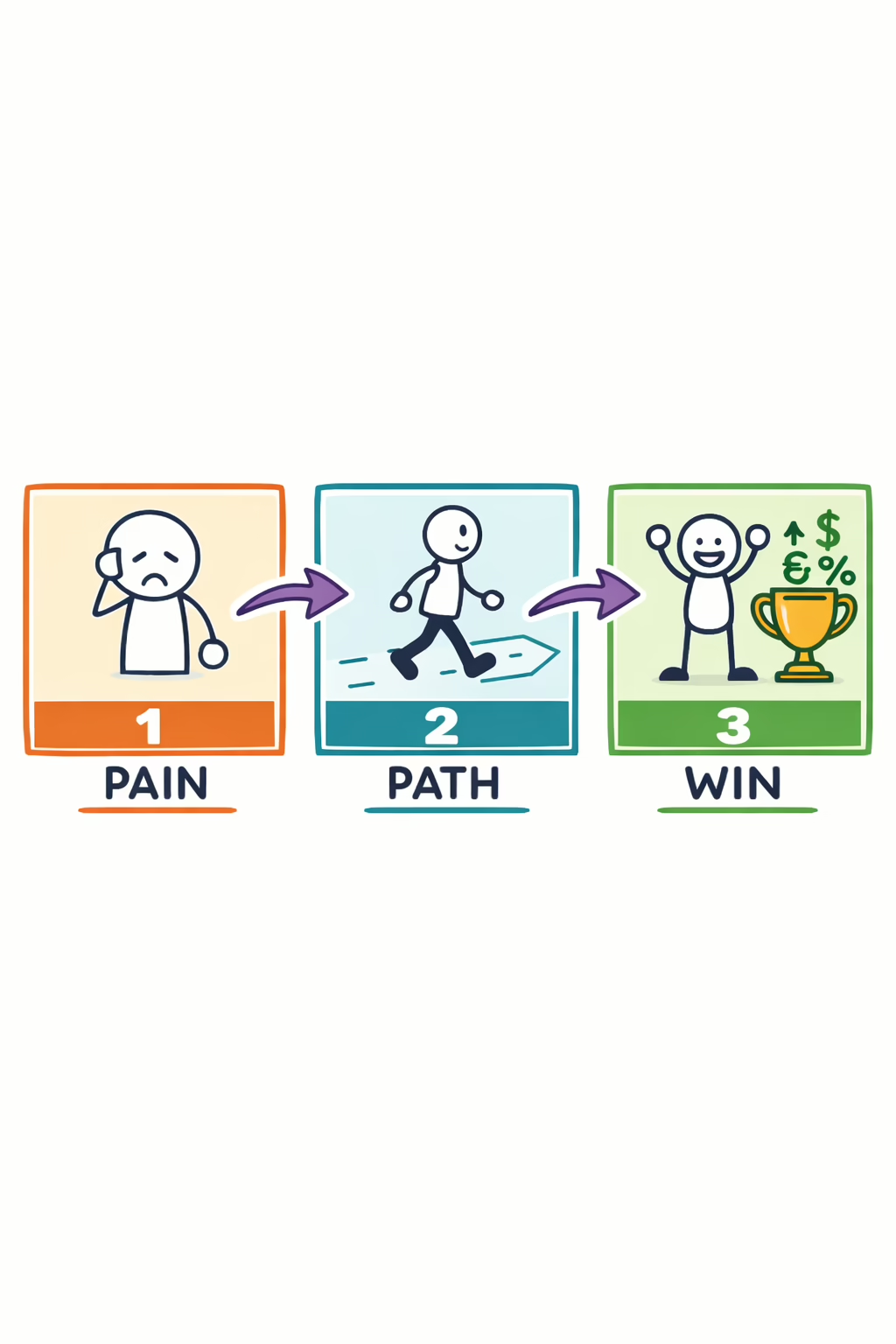
Structure results in a before-and-after format. “Before working with us, Sarah’s studio had 30 members paying $100 monthly. After six months, she had 80 members. Monthly revenue grew from $3,000 to $8,000. She recovered her $5,000 investment in the first month.”
This format overcomes multiple objections. The timeline shows speed. The ROI addresses price concerns. The specific numbers build credibility. Results prove your service delivers. Proof-based closing wins.
Also, explore proven strategies in our comprehensive guide on sales systems for service businesses to see how case studies fit into your overall sales approach.
The Testimonial: Let Clients Overcome Objections
Client quotes add authenticity. Prospects trust peer voices more than vendor claims. A strong testimonial overcomes sales objections by providing third-party validation. The client becomes your advocate.
Request testimonials that address common objections. Ask clients: “What worried you before hiring us? What changed after?” Their answers become objection-handling tools. When Sarah says “I was scared to spend money, but now I see it was the best investment,” she overcomes price objections for you.
Include the client’s full name and business when possible. Real names overcome trust objections. Anonymous testimonials feel fake. Transparency builds belief. Prospects verify your claims and see the proof.
Expert Insight from Kateryna Quinn, Forbes NEXT 1000:
“Case studies with client names close 3x more deals. Prospects research your clients. They see real businesses, real growth. That research overcomes objections better than any sales pitch.”
Using Case Studies for Specific Objection Handling
Map case studies to common objections. Create a library where each case study addresses a specific concern. When prospects raise objections, you have ready proof to overcome them. This preparation closes deals faster.
Organize case studies by objection type. Price objections get ROI case studies. Trust objections get social proof case studies. Timing objections get urgency case studies. This system ensures you always have the right story to overcome sales objections.
Overcome Price Objections with ROI Case Studies
Price objections need financial proof. Your case study must show clear return on investment. The ROI should exceed 3x to overcome cost concerns. Anything less feels risky to prospects.
Example structure: “Client invested $10,000 in our service. Within four months, they gained $35,000 in new revenue. ROI: 350%. The service paid for itself and generated $25,000 profit.” This math overcomes price objections instantly.
For service businesses, time-to-ROI matters too. Show how quickly clients see returns. Fast results overcome objections about cash flow. Prospects feel safer investing when they know recovery comes soon.
Overcome Trust Objections with Social Proof Case Studies
Trust objections require credibility markers. Use case studies with recognizable client names. Include photos or logos. Link to client websites. These elements overcome skepticism through verification.
Also, use case studies from similar industries. If you’re selling to fitness studios, show fitness studio success stories. Industry relevance overcomes the “but my business is different” objection. Prospects see direct applicability.
The Harvard Business Review study on B2B storytelling confirms this approach. Stories from similar businesses build trust faster. Relevance overcomes objections about fit.
Overcome Timing Objections with Urgency Case Studies
Timing objections mean “I’m not convinced yet.” Urgency case studies overcome this by showing opportunity cost. What does waiting cost? Your case study must answer this question.
Show what clients gained by acting quickly. “Jane started in January. By March, she had recovered her investment. By December, she grew revenue 50%. If she waited until April, she would have lost nine months of growth. That’s $45,000 in missed revenue.”
This calculation overcomes timing objections. Prospects realize delay costs money. Urgency stems from loss aversion. They fear missing out on growth others achieved. That fear closes deals.
Overcome “My Business Is Different” Objections
Industry-specific objections need targeted case studies. Build a case study library covering multiple industries. When prospects say “but my business is different,” you show a case study from their exact industry.
This strategy overcomes objections about applicability. Prospects can’t claim your service won’t work for them when you show it worked for their competitor. Industry proof eliminates doubt.
Also, vary case study details. Some prospects need local proof. Others need scale proof. Build case studies covering different business sizes, locations, and stages. This variety ensures you always have relevant proof to overcome sales objections.
Implementation Strategy for Sales Teams
Case studies work when your sales team uses them correctly. Train your team to match case studies to objections. This skill overcomes sales resistance faster than generic pitches. Preparation wins deals.
Create a case study playbook. Document which case studies address which objections. Include talking points for each story. This resource empowers your sales team to overcome objections consistently.
When to Share Case Studies in the Sales Process
Timing matters for case study sharing. Don’t wait until objections arise. Share case studies early in conversations. This approach overcomes objections before prospects voice them. Prevention beats correction.
First call: Share a relevant case study. “Before we discuss your needs, let me show how we helped a similar business.” This story sets expectations and builds credibility. Early proof overcomes initial skepticism.
Follow-up emails: Include case study links. Prospects review them at their own pace. Written case studies overcome objections when you’re not present. The story sells for you.
How to Present Case Studies Verbally
Verbal case study presentations require structure. Follow this format: challenge, solution, results. Keep it brief. Two minutes maximum. Long stories lose attention. Concise storytelling overcomes sales objections effectively.
Start with the challenge. “I worked with a client just like you. They worried about price too.” This opening creates connection. The prospect recognizes their concern in the story.
Describe the solution briefly. Focus on outcomes, not process. “We created a custom strategy. In three months, they saw results.” Speed through the middle. Prospects care more about results than methods.
End with specific numbers. “Revenue grew 40%. They recovered their investment in six weeks. Now they’re a loyal client.” Numbers overcome sales objections. Tangible results convince better than features.
How to Use Written Case Studies
Written case studies overcome objections in multiple formats. PDF downloads for proposals. Web pages for email sharing. One-pagers for quick reference. Each format serves different sales situations.
PDF case studies work for formal proposals. Prospects expect detailed documentation. Include all elements: challenge, solution, results, testimonial, photos. Comprehensive case studies overcome objections through thoroughness.
Web-based case studies enable easy sharing. Send a link via email or text. Prospects access the story instantly. Digital case studies overcome objections faster than attachments. Friction kills deals. Eliminate it.
One-page case studies fit presentations. Print them for in-person meetings. Leave copies with prospects. Physical case studies overcome objections after you leave. The story continues working.
Try using our AI sales pitch generator to craft compelling case study narratives that naturally integrate into your sales conversations. Speed up your objection-handling process with AI-powered tools.
AI Tools to Overcome Sales Objections Faster
AI tools accelerate case study creation. Building case studies manually takes hours. AI case study generators overcome this time constraint. You create professional case studies in minutes, not days.
Service business owners lack time for marketing tasks. AI tools solve this problem. They generate case study drafts based on client data you provide. You edit and publish. This efficiency overcomes the “I don’t have time” objection to building proof.
How AI Case Study Generators Work
AI case study generators use your input to create structured stories. You provide client information, challenges, solutions, and results. The AI writes a complete case study following proven formats. These formats overcome sales objections by hitting key persuasion points.
The tool asks specific questions. What problem did the client face? What solution did you provide? What results did they achieve? Your answers become the case study foundation. AI fills in transitions and structures the narrative. The output overcomes objections through professional storytelling.
Also, AI tools ensure consistency. Every case study follows the same structure. This consistency overcomes objections by creating familiarity. Prospects recognize the format across multiple case studies. Pattern recognition builds trust.
Benefits of AI-Powered Objection Handling
Speed ranks first. AI overcomes the time objection business owners have about creating marketing content. Generate a case study in 10 minutes instead of 3 hours. This speed enables you to build a large case study library quickly.
Quality ranks second. AI tools use proven copywriting frameworks. These frameworks overcome sales objections through psychological triggers. The structure persuades even when you’re not a trained writer.
Scalability ranks third. Build dozens of case studies covering every objection type. AI overcomes the resource constraint. Small teams produce marketing assets at enterprise levels. This advantage closes more deals.
For instance, the Uplify AI case study generator creates objection-focused stories in minutes. Input your client success data. The AI generates a complete case study ready to overcome sales objections. Try it today.
Combining AI Tools with Human Expertise
AI generates drafts. Humans add authenticity. This combination overcomes objections better than either alone. Use AI for structure and speed. Add personal touches for credibility.
Review AI-generated case studies carefully. Add client quotes in their exact words. Include specific details AI might miss. These touches overcome the “this feels generic” objection. Authenticity wins trust.
Also, customize case studies for specific industries. AI provides the framework. You add industry jargon and specific challenges. This customization overcomes relevance objections. Prospects see their world reflected in your stories.
Expert Insight from Kateryna Quinn, Forbes NEXT 1000:
“AI tools helped me scale from 5 case studies to 50. More proof overcomes more objections. My close rate jumped 40%. Build your case study library with AI. Speed matters in sales.”
Frequently Asked Questions
What are sales objections and why do they matter?
Sales objections are concerns prospects raise about price, timing, or trust. They matter because objections block sales. Case studies overcome objections by providing proof that addresses each concern. When you overcome sales objections effectively, you close more deals. Objections signal interest. They mean prospects consider your service but need reassurance. Case studies provide that reassurance through real client success stories.
How do case studies overcome price objections?
Case studies overcome price objections by showing clear ROI. When prospects see another client invested $5,000 and gained $20,000 in revenue, price becomes irrelevant. The case study reframes cost as investment. It demonstrates value through specific numbers. Price objections disappear when ROI exceeds 3x. Use case studies with strong financial results to overcome cost concerns instantly.
How many case studies do I need to overcome objections effectively?
Start with five case studies covering different objection types. One for price concerns. One for trust issues. One for timing objections. One for industry-specific doubts. One for scale questions. Five case studies overcome most sales objections. As you grow, build to 10-15 case studies. More proof overcomes more objections. Each new case study strengthens your credibility and closes additional deals.
When should I share case studies in the sales process?
Share case studies early in sales conversations. Don’t wait for objections to arise. Present a relevant case study in your first call. This approach overcomes objections before prospects voice them. Also share case studies in follow-up emails. Include links prospects can review independently. Early and frequent case study sharing overcomes resistance faster than reactive objection handling.
Can AI tools really help me overcome sales objections faster?
Yes, AI case study generators create professional stories in minutes. They overcome the time constraint business owners face. AI tools use proven frameworks that address common objections. You input client data and get a complete case study. This speed lets you build large proof libraries quickly. More case studies overcome more objections. AI tools accelerate your objection-handling capability significantly.
Step-by-Step Process to Overcome Sales Objections Using Case Studies
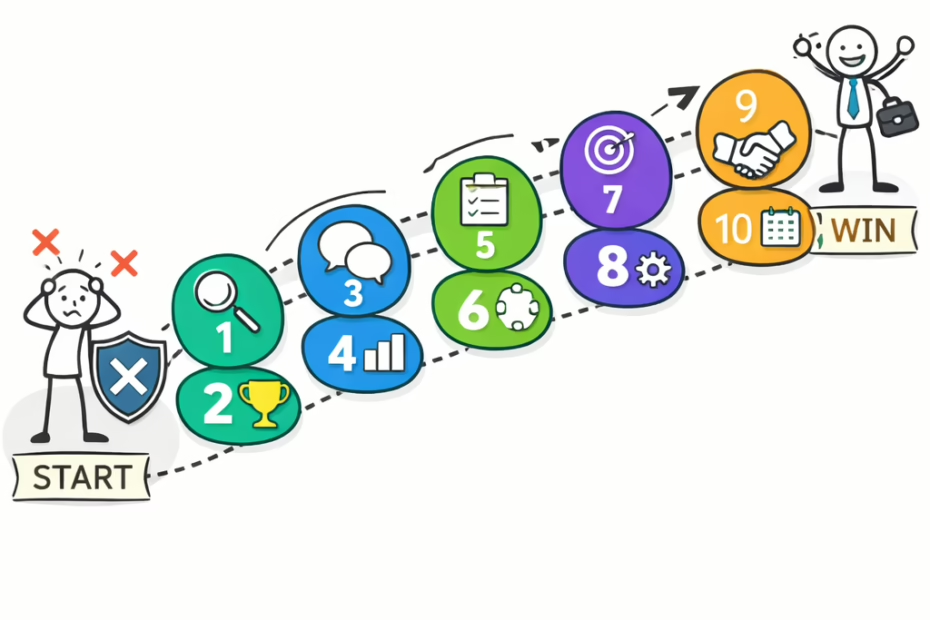
Follow this proven process to overcome sales objections systematically. Each step builds your case study library and improves objection handling.
- Identify your top five sales objections. Review sales calls and lost deals. List the objections prospects raise most often. These become your case study targets.
- Select clients who overcame those objections. Review your client list. Find success stories that match each objection. Clients who worried about price but saw great ROI. Clients who doubted you but now advocate for your service.
- Interview clients for case study details. Schedule 15-minute calls. Ask about their initial concerns, your solution, and specific results. Record their exact words for testimonials. Real language overcomes objections better than polished marketing speak.
- Structure each case study to address one objection. Focus each story on a specific concern. One case study for price objections. Another for trust issues. Targeted case studies overcome objections more effectively than generic success stories.
- Include specific numbers and timelines. Quantify results in every case study. Revenue growth percentages. New customer counts. Time to ROI. Specific metrics overcome skepticism. Vague claims fail to convince prospects.
- Create multiple formats for each case study. Build a PDF version. Create a web page. Design a one-page summary. Different formats overcome objections in different sales situations. Flexibility increases case study usage.
- Train your sales team to match case studies to objections. Create a playbook showing which case study addresses which objection. Role-play objection scenarios. Practice makes your team confident. Confident salespeople overcome objections faster.
- Share case studies early in sales conversations. Don’t wait for objections. Present relevant case studies proactively. This strategy overcomes objections before prospects voice them. Prevention beats reaction in sales.
- Use AI tools to accelerate case study creation. Generate case study drafts with AI case study generators. Edit for authenticity. Publish quickly. Speed overcomes the resource constraint small teams face. Build your library fast.
- Measure which case studies overcome objections best. Track conversion rates by case study. Some stories close more deals. Double down on winners. Retire weak performers. Data-driven optimization overcomes more objections over time.
Quick Reference: What It Means to Overcome Sales Objections
To overcome sales objections means to address prospect concerns with proof that eliminates doubt. Objections are barriers prospects raise about price, trust, timing, or fit. Case studies overcome these objections by showing real clients who had the same concerns but achieved success anyway. The case study provides social proof, ROI data, and timeline evidence that reassures prospects. When you overcome sales objections effectively, prospects move from doubt to decision. They see themselves in the success story and believe they’ll achieve similar results. This belief closes deals. Service businesses overcome objections best when they use multiple case studies targeting different concerns. Each case study acts as an objection buster, removing specific barriers to purchase. The goal is to overcome every major objection before prospects voice them, making the close natural and friction-free.
Conclusion: Start Using Case Studies to Overcome Sales Objections Today
Case studies overcome sales objections better than any other sales tool. They provide proof when prospects need reassurance. Real client stories address price concerns, build trust, and create urgency. Every service business needs a strong case study library.
Don’t wait to build your case studies. Start today. Interview your best clients. Document their success. Use AI tools to speed up creation. The sooner you build proof, the sooner you overcome objections and close more deals.
Remember: objections signal interest. Prospects ask questions because they consider buying. Case studies overcome those questions with evidence. Your sales process becomes consultative, not combative. You guide prospects to decisions through stories of others who succeeded.
Also, your case studies work 24/7. They overcome objections in emails, on your website, and in proposals when you’re not present. This constant work multiplies your sales capacity. One great case study closes dozens of deals.
Take action now. Choose your top objection. Select a client who overcame it. Create your first case study this week. Then build another. And another. Each case study strengthens your ability to overcome sales objections and grow your business.
Ready to overcome sales objections faster? Use our AI case study generator to create compelling proof stories in minutes. Stop losing deals to objections. Start winning with proof today.

Kateryna Quinn is an award-winning entrepreneur and founder of Uplify, an AI-powered platform helping small business owners scale profitably without burnout. Featured in Forbes (NEXT 1000) and NOCO Style Magazine (30 Under 30), she has transformed hundreds of service-based businesses through her data-driven approach combining business systems with behavior change science. Her immigrant background fuels her mission to democratize business success.