Your blog sits there gathering dust. You know it should grow your email list. But most posts bring zero subscribers.
Here’s what works: blog email list growth starts with strategy, not luck. You need a system that turns readers into email subscribers fast.
I built a marketing agency from $3K to $34K monthly revenue. My clients generated over $25M using these exact email list growth strategies. These systems work for service businesses.
Table of Contents
- What Is Blog Email List Growth?
- Why Blog Email List Growth Matters for Service Businesses
- How to Create Blog Lead Magnets That Convert
- Email List Building Tactics That Work
- AI Opt-In Tools for Subscriber Growth
- Step-by-Step: Blog Email List Growth Process
- Frequently Asked Questions
What Is Blog Email List Growth?
Blog email list growth means turning blog readers into email subscribers. You write blog content that attracts your ideal clients. Then you offer something valuable in exchange for their email address.
Most service business owners miss this. They write blog posts with no clear path to email list building. So readers leave without joining your list.
The best blog email list growth happens when you give readers exactly what they need. You solve a problem in your blog post. Then you offer an even better solution through your email list.
The Core Components of Blog Email List Growth
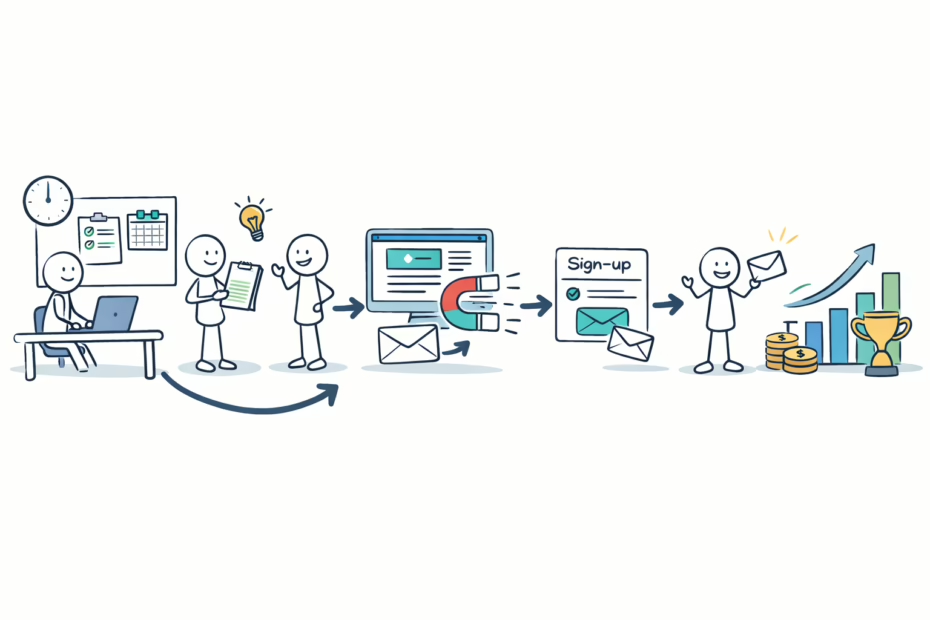
Every successful blog email list growth strategy has three parts. First, you need traffic to your blog. Second, you need a compelling blog lead magnet. Third, you need a simple way for readers to join your email list.
Traffic comes from search engines, social media, or paid ads. The best traffic sources for blogs vary by industry. But organic search works best for most service businesses.
Your blog lead magnet must solve one specific problem. Don’t try to solve everything at once. Focus on the biggest pain point your readers face right now.
Why Most Blog Email List Growth Fails
Most blog posts fail at email list building because they lack focus. You write about too many topics. Or your call to action is buried at the bottom.
Your blog needs a clear purpose for every post. Each blog post should guide readers toward your email list. Make the path obvious and easy to follow.
Another common mistake: asking for too much information. Keep your opt-in forms simple. Just ask for an email address and maybe a first name.
Expert Insight from Kateryna Quinn, Forbes Next 1000:
“I tested dozens of blog email list growth tactics. The winners always had one thing: a clear, specific promise. Tell readers exactly what they get.”
Why Blog Email List Growth Matters for Service Businesses
Your email list is your most valuable business asset. You own your email list. You don’t own your social media followers or search rankings.
Blog email list growth gives you direct access to potential clients. You can send messages anytime. No algorithm decides who sees your content.
Service businesses need consistent lead flow. Your blog brings new prospects every day. Email list building turns those prospects into warm leads.
The ROI of Blog Email List Growth
Email marketing returns $42 for every $1 spent on average. That’s a 4,200% ROI according to email marketing benchmarks from Litmus. Your blog makes this possible by attracting the right people.
Blog email list growth costs less than paid ads. You write once and the blog post works forever. New subscribers join your list every day without extra spending.
The AI lead magnet builder helps you create high-converting opt-in offers in minutes. You answer a few questions and get a complete blog lead magnet ready to use.
How Email Lists Drive Revenue for Service Businesses
Your email list keeps potential clients engaged until they’re ready to buy. Most people need 7-13 touchpoints before making a purchase decision. Email list building gives you those touchpoints.
You nurture relationships through email. Share helpful tips, case studies, and success stories. Build trust before asking for a sale.
When someone joins your email list from a blog post, they’re already interested in your topic. They’ve shown buying intent by consuming your content. This makes email list growth from blogs more valuable than cold leads.
Subscriber Growth That Compounds Over Time
Blog email list growth compounds. One blog post brings subscribers this month. Next month, that same post brings more subscribers. Your list grows without extra work.
Most service businesses need 1,000-3,000 email subscribers to generate consistent revenue. You reach this faster with strategic blog email list growth tactics.
The best part? Older blog posts often convert better over time. Search engines rank them higher. More people find them. Your email list building accelerates automatically.
How to Create Blog Lead Magnets That Convert
Your blog lead magnet makes or breaks email list growth. A weak blog lead magnet gets ignored. A strong one turns 30-50% of readers into subscribers.
The best blog lead magnets solve one specific problem immediately. Don’t promise “everything you need to know.” Instead, offer “the exact template I used to double my clients.”
Blog email list growth happens fastest when your blog lead magnet matches your blog content perfectly. If your blog post is about pricing strategy, your blog lead magnet should be a pricing calculator or pricing template.
Types of Blog Lead Magnets for Service Businesses
Templates work extremely well for email list building. People want ready-to-use tools. Give them a template they can fill out in 10 minutes.
Checklists are another high-converting blog lead magnet type. Service business owners love checklists because they’re quick to use and easy to follow.
Resource lists also drive blog email list growth. Compile your favorite tools, books, or websites. Package them as a downloadable PDF.
Calculators and assessments create high engagement. People enter their numbers and get personalized results. This makes them more likely to join your email list.
How to Match Blog Content to Blog Lead Magnets
Every blog post should have a related blog lead magnet. The blog content introduces a topic. The blog lead magnet helps readers implement what they learned.
For example, a blog post about writing sales pitches pairs perfectly with a sales pitch template. Readers learn the strategy in your blog. Then they download the template to apply it.
This approach drives blog email list growth because the value is obvious. Readers see exactly what they get by joining your email list.
The offer creation strategy guide shows you how to align all your marketing assets. Your blog posts, blog lead magnets, and email sequences should all support your core service.
Writing Blog Lead Magnet Copy That Converts
Your blog lead magnet headline determines email list building success. Make a clear, specific promise. Tell readers exactly what they get and how long it takes to use.
Bad headline: “Free Marketing Guide.” Good headline: “The 5-Minute Marketing Plan That Brought Me 23 New Clients.” See the difference? The second one makes a specific promise.
Your opt-in copy should emphasize immediate value. Don’t make readers work through a long email course. Give them something they can use right now to solve their current problem.
Expert Insight from Kateryna Quinn, Forbes Next 1000:
“The best blog lead magnets I created took 30 minutes to make. Simple, focused, and immediately useful. That’s the formula for blog email list growth.”
Email List Building Tactics That Work
Email list building needs more than just a blog lead magnet. You need strategic placement, timing, and messaging to maximize blog email list growth.
The placement of your opt-in forms matters enormously. Top-performing blog posts have opt-in opportunities in multiple locations. You can’t rely on one form at the end.
Blog email list growth accelerates when you make opting in easy and obvious. Remove friction from the signup process. Don’t ask for more information than you need.
Strategic Opt-In Form Placement
Put your first opt-in opportunity within the first 300 words of your blog post. Many readers won’t scroll to the bottom. Capture them early.
Use inline opt-in forms throughout your blog content. After you explain a key concept, offer a related blog lead magnet. This feels natural and helpful, not pushy.
End every blog post with a clear call to action for email list building. Summarize what readers learned. Then show them the next step: joining your email list for more help.
Exit-intent popups work well for blog email list growth. When someone tries to leave your blog, show them your best blog lead magnet offer. This captures readers who enjoyed your content but didn’t opt in yet.
Content Upgrades for Blog Email List Growth
Content upgrades are blog lead magnets specific to one blog post. Instead of offering the same thing on every blog post, you create unique downloads for your best content.
This strategy drives higher email list building conversion rates. When your blog post teaches a framework, your content upgrade gives the template. The match is perfect.
Service businesses see 25-50% conversion rates with good content upgrades. That means 1 in 4 readers joins your email list. This is much higher than generic blog lead magnets.
Using AI Newsletter Builder Tools
An AI newsletter builder helps you create email content quickly. After someone joins your email list from a blog post, you need to send regular emails.
Many service business owners struggle with consistent email list building and follow-up. They grow their email list but never send emails. This wastes the entire effort.
The AI newsletter generator solves this problem. You answer a few questions and get complete email newsletters. This keeps your email list engaged and ready to buy.
Blog Email List Growth Through Sequential Content
Plan your blog content as a series. Write 3-5 blog posts on related topics. Each blog post links to the next one and offers email list building opportunities.
This approach keeps readers engaged longer. They read multiple blog posts in one session. More touchpoints mean higher trust and better blog email list growth.
Your email list building also improves because readers see you as an authority. When someone reads three helpful blog posts from you, they’re much more likely to join your email list.
AI Opt-In Tools for Subscriber Growth
AI opt-in tools make blog email list growth faster and easier. You don’t need to design forms from scratch or write copy yourself. AI handles the heavy lifting.
The best AI opt-in tools integrate with your blog platform. They track which blog posts drive the most email list building. Then you can double down on what works.
Blog email list growth accelerates when you test different approaches. AI tools let you test multiple blog lead magnets and opt-in forms without technical skills.
How AI Lead Magnet Builders Work
An AI lead magnet builder asks you questions about your audience and service. Then it creates a complete blog lead magnet with copy, structure, and format.
You get checklists, templates, guides, and resource lists in minutes. This removes the biggest barrier to blog email list growth: creating valuable downloads.
The AI lead magnet builder from Uplify is designed specifically for service businesses. It understands your audience and creates blog lead magnets that convert.
AI Tools for Email List Building Copy
Writing opt-in copy takes time and skill. Most service business owners struggle with marketing copy. AI tools solve this problem by generating high-converting copy automatically.
You enter your blog topic and target audience. The AI creates headlines, descriptions, and call-to-action text optimized for email list building.
This speeds up blog email list growth dramatically. Instead of spending hours writing one opt-in form, you create five in 20 minutes and test them all.
Tracking Blog Email List Growth with AI
AI analytics tools show which blog posts drive the most subscriber growth. You see conversion rates, subscriber sources, and engagement metrics in one dashboard.
This data guides your content strategy. Double down on blog topics that drive email list building. Skip topics that bring traffic but no subscribers.
The AI marketing ROI calculator helps you measure the revenue impact of your blog email list growth efforts. You see exactly how much each subscriber is worth to your business.
Automating Email List Building Workflows
AI tools can automate your entire email list building process. Someone joins your list, and AI triggers a welcome sequence. They click a link, and AI sends related content.
This automation keeps new subscribers engaged without manual work. Your blog email list growth doesn’t slow down when you’re busy serving clients.
Service businesses using AI for email list building report 40-60% less time spent on marketing. The systems run automatically while you focus on delivery.
Step-by-Step: Blog Email List Growth Process
Here’s the exact process I use for blog email list growth. Follow these steps to turn your blog into an email list building machine.
The Complete Blog Email List Growth System
- Choose one main blog topic related to your service. Focus on problems your ideal clients search for online. Use keyword research to find topics with search volume.
- Write a helpful blog post that solves one specific problem. Keep it practical and actionable. Include examples from your own experience or client work.
- Create a blog lead magnet that extends your blog content. Turn your advice into a template, checklist, or resource list. Make it immediately useful.
- Add opt-in forms in three places: near the top of your blog post, in the middle after explaining a key concept, and at the end with a clear call to action.
- Set up a simple welcome email sequence. Send the blog lead magnet immediately. Then send 3-5 helpful emails over the next two weeks.
- Promote your blog post through your existing channels. Share it on social media, send it to your current email list, and mention it in client conversations.
- Track your blog email list growth metrics. Watch conversion rates, subscriber sources, and engagement. This data guides your next blog post.
- Create more blog posts on related topics. Link them together to keep readers engaged. Each new blog post brings more email list building opportunities.
- Test different blog lead magnets and opt-in copy. Try various headlines and offers. Keep what works and discard what doesn’t.
- Scale your blog email list growth by writing consistently. Publish one high-quality blog post every week. Your subscriber growth compounds over time.
Common Blog Email List Growth Mistakes to Avoid
Don’t create generic blog lead magnets that appeal to everyone. Specificity converts better than broad promises. Target your ideal client’s exact pain point.
Avoid asking for too much information in your opt-in forms. Every additional field reduces email list building conversion rates. Stick to email address only for best results.
Never hide your opt-in forms. Some business owners worry about seeming pushy. But if your blog lead magnet truly helps people, you’re doing them a favor by making it obvious.
Don’t neglect mobile users. Over 60% of blog traffic comes from mobile devices according to Statista mobile traffic statistics. Make sure your opt-in forms work perfectly on phones.
Frequently Asked Questions
What is blog email list growth?
Blog email list growth is the process of turning blog readers into email subscribers. You create valuable blog content that attracts your ideal clients. Then you offer a blog lead magnet in exchange for their email address. This builds your list with people already interested in your topics.
How do I create a blog lead magnet that converts?
Create a blog lead magnet that solves one specific problem immediately. Make it actionable and easy to use in 10 minutes or less. Match your blog lead magnet to your blog content perfectly. If your blog teaches a strategy, your blog lead magnet should provide the template or checklist.
Why does blog email list growth matter for service businesses?
Blog email list growth gives you direct access to potential clients. You own your email list unlike social media followers. Email marketing returns $42 for every dollar spent. Your blog brings consistent traffic and your email list turns that traffic into paying clients over time.
When should I add opt-in forms to my blog?
Add opt-in forms in three places on every blog post. Put one near the top within 300 words. Add another in the middle after explaining a key concept. End with a clear call to action form. This maximizes blog email list growth without annoying readers.
Can AI tools help with email list building?
Yes, AI tools dramatically speed up email list building. They create blog lead magnets, write opt-in copy, and generate email sequences automatically. AI tools remove the technical barriers to blog email list growth. Service businesses using AI report 40-60% less time spent on marketing tasks.
Quick Reference: Blog Email List Growth Defined
Blog email list growth is the systematic process of converting blog readers into email subscribers through strategic content and compelling offers. This marketing approach combines blog content creation with email list building tactics to generate qualified leads for service businesses.
The process involves writing helpful blog posts that attract your ideal clients through search engines and social media. Then you offer a valuable blog lead magnet in exchange for email addresses. This builds a list of engaged prospects who already trust your expertise.
Effective blog email list growth requires matching your blog content to specific blog lead magnets. When someone reads about a topic and immediately gets a tool to implement it, conversion rates jump to 30-50%. This is much higher than generic opt-in forms.
Service businesses benefit most from blog email list growth because it creates consistent lead flow. Your blog attracts new prospects every day. Your email list nurtures those prospects until they’re ready to buy. This system works automatically once set up correctly.
Start Growing Your Email List Today
Blog email list growth doesn’t happen by accident. You need a clear strategy, valuable blog lead magnets, and consistent execution. But the payoff is worth it.
Your email list becomes your most valuable business asset. You’ll have direct access to people who already know and trust you. This makes selling your services much easier.
Start with one blog post this week. Create a simple blog lead magnet that solves one problem. Add opt-in forms in three places. Then track your blog email list growth and improve from there.
The AI lead magnet builder makes this process faster. You answer a few questions and get a complete blog lead magnet ready to use. No design skills or copywriting experience needed.
Your email list building success comes from taking action today. Most service business owners know they should grow their list. The winners actually do it. Be the one who did.

Kateryna Quinn is an award-winning entrepreneur and founder of Uplify, an AI-powered platform helping small business owners scale profitably without burnout. Featured in Forbes (NEXT 1000) and NOCO Style Magazine (30 Under 30), she has transformed hundreds of service-based businesses through her data-driven approach combining business systems with behavior change science. Her immigrant background fuels her mission to democratize business success.