You work hard but clients still hesitate. Data driven credibility changes that. Numbers prove your value fast.
Research backed content turns skeptics into buyers. Real data shows what you can do. Credibility proof closes deals faster.
I built Uplify after generating $25M for clients. Data driven credibility was the difference. These research methods work for any service business.
Table of Contents
- What Data Driven Credibility Really Means
- Why Research Backed Content Wins Clients
- How to Find Credibility Data Fast
- Data Storytelling That Converts
- Building Your Credibility Proof System
- AI Tools for Research and Data
What Data Driven Credibility Really Means
Data driven credibility uses real numbers to prove your value. So, clients see facts instead of claims. Research shows what you actually deliver.
Most service businesses tell clients they’re great. But data driven credibility shows clients the proof. Numbers create instant trust and credibility.
For example, saying “We help businesses grow” means nothing. But “Our clients average 43% revenue growth” shows data. That’s credibility proof that works.
The Core Elements of Data Driven Credibility
Research backed content needs three key parts. First, you need real data from your work. Second, you need credibility proof that’s easy to check. Third, you need data storytelling that makes sense.
Data driven credibility starts with tracking your results. Also, you must collect research from every client project. Then, you turn that data into credibility proof.
Your credibility data should include specific numbers. Revenue growth, time saved, cost reduction all work. In fact, the more specific your research, the stronger your credibility.
Why Generic Claims Kill Trust
Clients hear vague promises every day. “Best service” or “top quality” sound empty. But data driven credibility cuts through the noise.
Research shows that transparency builds customer trust faster than any claim. So, sharing real data proves you’re different.
Your credibility proof should show actual results. For instance, case studies with data work better than testimonials alone. Data storytelling makes your value real and credible.
Data vs. Empty Marketing Speak
Marketing talk uses words like “amazing” or “incredible.” Data driven credibility uses numbers instead. Research backed content shows the math behind your claims.
Compare these two statements about credibility. “We deliver great results” is weak. “Our average client sees 67% more leads” is strong data.
The second example uses data driven credibility. Also, it gives clients specific credibility proof. Research like this wins more business every time.
Key Takeaway: Data driven credibility replaces vague claims with real numbers that prove your value.
Why Research Backed Content Wins Clients
Research backed content works because buyers want proof. So, they look for data before hiring anyone. Credibility proof closes deals faster than promises.
Service businesses without data driven credibility lose to competitors. Clients can’t tell who’s better without research. But solid data makes the choice obvious.
Your research backed content should appear everywhere. Website, proposals, and sales calls all need data. In fact, credibility proof should saturate your marketing.
The Psychology Behind Data Trust
People trust numbers more than words. Data driven credibility taps into this psychology. Research shows concrete proof that brains accept quickly.
When you share credibility data, clients feel safer. Also, data storytelling reduces their buying risk. Numbers create a credibility shield around your service.
For example, “93% client retention rate” sounds stable. It shows data that proves you keep clients happy. That credibility proof reduces buyer anxiety fast.
How Research Shortens Sales Cycles
Data driven credibility speeds up buying decisions. So, clients spend less time questioning your value. Research backed content answers doubts before they form.
Without credibility data, clients ask many questions. They need proof you can deliver results. But with data storytelling, the proof is already there.
The AI case study generator helps you create research backed content fast. It turns your project data into credibility proof automatically. So, you build data driven credibility in minutes.
Your sales process should lead with data. For instance, start calls with credibility proof. Share research backed content in proposals. Then, clients see your value immediately.
Research vs. Competitor Guesswork
Most competitors don’t use data driven credibility. They make claims without research to back them. But you can win by showing real data.
When competitors say “we’re the best,” you show numbers. Your credibility proof beats their empty words. Data storytelling makes your offer the obvious choice.
For example, your research might show average project timelines. Or cost savings per client based on real data. This credibility data proves you’re worth the investment.
Expert Insight from Kateryna Quinn, Forbes Next 1000:
“I tracked every client result for years. That data driven credibility helped me grow revenue to $34K monthly. Numbers don’t lie, and clients know it.”
Key Takeaway: Research backed content builds trust faster and shortens sales cycles dramatically.
How to Find Credibility Data Fast
Finding credibility data starts with your past work. So, review every completed project for results. Research backed content needs real numbers from your business.
Data driven credibility comes from tracking metrics consistently. Also, you must measure outcomes for every client. Then, that research becomes your credibility proof.
Many service businesses never collect this data. But without research, you can’t build credibility. Start tracking results today for future data storytelling.
Mining Your Existing Client Results
Your current clients hold valuable credibility data. So, ask them about specific results you delivered. Research their before-and-after numbers for data driven credibility.
For example, if you’re a marketing agency, track leads generated. Also, measure conversion rates and revenue growth. This research becomes powerful credibility proof.
Create a simple spreadsheet to track data. Include client name, service provided, and measurable results. Then, you have research backed content ready to share.
Industry Research for Context
Your data driven credibility gets stronger with context. So, compare your results to industry averages. Research backed content shows how you beat the norm.
For instance, if average conversion rates are 2%, your 5% is impressive. That credibility data proves you’re above average. Data storytelling with context wins more clients.
The SBA business performance guide shows key metrics to track. Use these benchmarks for your credibility proof. Then, your research backed content has clear standards.
Creating Data from Testimonials
Old testimonials often hide credibility data. So, review them for specific numbers clients mentioned. Research backed content can come from past feedback.
For example, a client might say “sales doubled.” That’s data driven credibility you can use. Turn vague praise into specific research for stronger proof.
Also, reach back out to happy clients. Ask for exact numbers to add credibility data. Most clients will share research if you explain why.
Survey Your Clients for Data
Surveys create fresh credibility data quickly. So, send a short form asking for results. Research backed content grows every time you collect data.
Your survey should ask specific questions. “How much did revenue increase?” or “How many hours did you save?” These answers become credibility proof.
For instance, you might learn clients save 12 hours weekly. That research backed content is gold for data storytelling. Numbers like this build instant credibility.
Key Takeaway: Credibility data lives in your past work, client feedback, and industry research.
Data Storytelling That Converts
Data storytelling turns raw numbers into compelling narratives. So, your credibility data needs context to work. Research backed content must tell a clear story.
Numbers alone don’t persuade clients effectively. But data driven credibility with a story sells. Research shows that stories make data memorable and credible.
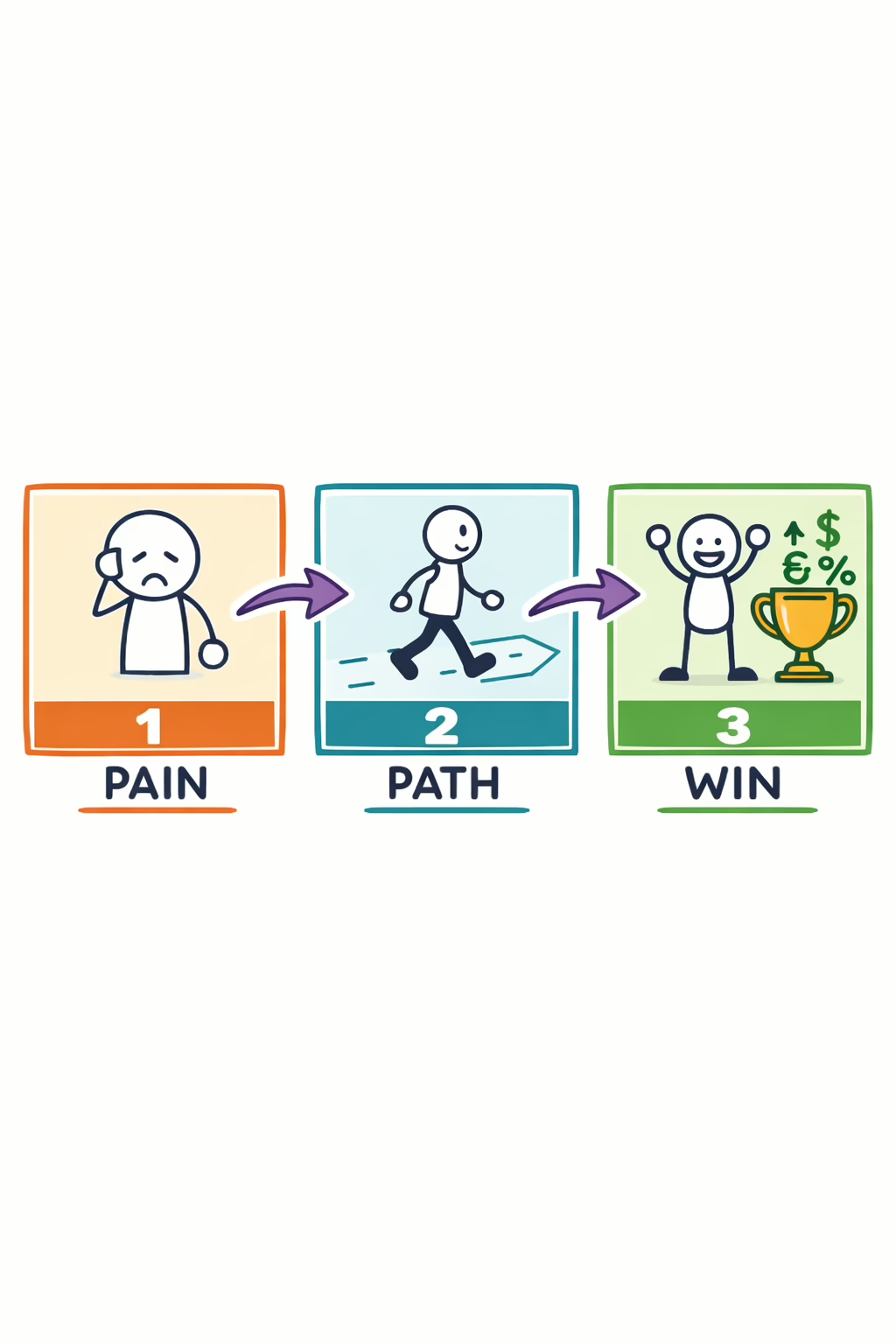
Your credibility proof should follow a simple structure. Start with the client’s problem using data. Then, show your solution with more research. Finally, reveal the results with specific numbers.
The Before-During-After Framework
Effective data storytelling uses three clear stages. First, describe the starting point with credibility data. Next, explain your process with research. Last, show final results with proof.
For example, “Client had 50 leads monthly” is before. “We implemented our research backed content strategy” is during. “Now they get 180 leads monthly” is after.
This framework makes data driven credibility easy to follow. Also, it shows clear cause and effect. Clients see exactly how your research delivers results.
Using Percentages and Comparisons
Percentages make credibility data more impactful. So, show growth rates instead of just numbers. Research backed content with percentages hits harder.
For instance, “increased from $10K to $30K” is good. But “200% revenue growth” sounds even better for data driven credibility. Percentages create stronger credibility proof.
Also, compare your data to industry standards. “50% above average retention” shows context. This research backed content proves you’re exceptional.
Visual Data for Maximum Impact
Data driven credibility works better with visuals. So, turn research into simple charts or graphs. Credibility proof in pictures communicates faster than text.
For example, a growth chart shows data storytelling at a glance. Clients see the upward trend instantly. This research backed content requires no explanation.
Your credibility data should appear in presentations and proposals. Also, use visuals on your website for immediate impact. Research shows that data visualization improves understanding by 400%.
Keeping Data Stories Simple
Complex research confuses potential clients. So, simplify your data driven credibility for clarity. Research backed content should be easy to grasp.
For instance, focus on one or two key metrics. “We increased leads and closed rate” is enough credibility proof. Too much data dilutes your data storytelling.
Your credibility data should support a single main point. Also, avoid jargon when sharing research. Simple data driven credibility wins more business.
Key Takeaway: Data storytelling transforms raw numbers into persuasive credibility proof that clients remember.
Building Your Credibility Proof System
A credibility proof system captures data automatically. So, you never miss research opportunities. Data driven credibility becomes part of your workflow.
Most service businesses collect data randomly. But systematic research backed content requires a process. Build credibility data collection into every project.
Your system should track metrics from day one. Also, it should make data storytelling easy later. This research approach builds credibility proof continuously.
Setting Up Data Collection Points
Data driven credibility needs clear collection moments. So, identify when to gather research during projects. Credibility data grows at specific project stages.
For example, collect baseline data at project start. Record mid-point progress for research continuity. Then, capture final results for credibility proof.
Your collection points should be simple to execute. Also, train your team to gather data consistently. This research backed content system runs automatically.
Tools for Tracking Credibility Data
Simple spreadsheets work for basic data driven credibility. But better tools make research easier and faster. Choose software that fits your business size.
For instance, project management tools often track metrics. CRM systems can store credibility data about results. The AI case study generator turns this research into polished credibility proof instantly.
Your tracking system should integrate with existing workflows. Also, it should make data storytelling simple. Research backed content becomes easy when tools work together.
Creating a Case Study Library
Case studies are data driven credibility gold. So, build a library of research backed content. Each case study shows credibility proof in action.
Your library should organize studies by industry or problem. Also, tag them with key credibility data points. This research becomes searchable and useful fast.
For example, tag a study with “lead generation” and “B2B.” Then, you can find relevant data storytelling quickly. This credibility proof system saves time and wins clients.
The case studies hub shows how to structure research backed content. Use this framework for all your data driven credibility materials. So, your credibility proof stays consistent and professional.
Updating Your Credibility Data Regularly
Old research loses impact over time. So, refresh your data driven credibility every quarter. Research backed content should reflect recent results.
For instance, update your average client results seasonally. Also, add new credibility proof as projects complete. Fresh data storytelling shows you’re currently effective.
Your system should remind you to update data. Also, archive old research for historical credibility proof. This process keeps your data driven credibility current.
Expert Insight from Kateryna Quinn, Forbes Next 1000:
“I updated my credibility data monthly. That research discipline created trust with every prospect. Current numbers prove you’re still delivering results today.”
Key Takeaway: A systematic approach to collecting credibility data makes research backed content creation automatic.
AI Tools for Research and Data
AI tools accelerate data driven credibility creation. So, you can build research backed content in minutes. Credibility proof no longer takes hours to produce.
Traditional research methods are slow and manual. But AI case study tools automate data storytelling. This technology turns raw data into polished credibility proof.
Your business needs efficient credibility data systems. Also, AI tools ensure consistency across all research. Data driven credibility becomes scalable with automation.
AI Case Study Generators
AI case study generators transform data into stories. So, you input basic credibility data and get polished research. These tools make data driven credibility accessible to everyone.
For example, you enter client results and project details. The AI creates research backed content with proper structure. This credibility proof is ready to share immediately.
The AI case study generator specializes in service businesses. It understands data storytelling for professional services. So, your credibility data becomes client-ready content fast.
Data Analysis Tools
Data analysis tools find patterns in your credibility data. So, they reveal insights you might miss manually. Research backed content becomes more powerful with AI analysis.
For instance, AI can identify your strongest credibility proof. It shows which data storytelling resonates most with clients. This research optimization improves your close rate.
Your analysis should look for trends across projects. Also, identify which credibility data converts best. Data driven credibility improves when you know what works.
Content Optimization Tools
AI content tools improve how you present research. So, they make data driven credibility more persuasive. Credibility proof gets stronger with better writing.
For example, AI can suggest clearer data storytelling phrasing. It can also optimize research backed content for readability. This helps clients understand your credibility data faster.
Your credibility proof should be simple and clear. Also, it should follow proven persuasion patterns. AI tools ensure your data driven credibility hits every mark.
Integrating AI into Your Workflow
AI tools work best when integrated daily. So, make data driven credibility creation part of routine. Research backed content should flow naturally from AI systems.
For instance, set up automatic data collection triggers. When a project ends, AI prompts for credibility data. Then, it generates research backed content automatically.
Your team should use AI for consistent credibility proof. Also, train everyone on data storytelling tools. This ensures all research maintains high standards.
Ready to build data driven credibility for your business? The AI case study generator turns your results into research backed content in minutes. So, start creating credibility proof today.
Key Takeaway: AI tools make creating data driven credibility fast, consistent, and professional.
Conclusion and Next Steps
Data driven credibility separates winners from talkers. So, start collecting research from every project today. Your credibility proof library grows with each client.
Research backed content closes more deals than promises. Also, it shortens sales cycles and builds trust. Data storytelling makes your value undeniable and clear.
Begin by auditing your existing credibility data. Then, set up a system to capture research. Finally, use tools like the AI case study generator to turn data into credibility proof.
Your business deserves the trust that comes from real numbers. So, commit to data driven credibility starting now. Research backed content will transform how clients see you.
Frequently Asked Questions
What is data driven credibility?
Data driven credibility uses real numbers to prove your business value. It shows research backed content instead of empty claims. So, clients see credibility proof through actual results. This data storytelling approach builds trust faster than any promise.
How do I collect credibility data?
Start by tracking results from every client project. Record specific metrics like revenue growth or time saved. Then, survey clients for additional research backed content. This credibility data becomes your proof library. So, make data collection a standard part of every project.
Why does research backed content work better?
Research backed content provides concrete credibility proof. So, it reduces buyer risk and speeds decisions. Data driven credibility answers questions before clients ask them. Numbers create trust that claims can’t match. Also, research differentiates you from competitors immediately.
When should I share credibility data?
Share data driven credibility at every client touchpoint. Use research backed content on your website immediately. Also, lead sales calls with credibility proof. Include data storytelling in proposals and presentations. So, clients see your value throughout the entire buying process.
Can small businesses build data driven credibility?
Yes, any service business can create research backed content. Start with just a few client results. Then, expand your credibility data over time. Small businesses often have stronger data storytelling than large firms. So, your size doesn’t limit credibility proof potential at all.
Step-by-Step Process for Building Data Driven Credibility
- Review past client projects for measurable credibility data
- Create a spreadsheet to track all research results
- Survey current clients for specific outcome data
- Calculate percentages and growth rates for data storytelling
- Compare your credibility data to industry averages
- Write simple before-during-after narratives for each data point
- Create visual charts from your research backed content
- Build case studies using your credibility proof library
- Set up automatic data collection for all new projects
- Use AI tools to turn raw data into polished credibility stories
Quick Reference: Data Driven Credibility Defined
Data driven credibility is the practice of using verifiable research and real numbers to demonstrate business value. It transforms vague claims into concrete credibility proof through data storytelling. Instead of saying “we’re great,” data driven credibility shows “our clients achieve 67% average growth.” This approach uses research backed content to build trust faster, shorten sales cycles, and differentiate your service business from competitors who rely on empty promises.

Kateryna Quinn is an award-winning entrepreneur and founder of Uplify, an AI-powered platform helping small business owners scale profitably without burnout. Featured in Forbes (NEXT 1000) and NOCO Style Magazine (30 Under 30), she has transformed hundreds of service-based businesses through her data-driven approach combining business systems with behavior change science. Her immigrant background fuels her mission to democratize business success.