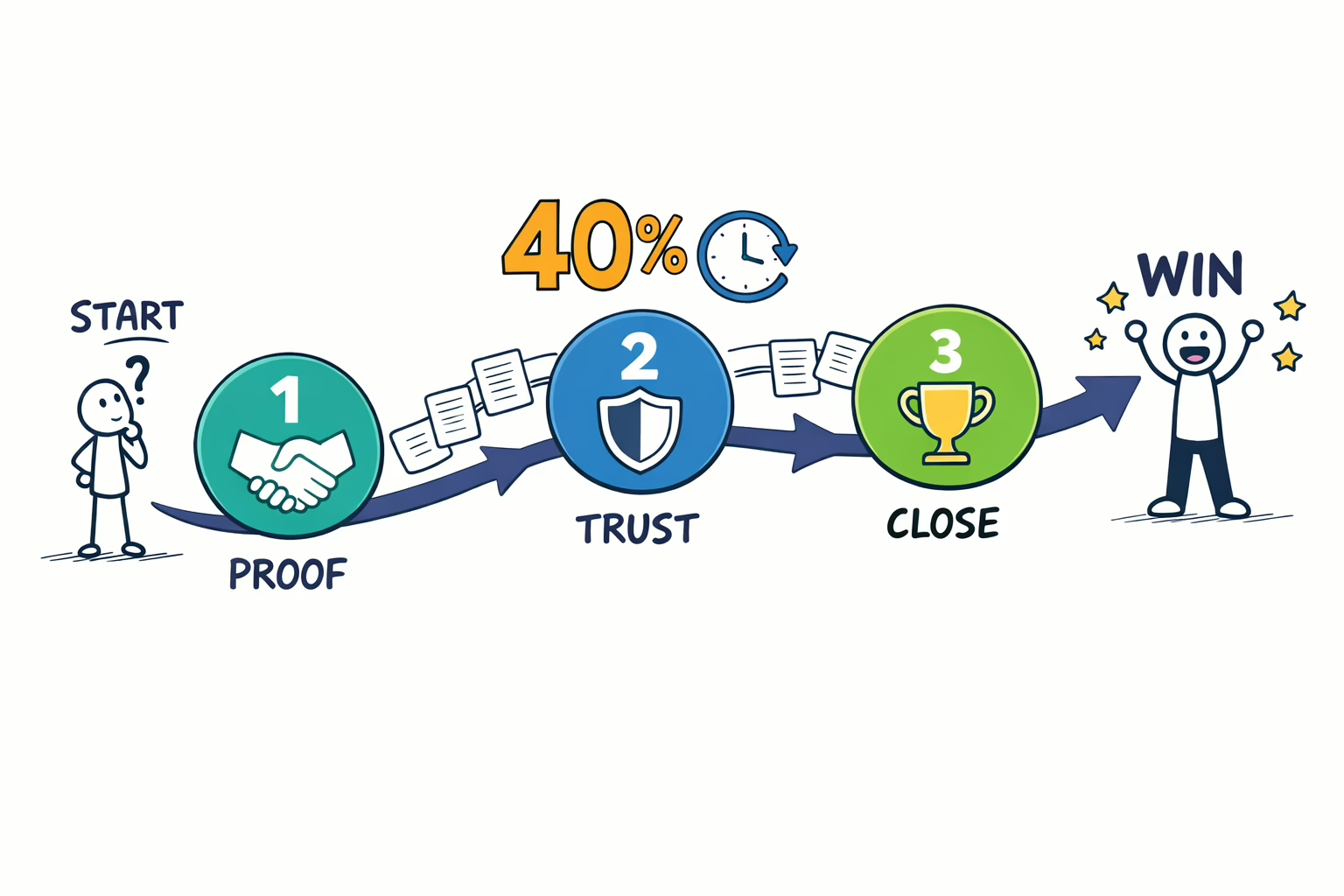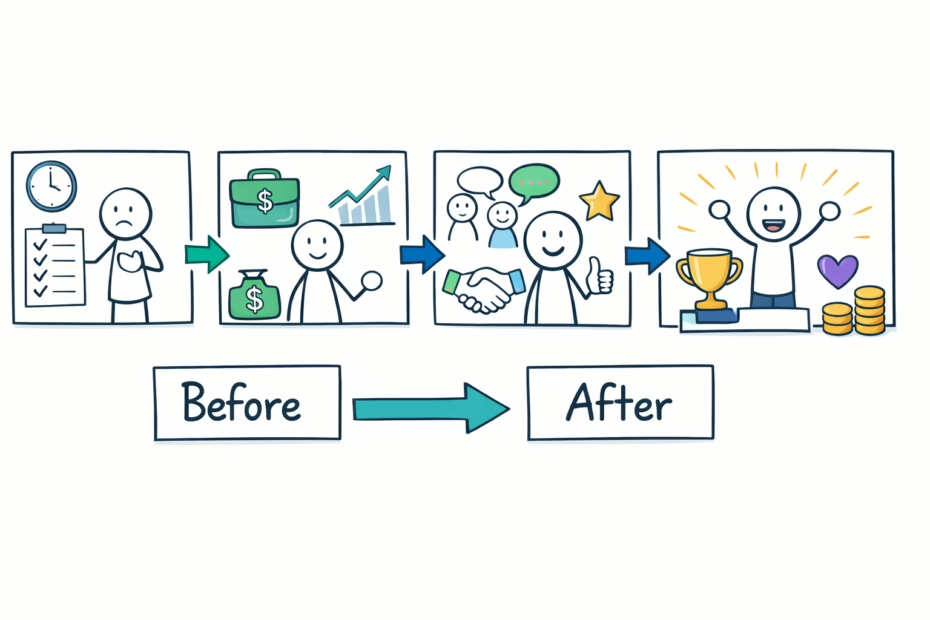
You need a case study to close more deals. But writing one takes hours you don’t have. Most service business owners skip this step entirely. That’s a mistake. A strong case study proves your value fast.
I built Uplify after generating $25M for clients. Case studies closed deals faster than any pitch. They show real results, not empty promises. So, here’s how to write a case study in minutes.
This guide walks through every step of the case study writing process. You’ll learn what to include, how to structure each section, and which details matter most. By the end, you’ll have a case study template you can use again and again.
Table of Contents
- What Is a Case Study?
- Why Case Studies Matter for Service Businesses
- The 10 Steps to Write a Case Study Fast
- How to Structure Your Case Study
- Case Study Examples That Convert
- Common Case Study Mistakes to Avoid
- Frequently Asked Questions
What Is a Case Study?
A case study documents how your service helped a client solve a problem. It includes the client’s challenge, your solution, and the results they achieved. Think of it as a story with data to back it up.
Most case studies follow a simple format. First, you describe the problem. Next, you explain what you did. Then, you share the outcome with numbers. This structure makes your case study easy to read and understand.
Why Case Studies Work
Case studies work because they prove your claims. When you say your service delivers results, prospects want evidence. A case study provides that proof. It shows exactly what you did and what happened next.
Service business owners often struggle to explain their value. A case study does this work for you. It turns abstract promises into concrete examples. So, prospects see the real impact of your work.
The best case studies focus on one client and one clear result. They don’t try to cover everything you do. Instead, they highlight a specific problem you solved. This makes the case study more powerful and easier to write.
Case Study vs Success Story
A case study differs from a success story. A success story is often shorter and more general. It might share a quick win or client testimonial. A case study digs deeper into the process and results.
Case studies include more detail about the steps you took. They explain your approach and the timeline. Success stories focus more on the emotional journey. Both are valuable, but case studies carry more weight with data-driven buyers.
When you write a case study, aim for depth. Include specific numbers, timelines, and actions. This level of detail builds trust. Prospects can see exactly how you work and what they can expect.
Expert Insight from Kateryna Quinn, Forbes Next 1000:
“I used case studies to close $2M in agency deals. They removed doubt faster than any pitch deck. Show real results, not just what you promise.”
Why Case Studies Matter for Service Businesses
Case studies help service businesses close deals faster. They provide the proof prospects need to make a decision. When a potential client sees results from someone like them, trust increases. That trust shortens the sales cycle.
Most service businesses struggle with the same problem. They can’t show their work like a product company. A software company demos their tool. A service business needs a different approach. A case study fills that gap.
Case Studies Build Credibility
Credibility matters more than ever in service sales. Prospects research you before they reach out. They read your website, check reviews, and look for proof. A case study gives them the evidence they need.
When you write a case study with real numbers, skepticism drops. Prospects stop wondering if you can deliver. They see you’ve done it before. This shift makes sales conversations easier and more productive.
Service businesses that skip case studies lose deals to competitors who have them. Even a simple case study beats no proof at all. So, start with one case study and build from there.
Case Studies Shorten Sales Cycles
Long sales cycles drain resources. You spend time answering the same questions over and over. A case study addresses common objections before prospects even ask. This speeds up the process.
Prospects often hesitate because they don’t know what to expect. A case study removes that uncertainty. It shows the entire process from start to finish. They can see the steps, timeline, and results.
When you share a case study early in the sales process, conversations shift. Instead of explaining what you do, you discuss how you’ll apply your approach to their situation. This moves deals forward faster.
The SBA marketing guide emphasizes proof in service marketing. Case studies provide that proof in a format prospects trust. They combine storytelling with data, making them more memorable than generic claims.
Case Studies Support Multiple Marketing Channels
A single case study works across many channels. You can use it on your website, in proposals, and during sales calls. You can also turn it into social media posts or email campaigns. This makes each case study a high-value asset.
Many service businesses underuse their case studies. They write one and forget about it. Instead, repurpose your case study into multiple formats. Create a one-page summary, a slide deck, and short social posts. Each format extends the case study’s value.
When you write a case study, think about how you’ll share it. Will you send it as a PDF? Embed it on your site? Use it in a pitch? Plan for these uses from the start. This makes the case study more effective across all channels.
The 10 Steps to Write a Case Study Fast
Writing a case study doesn’t need to take hours. Follow these steps to create a strong case study quickly. Each step focuses on one part of the process. Together, they give you a complete case study you can use right away.
These case study steps work for any service business. Whether you’re a coach, agency owner, or consultant, this process applies. You’ll gather the right information, write it clearly, and format it for maximum impact.
- Choose the right client: Pick a client who saw clear results. They should be willing to share details and provide quotes. Avoid clients with complex situations that are hard to explain.
- Define the problem: State the specific challenge your client faced. Use their words when possible. Keep this section short and focused on one main issue.
- Describe the solution: Explain what you did to solve the problem. Break this into clear steps. Focus on actions, not theory or strategy.
- Gather the data: Collect numbers that show the impact of your work. This includes revenue growth, time saved, or other measurable outcomes. Make sure the data is accurate.
- Write the story: Connect the problem, solution, and results into a narrative. Use simple language. Keep sentences short and direct.
- Add a client quote: Include a testimonial that supports your case study. The quote should highlight the main benefit they experienced. Place it near the results section.
- Format for readability: Use headings, bullet points, and short paragraphs. Make the case study easy to scan. Most readers won’t read every word.
- Include visuals: Add charts, graphs, or images to break up text. Visual elements make data easier to understand. They also make the case study more engaging.
- Review and edit: Check for clarity and accuracy. Remove unnecessary words. Make sure the case study flows from problem to solution to results.
- Get client approval: Share the draft with your client before publishing. Confirm they’re comfortable with the details. Make any requested changes promptly.
These steps give you a proven process for writing case studies. Each step builds on the last. By following them in order, you create a case study that’s clear, compelling, and ready to use.
Case Study Writing Tools That Help
Many service business owners struggle with the writing process. They know what to say but not how to say it. AI tools can help you write a case study faster. They don’t replace your expertise, but they speed up the work.
The AI case study writer helps you structure your case study in minutes. You input the client details, problem, solution, and results. The tool formats everything into a professional case study template. This saves hours of writing and formatting time.
After the tool generates your draft, review and customize it. Add your voice and specific details. The tool handles structure and flow. You focus on making it unique to your client and your business.
Other tools can help too. Grammar checkers clean up your writing. Design tools create professional PDFs. Use whatever speeds up your case study writing process. The goal is to produce case studies consistently, not to spend days on each one.
How to Structure Your Case Study
A strong case study follows a clear structure. This structure guides readers from problem to solution to results. Most effective case studies use the same basic format. Learn this format once and apply it to every case study you write.
The structure includes four main sections. Each section serves a specific purpose. Together, they tell a complete story that builds trust and demonstrates value.
Section 1: Client Background
Start with a brief introduction to the client. Include their industry, business size, and main challenge. Keep this section short. Two to three sentences are enough.
The client background sets context for the rest of the case study. It helps prospects understand the situation. When prospects see clients similar to them, they pay more attention.
Example: “ABC Fitness is a boutique gym in Austin. They struggled to attract new members despite strong word-of-mouth. Their marketing budget was limited and they needed fast results.”
Section 2: The Challenge
Next, describe the specific problem your client faced. Be as detailed as possible without overcomplicating. Use data if available. This section should feel relatable to your target prospects.
The challenge section creates tension in your case study. Readers see a problem they might face themselves. This draws them into the story and makes them curious about your solution.
Focus on one main challenge. Multiple problems dilute your message. If the client had several issues, pick the most important one. You can mention others briefly, but keep the focus narrow.
Example: “ABC Fitness saw membership applications drop 40% year-over-year. They tried Facebook ads but saw no return. Their website traffic was low and they had no email list to market to.”
Section 3: The Solution
Now explain what you did to solve the problem. Break your solution into clear steps. Use active voice and simple language. This section should show your process without overwhelming readers with jargon.
The solution section demonstrates your expertise. It shows how you think and work. Prospects read this to understand if your approach fits their needs.
Don’t share every detail of your process. Focus on the key actions that led to results. You want to be informative without giving away your entire methodology. Balance transparency with protecting your intellectual property.
Example: “We started by rebuilding their website with clear calls-to-action. Then we launched a local SEO campaign targeting ‘gym near me’ searches. We also created a lead magnet offering a free fitness assessment. In parallel, we set up automated email campaigns to nurture leads.”
Section 4: The Results
Finally, share the outcomes your client achieved. Use specific numbers whenever possible. Compare before and after metrics. This is the most important section of your case study.
The results section is why prospects read case studies. They want to know what you can deliver. Strong results build credibility and create urgency. Weak results undermine everything else.
Include a mix of quantitative and qualitative results. Numbers prove impact. Quotes show the human side. Together, they create a compelling picture of success.
Example: “Within six months, ABC Fitness saw 120 new member applications. Website traffic increased 300%. Their email list grew from zero to 2,000 subscribers. Most importantly, revenue increased 60% compared to the previous year.”
This structure works for any service business. Whether you’re writing a case study for coaching, consulting, or agency services, these four sections give you a proven framework. Use it consistently and your case studies will be stronger and faster to produce.
Case Study Examples That Convert
Good case study examples share common traits. They tell a clear story, include real data, and focus on one main result. Let’s look at what makes case studies effective and how you can apply these lessons to your own work.
The best case studies feel like stories, not reports. They have a beginning, middle, and end. They use simple language and avoid industry jargon. Most importantly, they focus on the client, not the service provider.
Example 1: Marketing Agency Case Study
A marketing agency worked with a local law firm. The firm struggled to attract personal injury cases. Their website ranked poorly and they relied entirely on referrals.
The agency rebuilt the website and launched an SEO campaign. They targeted specific legal terms and created content around common client questions. They also set up a Google Business Profile and encouraged client reviews.
After eight months, the law firm’s website ranked on page one for 15 key terms. They received 200+ qualified leads from organic search. Revenue from new cases increased 80%. The managing partner said, “We finally have a predictable way to grow without relying on referrals.”
This case study works because it focuses on one clear outcome. The problem, solution, and results are easy to follow. The numbers are specific and impressive. Any law firm reading this would see themselves in the story.
Example 2: Consulting Case Study
A business consultant helped a small retail shop improve profitability. The shop had steady foot traffic but low margins. The owner worked 70-hour weeks and still struggled to pay herself.
The consultant analyzed pricing, reduced inventory waste, and streamlined operations. They helped the owner implement a point-of-sale system that tracked margins in real time. They also negotiated better terms with suppliers.
Within four months, profit margins increased from 12% to 28%. The owner reduced her hours to 40 per week. Annual profit doubled. She said, “I finally understand my business and feel in control.”
This case study works because it addresses a common pain point. Many small business owners work too much for too little profit. The solution is clear and the results are transformational. This makes the case study highly relatable.
What Makes These Examples Strong
Both examples follow the same structure. They start with a relatable problem. They explain the solution in simple terms. They share impressive results with specific numbers. Each case study also includes a client quote that reinforces the main message.
Notice how each case study focuses on one main outcome. The marketing agency case study highlights lead generation. The consulting case study emphasizes profitability. This focus makes the case study more powerful and easier to remember.
When you write a case study, follow this same approach. Pick one problem, explain your solution clearly, and highlight one main result. This simplicity makes your case study more effective.
For more ideas on how to structure case studies for service businesses, explore different formats and approaches. The right format depends on your industry and target audience.
Quick Case Study Template
Use this template to write your next case study fast. Fill in each section with your client’s information. This gives you a first draft in under 30 minutes.
Client: [Name, industry, location]
Challenge: [Main problem they faced, with data if possible]
Solution: [What you did, broken into 3-5 steps]
Results: [Specific outcomes with numbers, plus client quote]
This case study template works for any service business. It gives you structure without restricting creativity. Use it as a starting point and customize it to fit your brand and voice.
Common Case Study Mistakes to Avoid
Many service businesses make the same mistakes when writing case studies. These errors weaken the impact and reduce conversion rates. Avoid these pitfalls to create case studies that actually close deals.
The most common mistake is focusing on features instead of outcomes. Prospects don’t care what you did. They care about what happened because of what you did. Always lead with results.
Mistake 1: No Clear Results
A case study without results is just a story. Prospects read case studies to see proof of impact. If you can’t show clear results, the case study won’t work.
Some service businesses struggle to quantify their impact. If you don’t have hard numbers, use other proof. Client quotes, before-and-after comparisons, and qualitative improvements all work. Just make sure something demonstrates value.
When you write a case study, results come first. If a client didn’t achieve measurable results, don’t use them for a case study. Wait until you have a stronger example to share.
Mistake 2: Too Much Jargon
Industry jargon confuses readers and weakens your message. Write your case study in simple language. Assume the reader is smart but not familiar with your specific terminology.
Technical terms are fine if you explain them. But if you can say something simply, do that instead. Your case study should be clear to anyone who might buy your service, not just industry insiders.
Read your case study out loud. If you stumble over words or phrases, simplify them. Your writing should flow naturally and feel conversational.
Mistake 3: Making It About You
Your case study should focus on the client, not you. Yes, you solved the problem. But the client experienced the transformation. Frame everything from their perspective.
Many service businesses fall into the trap of listing everything they did. The solution section becomes a long list of services. This bores readers and misses the point.
Instead, describe your solution in terms of the client’s experience. What changed for them at each step? How did they feel about the process? This approach makes the case study more engaging and relatable.
Mistake 4: No Client Quote
A client quote adds credibility and emotion to your case study. It shows the human side of the results. Without it, the case study feels flat and less believable.
Ask your client for a quote when you request case study participation. Guide them with specific questions. What was their biggest challenge? What surprised them most about working with you? What would they tell others considering your service?
Place the quote near your results section. This reinforces the impact and gives readers a voice to connect with. Even a short quote makes a big difference.
Mistake 5: Poor Formatting
A wall of text scares readers away. Even the best case study fails if no one reads it. Format your case study for easy scanning.
Use headings to break up sections. Add bullet points for lists. Keep paragraphs short. Include white space. These simple formatting choices make your case study more readable.
Also consider visual elements. Charts, graphs, and images make data easier to understand. They also make the case study more visually appealing. Most readers skim first, so give them something to catch their eye.
Research from Forbes Agency Council shows that case studies with strong formatting convert better. Readers spend more time on well-designed case studies and are more likely to take action.
Frequently Asked Questions
What is a case study?
A case study documents how your service helped a client. It includes the problem, solution, and results. Case studies prove your value with real examples instead of claims.
How do I write a case study fast?
Follow the case study steps outlined above. Start by choosing the right client. Gather data on their results. Then write using a simple structure. A case study template speeds up the process even more.
Why do case studies matter for service businesses?
Case studies build trust and shorten sales cycles. They provide proof that your service works. Prospects see real results from clients like them. This makes them more likely to buy.
When should I write a case study?
Write a case study after a client achieves clear results. Wait until you have specific numbers to share. Don’t rush the case study. Strong results make it more effective.
Can AI help me write a case study?
Yes, AI tools speed up the case study writing process. They help with structure and formatting. However, you still need to provide the client details and results. AI handles the template work so you can focus on content.
How to Write a Case Study: Step-by-Step Process
Here’s a complete checklist for writing your next case study. Follow these steps in order. Each builds on the previous one to create a strong, effective case study.
- Select a client who achieved measurable results and is willing to participate.
- Schedule a brief interview to gather details about their experience and outcomes.
- Document the specific problem they faced before working with you.
- List the key actions you took to solve their problem.
- Collect all relevant data showing the impact of your work.
- Write the case study following the four-section structure described above.
- Add a compelling client quote that reinforces your main message.
- Format the case study with headings, bullet points, and visuals.
- Review for clarity and remove unnecessary words or jargon.
- Send the draft to your client for approval and make any requested changes.
This process works for any service business. Whether you’re writing your first case study or your fiftieth, these steps ensure consistency and quality.
What Is a Case Study? Quick Reference
A case study is a detailed account of how your service solved a client’s problem. It includes background information about the client, a description of their challenge, an explanation of your solution, and measurable results. Case studies serve as proof of your expertise and help prospects understand what working with you looks like. They combine storytelling with data to create a compelling narrative that builds trust and drives conversions.
Case studies differ from testimonials in depth and structure. A testimonial is a short statement of satisfaction. A case study provides the full context, process, and outcomes. This makes case studies more valuable for complex services where prospects need to understand your approach before committing.
The most effective case studies focus on one clear problem and one measurable result. They use simple language and follow a logical structure that’s easy to scan. When done well, a case study becomes one of your most powerful sales tools.
Start Writing Case Studies That Convert
Now you know how to write a case study that proves your value. You have a clear process, structure, and template. The next step is to choose a client and start writing.
Don’t wait for the perfect client or perfect results. Start with what you have. Your first case study won’t be perfect, and that’s fine. You’ll improve with each one you write. The important thing is to start now.
Case studies become more valuable over time. As you build a library of case studies, you can match different examples to different prospects. You can show a variety of problems you’ve solved and industries you’ve served. This flexibility makes your sales process stronger.
Remember, a case study proves what you can do. It removes doubt and builds trust faster than any pitch. So, stop telling prospects what you’ll do. Show them what you’ve already done.
If you want to speed up the case study writing process, try the AI case study writer from Uplify. It handles structure and formatting so you focus on the content. You’ll create professional case studies in minutes instead of hours.
Your case studies are waiting to be written. Choose your first client today. Follow the steps above. And start closing more deals with proof that actually works.

Kateryna Quinn is an award-winning entrepreneur and founder of Uplify, an AI-powered platform helping small business owners scale profitably without burnout. Featured in Forbes (NEXT 1000) and NOCO Style Magazine (30 Under 30), she has transformed hundreds of service-based businesses through her data-driven approach combining business systems with behavior change science. Her immigrant background fuels her mission to democratize business success.