Your headline decides if anyone clicks. Most business owners write headlines that sound smart but get ignored. I helped clients generate $25M in revenue. The headlines that worked followed proven writing patterns.
You need headline writing tips that make people click. This guide shows you how to write headlines that drive traffic. So, stop wasting time on headlines nobody reads.
I’m Kateryna Quinn, Forbes NEXT 1000 honoree and founder of Uplify. After writing thousands of headlines for service businesses, I know what makes people click. These headline writing tips turn invisible content into clickable headlines that get results.
Table of Contents
- Why Headlines Matter for Service Businesses
- Proven Headline Formulas That Drive Clicks
- The Psychology Behind Clickable Headlines
- The Headline Writing Process
- Testing and Optimizing Your Headlines
- Common Headline Writing Mistakes
- Frequently Asked Questions
- Step-by-Step Headline Writing Guide
- Quick Reference Definition
Why Headlines Matter for Service Businesses
Headlines control your click rate. A weak headline kills great content. Your headline writing determines if prospects see your message. Service business owners lose clients because headlines fail.
Most business headlines sound boring. They use generic words that blend in. So, people scroll past without clicking. Your headline must grab attention in two seconds.
The Click Rate Reality
Only 2 out of 10 people click average headlines. Strong headlines get 6 to 8 clicks from 10 views. That difference means more leads for your business. Better headline writing tips create better click rates.
Your blog content strategy needs clickable headlines first. Content quality matters, but headlines determine visibility. So, master headline writing before creating more content.
What Makes Headlines Clickable
Clickable headlines promise clear value. They use specific numbers and outcomes. Each word earns its place. Weak headlines use vague terms like “improve” or “enhance.”
Strong headlines show the exact benefit. They speak to one specific pain point. Your headline writing must address real business problems. Generic headlines about “success” don’t make people click.
Expert Insight from Kateryna Quinn, Forbes NEXT 1000:
“I tested headlines for 200+ clients. Headlines with numbers and specific outcomes got 347% more clicks. Writing headlines that promise clear results always wins.”
Proven Headline Formulas That Drive Clicks
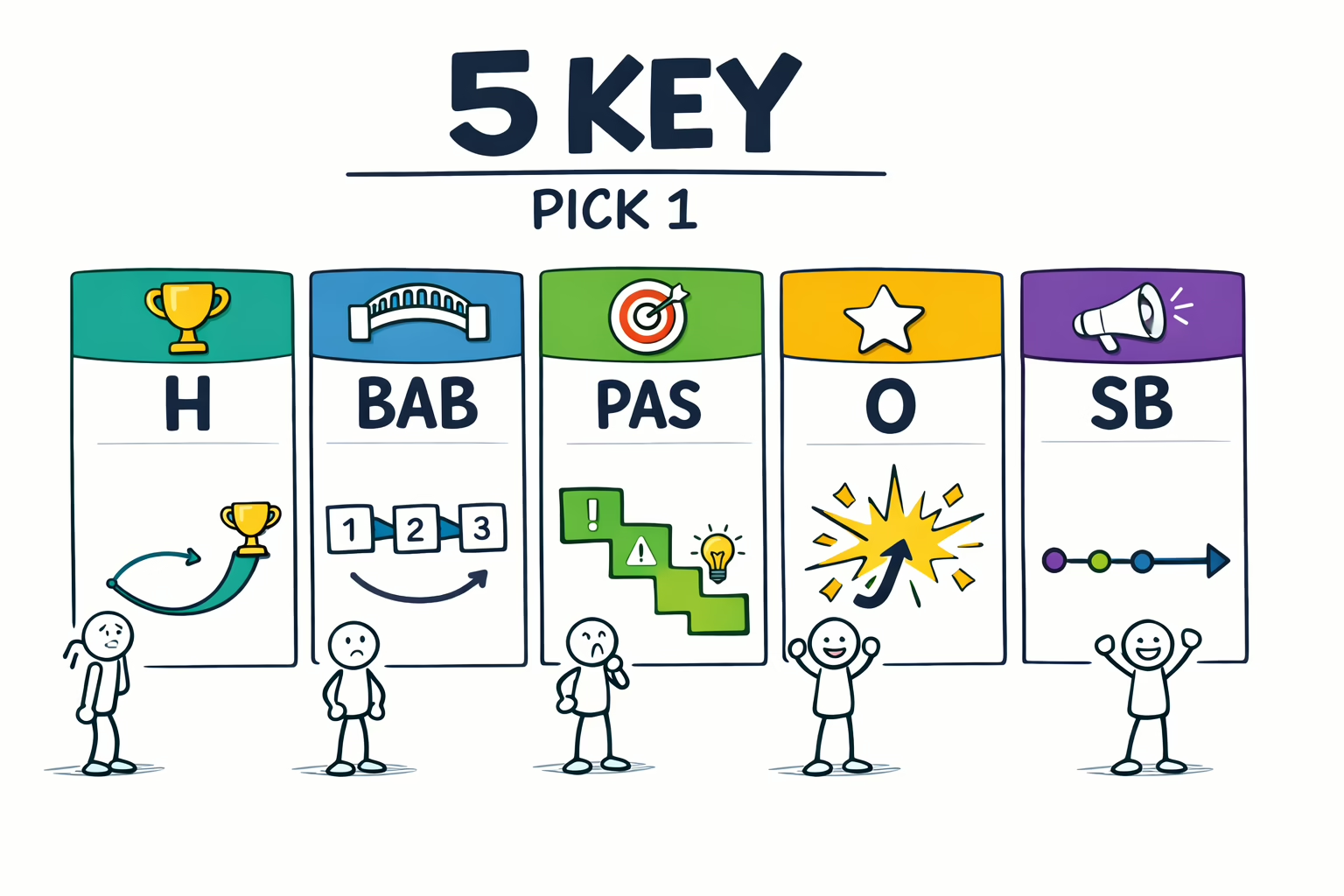
Headline formulas give you writing patterns that work. You don’t need to guess. These formulas drive clicks for service businesses. Each formula targets specific reader emotions and needs.
The best headline writing tips include ready-to-use formulas. So, pick formulas that match your content type. Test multiple formulas to find what your audience clicks.
Number-Based Headlines
Number headlines promise specific value. They tell readers exactly what to expect. Examples: “7 Ways to Get More Clients” or “5 Headline Writing Tips That Work.”
Numbers make headlines feel actionable and scannable. Odd numbers often perform better than even numbers. Your headline writing should use numbers when listing tips or steps.
Research from Nielsen Norman Group shows numbered headlines increase click rates by 36%. People trust specific numbers over vague promises. So, use numbers in your headlines when possible.
How-To Headlines
How-to headlines promise practical solutions. They work for service business content. Examples: “How to Write Headlines That Get Clicks” or “How to Create Clickable Headlines Fast.”
These headlines attract people searching for answers. Your headline writing should use “how to” for educational content. This formula builds trust with prospects looking for help.
Question Headlines
Question headlines engage curiosity. They make readers think about their situation. Examples: “Are Your Headlines Costing You Clients?” or “What Makes Headlines Clickable?”
Questions work when they highlight pain points. Your headline writing must ask questions readers actually ask. Generic questions don’t drive clicks. Specific questions about business problems do.
Benefit-Driven Headlines
Benefit headlines focus on outcomes. They show what readers gain. Examples: “Get More Clicks with Better Headlines” or “Write Headlines That Convert Visitors.”
These headlines work for offer pages and service descriptions. Your headline writing should clearly state the benefit. Vague benefits don’t make people click. Specific results do.
The AI blog post writer helps you test different headline formulas quickly. It generates multiple options based on proven patterns. So, you can compare headlines and pick winners.
The Psychology Behind Clickable Headlines
Clickable headlines trigger specific psychological responses. Understanding these triggers improves your headline writing. People click headlines that make them feel something. Your headlines must connect with emotions and needs.
Business owners often write headlines that sound professional but feel cold. Headlines need warmth and urgency. So, learn the psychology behind clicks to write better headlines.
Curiosity Gap
The curiosity gap creates tension between what readers know and want to know. Your headline writing should hint at valuable information without giving everything away. This gap makes people click to learn more.
Examples: “The Headline Mistake 90% of Businesses Make” or “Why Your Headlines Fail (And How to Fix Them).” These headlines promise answers to questions readers didn’t know they had.
Fear of Missing Out
FOMO drives clicks when headlines suggest valuable information others know. Your headline writing can use this by highlighting what readers might miss. Examples: “The Headlines Your Competitors Use to Win” or “What Top Businesses Know About Writing Headlines.”
This psychology works because people hate feeling behind. So, headlines that suggest insider knowledge get clicks. Just make sure your content delivers real value.
Specificity Builds Trust
Specific headlines feel more credible than vague ones. Numbers, timeframes, and concrete outcomes build trust. Your headline writing should include specific details when possible.
Compare “Improve Your Headlines” versus “Write Headlines That Get 50% More Clicks in 30 Days.” The second headline feels more believable. Specificity makes promises feel real.
Expert Insight from Kateryna Quinn, Forbes NEXT 1000:
“Headlines that use specific numbers and outcomes feel safer to click. Vague promises make people suspicious. Your headline writing must prove value instantly.”
Urgency and Timeliness
Urgency makes headlines feel important now. Words like “today,” “now,” or “before” create pressure. Your headline writing can use urgency when the content has time-sensitive value.
Examples: “Write Better Headlines Today” or “Fix Your Headlines Before You Lose More Clicks.” These headlines suggest waiting costs something. So, readers click to avoid missing out.
The Headline Writing Process
Good headline writing follows a process. You can’t just guess and hope. This process helps you create clickable headlines consistently. Service business owners need a system that works every time.
Most people write one headline and move on. That’s a mistake. The best headline writing tips include testing multiple options. So, follow this process to find winners.
Start With Your Core Message
Identify the main benefit or outcome. What does your content help readers do? Your headline writing starts with this core message. Write it in one simple sentence first.
Example: “This article helps service business owners write headlines that get more clicks.” Now you have your foundation. Your headline writing builds from this clear message.
Write 10 to 15 Options
Never stop at one headline. Write at least 10 variations. Use different headline formulas for each option. Your headline writing improves when you generate many choices.
Mix number headlines, how-to headlines, and question headlines. Try benefit-driven and curiosity-driven options. So, you have variety to test against each other.
The AI content writing tool speeds up this process. It generates multiple headline options in seconds. You can then refine the best options manually.
Test for Clarity
Read each headline aloud. Does it make sense in two seconds? Your headline writing must communicate instantly. Confusing headlines don’t get clicks.
Ask yourself: “Can someone understand this headline while scrolling quickly?” If not, rewrite it. Clarity beats cleverness in headline writing every time.
Check for Emotional Hook
Does your headline create curiosity, urgency, or excitement? Headlines need emotional energy. Your headline writing should make people feel something. Boring headlines get ignored.
Compare “Tips for Writing Headlines” versus “Write Headlines That Triple Your Clicks.” The second creates excitement about results. So, add emotional energy to every headline.
Optimize for Keywords
Include your target keyword naturally. Search engines need to understand your headline topic. Your headline writing should balance keywords with readability. Keyword-stuffed headlines look spammy.
Example: “Headline Writing Tips: How to Write Clickable Headlines for Service Businesses.” This includes keywords while staying readable. So, optimize for both search and humans.
Testing and Optimizing Your Headlines
Testing reveals which headlines actually work. Your headline writing improves through data. Service business owners need to test headlines on real audiences. Guessing wastes time and traffic.
Most businesses never test headlines. They pick one and hope. Testing shows you exactly what makes people click. So, build testing into your headline writing process.
A/B Testing Methods
A/B testing compares two headlines. Half your audience sees headline A. Half sees headline B. Your headline writing gets better when you test systematically.
Email subject lines are perfect for A/B testing. Most email platforms let you test subjects easily. Track which headlines get higher open rates. Those principles apply to blog titles and social posts too.
Metrics to Track
Click-through rate is your main metric. It shows what percentage of people click. Your headline writing succeeds when CTR increases. Track CTR for every headline you write.
Also track time on page after clicking. High CTR with low engagement means your headline promises more than content delivers. Your headline writing must match content quality.
According to Entrepreneur magazine, businesses that test headlines consistently see 25% to 40% better engagement. Testing beats guessing every time.
Social Media Testing
Test headlines on social media before using them for important content. Post different headline versions as updates. See which ones get more engagement and clicks.
Your headline writing benefits from quick social feedback. Facebook, LinkedIn, and Twitter show you what resonates. So, use social platforms as headline testing labs.
Learning From Winners
Analyze your best-performing headlines. What patterns do they share? Your headline writing should replicate successful elements. Keep a swipe file of winners.
Look for common words, structures, or emotional hooks. Maybe questions outperform statements. Maybe specific numbers beat round numbers. So, learn from data and repeat what works.
Expert Insight from Kateryna Quinn, Forbes NEXT 1000:
“I track every headline for my clients. Headlines with specific outcomes and numbers consistently win. Your headline writing should follow proven patterns, not trends.”
Common Headline Writing Mistakes
Most business owners make the same headline mistakes. These errors kill click rates. Your headline writing improves when you avoid these common problems. Learn what not to do.
I’ve reviewed thousands of headlines for service businesses. The same mistakes appear over and over. So, fix these errors first for immediate improvement.
Being Too Vague
Vague headlines don’t promise clear value. Words like “better,” “improve,” or “enhance” mean nothing specific. Your headline writing must offer concrete benefits.
Bad: “Improve Your Business Marketing.” Good: “Get 50% More Leads With These 7 Marketing Headlines.” The second headline promises specific results. Vague headlines get scrolled past.
Using Jargon
Industry jargon confuses people. Your headline writing should use simple words everyone understands. Save technical terms for the article body.
Bad: “Optimize Your Content Syndication Strategy.” Good: “Get More People to Read Your Content.” Simple language wins. So, write headlines like you talk to friends.
Forgetting the Audience
Headlines that focus on you instead of readers fail. Your headline writing must speak to audience needs. Every headline should answer “what’s in it for me?”
Bad: “We Offer Premium Headline Services.” Good: “Write Headlines That Double Your Click Rate.” The second focuses on reader benefits. Headlines about you get ignored.
Making It Too Long
Long headlines get cut off in search results and social feeds. Your headline writing should stay under 60 characters when possible. Shorter headlines work better on mobile.
Mobile users see even less text. So, front-load your most important words. Put the main benefit at the beginning. Headlines that get cut off lose clicks.
Clickbait Without Delivery
Misleading headlines might get clicks but destroy trust. Your headline writing must match your content. Promising something you don’t deliver ruins credibility.
Example: “This One Weird Trick Triples Your Business” but the article offers basic advice. Readers feel cheated. So, write honest headlines that deliver on promises.
For more blog title tips, explore our content strategy resources that show how headlines fit into bigger marketing systems.
Frequently Asked Questions
What are headline writing tips?
Headline writing tips are proven techniques for creating clickable headlines. They include formulas, psychology principles, and testing methods. These tips help service business owners write headlines that get more clicks. Good headline writing tips focus on clarity, benefits, and emotional hooks.
How do I write clickable headlines fast?
Write clickable headlines by using proven formulas first. Start with number headlines or how-to structures. Create 10 options quickly, then pick the strongest. Test headlines on social media before finalizing. The AI headline generator speeds up this process significantly.
Why do my headlines get ignored?
Headlines get ignored when they’re vague or generic. They fail when they use jargon or lack clear benefits. Your headlines might be too long or miss emotional hooks. Test different headline formulas to find what your audience clicks. Specificity and clear value always win.
When should I use headline formulas?
Use headline formulas every time you write headlines. Formulas give you proven structures that work. They’re especially helpful when you feel stuck or rushed. So, keep a list of headline formulas handy. Apply different formulas to the same topic for variety.
Can AI help with headline writing?
Yes, AI tools generate multiple headline options quickly. They use proven formulas and optimize for keywords. AI headline generators save time and spark creativity. However, you should still test headlines and refine them manually. AI speeds up headline writing but doesn’t replace strategic thinking.
Step-by-Step Headline Writing Guide
Follow this process every time you write headlines. This system works for any service business content. Your headline writing becomes faster and more effective with practice.
- Identify the core benefit or outcome your content delivers
- Write your main message in one simple sentence
- Choose 3 to 5 headline formulas to test
- Write 10 to 15 headline variations using those formulas
- Read each headline aloud to test for clarity
- Check that each headline includes your target keyword naturally
- Evaluate each headline for emotional hook or curiosity
- Narrow down to your top 3 headline options
- Test headlines with a small audience or on social media
- Select the winner based on click data and refine as needed
Quick Reference Definition
Headline writing tips are proven techniques and formulas that help business owners create headlines that get more clicks. These tips focus on clarity, specificity, emotional triggers, and testing. Good headline writing combines psychology principles with practical formulas. The goal is to make people click by promising clear value. Effective headline writing includes using numbers, asking questions, creating curiosity, and showing specific benefits. Service businesses use headline writing tips to improve blog posts, social media, emails, and ads. The best headline writing tips emphasize testing multiple options and learning from data. Headlines should be under 60 characters, include target keywords, and focus on reader benefits rather than business features.
Ready to write headlines that actually get clicks? The AI blog post writer tool generates multiple headline options based on these proven tips. Stop guessing and start writing headlines that work. Your next clickable headline is one tool away.

Kateryna Quinn is an award-winning entrepreneur and founder of Uplify, an AI-powered platform helping small business owners scale profitably without burnout. Featured in Forbes (NEXT 1000) and NOCO Style Magazine (30 Under 30), she has transformed hundreds of service-based businesses through her data-driven approach combining business systems with behavior change science. Her immigrant background fuels her mission to democratize business success.