Buyers want proof before they open their wallet. No proof means no sale. Your service business needs to show buyer proof psychology at work.
I generated $25M in client revenue before building Uplify. Proof was always the difference between winning and losing. Buyers don’t trust claims. They trust psychology backed by evidence.
This post shows you how buyer proof psychology works. You’ll learn what buyers need to see. You’ll also discover how to build buyer confidence fast. Service businesses win when they master buyer proof psychology.
Table of Contents
- What Is Buyer Proof Psychology
- Why Buyers Need Proof Before Purchase
- Types of Buyer Proof That Drive Psychology
- How to Build Buyer Proof Psychology
- Buyer Proof Psychology Mistakes to Avoid
- AI Tools for Buyer Proof Psychology
What Is Buyer Proof Psychology
Buyer proof psychology means showing evidence that your service works. Buyers look for proof before they trust you. The psychology of proof drives every purchase decision buyers make.
Your buyers face risk when they hire you. So they search for proof that reduces their risk. Proof includes reviews, case studies, testimonials, and results. Each type of proof triggers buyer psychology differently.
The psychology behind buyer proof is simple. Buyers want to see that others succeeded with you. Social proof tells buyers they’re making a safe choice. Trust building happens when proof matches buyer needs.
The Science Behind Buyer Proof Psychology
Buyer proof psychology taps into brain science. Our brains look for patterns to reduce risk. When buyers see proof, their brain registers safety. Harvard Business Review research on trust psychology shows that proof accelerates buyer confidence faster than any sales pitch.
Buyers also compare themselves to others in your proof. If your proof shows similar buyers, psychology kicks in. The buyer thinks, “If it worked for them, it works for me.” This is purchase psychology at its core.
Your service business must understand buyer proof psychology deeply. Proof isn’t just nice to have. Proof is what converts browsers into buyers. AI credibility tools can help you create proof faster than ever.
Why Proof Matters More Than Claims
Buyers ignore claims without proof. Your claim says you’re the best. But buyer psychology demands evidence. Proof shows what claims can’t.
For example, saying “We help businesses grow” is a claim. Showing “We grew 47 businesses by 210% in 12 months” is proof. Buyers trust the second statement because psychology responds to specifics.
The AI case study generator helps you turn results into buyer proof psychology content. Build proof that buyers actually believe. Stop making claims. Start showing buyer proof.
Key Takeaway: Buyer proof psychology is evidence that triggers trust in buyers’ brains.
Why Buyers Need Proof Before Purchase
Buyers need proof because they fear making mistakes. The psychology of fear drives buyer behavior. No buyer wants to waste money on the wrong service.
When buyers don’t see proof, they hesitate. Their psychology tells them to wait. Proof removes hesitation by showing that others succeeded with you. Buyer confidence grows when proof answers their fear.
Service business owners often skip proof. They think their service speaks for itself. But buyer psychology doesn’t work that way. Buyers need proof to justify the purchase to themselves and others.
The Cost of Missing Proof
Missing proof costs you sales every single day. Buyers compare you to competitors who show proof. If you don’t have proof, buyers assume you don’t deliver results. Purchase psychology always favors proof over promises.
I’ve seen service businesses lose 60% of potential buyers because they lacked proof. Those buyers went to competitors with strong buyer proof psychology. One case study can shift buyer psychology faster than ten sales calls.
So build proof before you need it. Document every buyer success. Turn each win into buyer proof psychology content. Use an AI proof generator to speed up the process. Buyers will respond when they see real proof.
How Buyer Proof Psychology Builds Trust
Trust building starts with proof. Buyers trust what they can verify. Proof gives them something to verify. The psychology behind trust is rooted in evidence, not words.
When buyers see proof from similar businesses, psychology kicks in. They think, “This business understands me.” That emotional connection drives buyer confidence. Trust building becomes automatic when proof aligns with buyer needs.
Also, proof reduces the buyer’s need to question you. Their psychology shifts from skeptical to confident. Buyers stop asking “Will this work?” and start asking “When do we start?” That’s the power of buyer proof psychology.
Key Takeaway: Buyers need proof to overcome fear and build trust before purchase.
Types of Buyer Proof That Drive Psychology
Different types of proof trigger different buyer psychology. Not all proof works the same way. Your service business needs to know which proof type drives buyer confidence for your audience.
The most common types of buyer proof include case studies, testimonials, reviews, data, and social proof. Each type serves a unique role in buyer psychology. Let’s break down how each proof type works.
Case Studies as Buyer Proof Psychology
Case studies show the full buyer journey. They reveal the problem, the solution, and the results. Buyer psychology responds to stories that mirror their own situation.
A strong case study includes specific numbers. For example, “We increased revenue by 210% in 90 days for a fitness studio.” Buyers trust specifics because psychology reads them as real. Vague case studies don’t trigger buyer confidence.
Your case studies should focus on buyer outcomes. Show how you solved problems similar to what your buyers face. Purchase psychology favors proof that feels relevant. Create case studies that match your buyer’s psychology exactly.
Testimonials and Reviews
Testimonials give buyers a quick proof point. Reviews show volume. Both types of proof build buyer confidence through social validation. The psychology of social proof is incredibly strong.
Buyers scan testimonials to find someone like them. If they see a testimonial from their industry, psychology signals trust. Reviews amplify this effect. The more reviews you have, the stronger the buyer proof psychology.
So collect testimonials regularly. Ask buyers to mention specific results. Use AI tools to turn results into testimonials. Your buyer confidence grows when proof comes from real buyers.
Data and Results as Proof
Data is pure buyer proof psychology. Numbers don’t lie. Buyers trust data because psychology sees it as objective. Show your results in numbers whenever possible.
For example, “We helped 87 service businesses double their revenue” is stronger than “We help businesses grow.” The psychology behind buyer proof favors specifics. Data removes doubt from the buyer’s mind.
Also, use data to show trends. “Our buyers see results in 30 days on average” tells buyers what to expect. Purchase psychology loves predictability. Data-driven proof builds buyer confidence faster than any other type.
Social Proof and Authority
Social proof means showing how many buyers trust you. Authority proof means showing who trusts you. Both types of proof trigger buyer psychology in powerful ways.
When buyers see “Over 1,000 service businesses use our system,” psychology signals safety. Big numbers create buyer confidence. Authority proof works the same way. “Featured in Forbes” tells buyers you’re credible.
Your service business should collect both types of proof. Show volume and show authority. Buyer psychology responds to both. The Uplify testimonials page combines social proof with buyer stories to maximize buyer confidence.
Key Takeaway: Different proof types trigger different buyer psychology responses for trust building.
How to Build Buyer Proof Psychology
Building buyer proof psychology takes a system. You can’t create proof randomly. Your service business needs a process to capture proof and use it strategically.
The best time to collect buyer proof is right after you deliver results. Buyers feel positive psychology at that moment. They’re willing to share their success. Don’t wait weeks to ask for proof.
Step-by-Step Process to Build Buyer Proof
- Identify your best buyer results. Look for wins with clear numbers.
- Ask buyers for permission to share their story. Most buyers say yes.
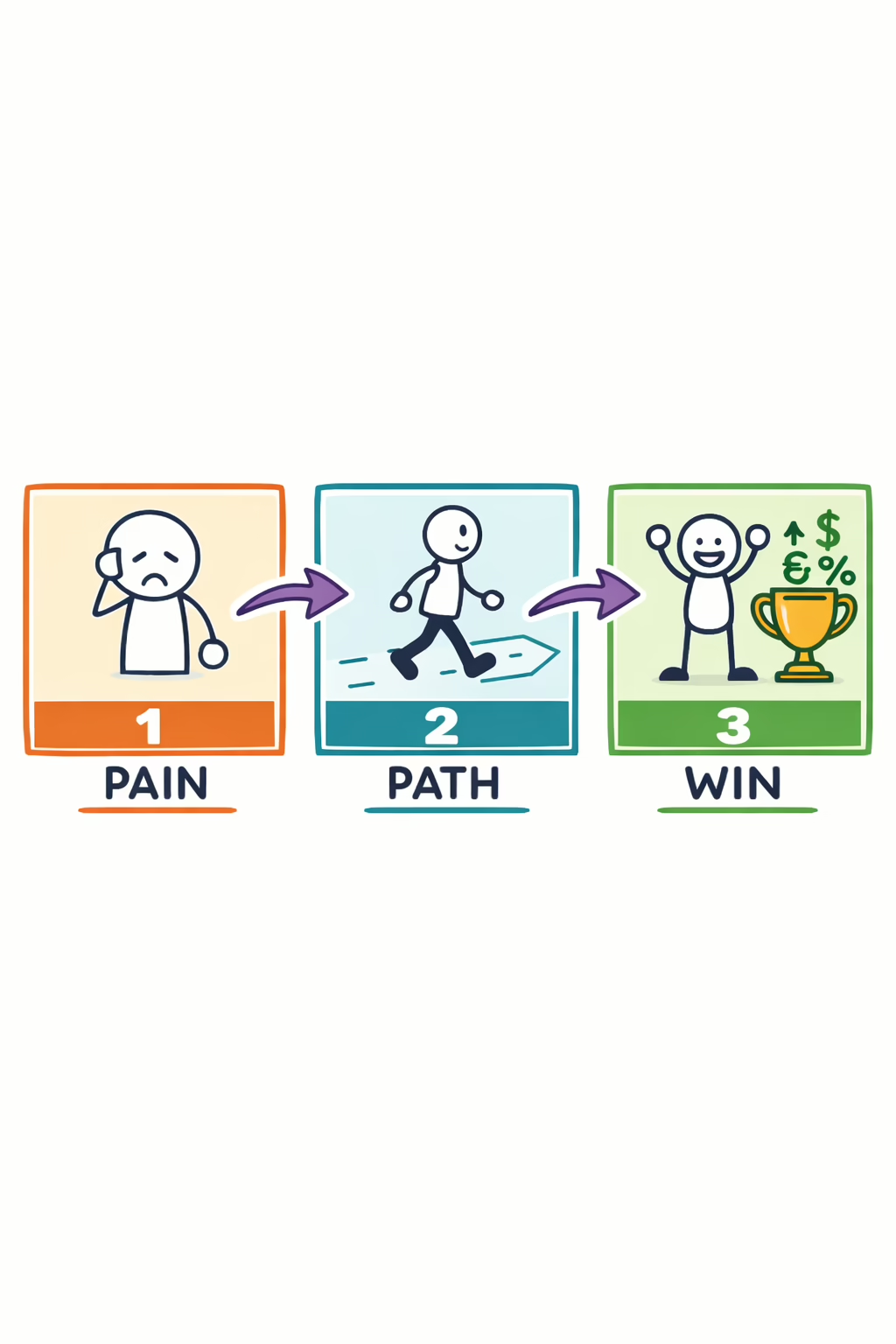
- Document the buyer’s problem before you worked together. Psychology needs contrast.
- Show the solution you provided. Be specific about what you did.
- Highlight the buyer’s results. Use numbers whenever possible.
- Turn the story into a case study. Use AI tools to write it fast.
- Get the buyer’s approval on the final case study. Trust matters.
- Publish the case study on your website. Make it easy to find.
- Share the proof in your sales process. Buyers need to see it.
- Update your proof regularly. Fresh proof builds stronger buyer psychology.
How AI Tools Speed Up Buyer Proof Creation
AI credibility tools make proof creation faster. You no longer need hours to write a case study. An AI proof generator can turn raw results into polished buyer proof psychology content in minutes.
For example, the AI case study generator asks you simple questions about the buyer’s results. Then it writes a full case study that triggers buyer confidence. You just review and publish.
AI tools also help you create testimonials, reviews, and social proof content. Your buyer proof psychology grows faster with AI. Service businesses that use AI build trust building systems in days, not months.
Where to Display Buyer Proof
Buyer proof psychology only works if buyers see it. Your proof must appear where buyers make decisions. That means your website, proposals, emails, and sales calls.
Put proof on your homepage. Buyers form opinions in seconds. Early proof builds buyer confidence immediately. Also, include proof in your about page, service pages, and contact page.
In your sales process, share proof early. Don’t wait until the buyer asks. Psychology responds better to proactive proof. Send case studies in your first email. Reference buyer results in every sales call.
Key Takeaway: Building buyer proof psychology requires a system to capture and display proof.
Buyer Proof Psychology Mistakes to Avoid
Many service businesses make buyer proof psychology mistakes. These mistakes weaken trust building instead of strengthening it. Avoid these errors to keep your buyer confidence strong.
Using Vague Proof
Vague proof doesn’t trigger buyer psychology. Statements like “Our clients love us” or “We get great results” mean nothing. Buyers need specifics to trust you.
Instead, show exact results. “We helped a fitness studio add 47 new buyers in 60 days” is specific. Buyer psychology responds to numbers and timelines. Replace vague claims with precise buyer proof psychology.
Showing Irrelevant Proof
Irrelevant proof confuses buyers. If you serve fitness studios, don’t show proof from law firms. Buyer psychology looks for relevance. Proof must match the buyer’s situation.
So segment your proof by buyer type. Create case studies for each buyer persona. When buyers see proof from their industry, psychology signals trust. Relevance is key to buyer confidence.
Hiding Your Proof
Many service businesses have great proof but hide it. They bury case studies on a random page. Buyers never find it. Hidden proof is worthless for buyer psychology.
Make proof easy to find. Put it front and center. Link to proof from every page. Buyer confidence grows when proof is visible. Don’t make buyers search for evidence.
Forgetting to Update Proof
Old proof loses power. Buyers want to see recent wins. If your case studies are from three years ago, buyer psychology questions whether you still deliver. Fresh proof builds stronger buyer confidence.
Update your proof every quarter. Add new case studies regularly. Show recent buyer results. Purchase psychology favors current evidence. Keep your buyer proof psychology fresh.
Key Takeaway: Avoid vague, irrelevant, hidden, or outdated proof to maintain buyer psychology.
AI Tools for Buyer Proof Psychology
AI credibility tools make building buyer proof psychology easier. You don’t need to hire writers or spend weeks creating content. AI proof generators handle the heavy lifting for you.
The best AI tools ask you questions about your buyer results. Then they write professional case studies, testimonials, and proof content. Your buyer confidence grows because the proof looks polished and credible.
How the AI Case Study Generator Works
The AI case study generator creates full case studies in minutes. You enter basic information about the buyer’s problem, solution, and results. The AI writes a story that triggers buyer psychology.
Each case study includes specific numbers and outcomes. Buyers trust specifics. The AI also formats the case study for easy reading. Short sentences and clear sections keep buyer psychology engaged.
So use AI to turn every buyer win into proof. Build your buyer proof psychology library faster than competitors. AI tools give you a competitive edge in trust building.
Other AI Tools for Buyer Proof
Beyond case studies, AI tools help with other proof types. The AI review generator turns buyer feedback into polished reviews. The AI success story writer creates buyer stories that boost psychology.
These AI credibility tools save hours of work. You focus on delivering results. AI handles the proof creation. Your buyer confidence grows because you consistently show evidence.
Also, AI tools help you repurpose proof. Turn one case study into social media posts, email content, and sales slides. Buyer psychology sees your proof everywhere, which amplifies trust building.
Why Service Businesses Need AI for Proof
Service businesses struggle to find time for proof creation. You’re busy serving buyers. AI credibility tools solve this problem. They automate buyer proof psychology content so you can focus on delivery.
AI also ensures consistency. Every case study follows the same structure. Buyers see professional proof every time. Purchase psychology favors consistency. AI tools make your buyer confidence system reliable.
So invest in AI proof generators now. Build your buyer proof psychology library faster. Your service business will close more sales because buyers trust your evidence. Start with the AI case study generator and watch buyer confidence grow.
Key Takeaway: AI credibility tools automate buyer proof psychology creation for faster trust building.
Conclusion: Build Buyer Proof Psychology Today
Buyer proof psychology is non-negotiable for service businesses. Buyers need evidence before they trust you. Proof removes fear and builds buyer confidence fast.
Start building proof today. Document every buyer win. Turn results into case studies, testimonials, and reviews. Use AI credibility tools to speed up the process. Your buyer psychology response will improve immediately.
Also, display proof everywhere buyers look. Put it on your website, in your proposals, and in your emails. Buyer confidence grows when proof is visible. Don’t hide your wins.
The best service businesses master buyer proof psychology. They show evidence at every step. Buyers feel safe, so they buy. You can do the same.
Ready to build buyer proof psychology fast? Try the AI case study generator and create your first proof piece in minutes. Your buyers are waiting for evidence. Show them what you’ve got.
Frequently Asked Questions
What is buyer proof psychology?
Buyer proof psychology is the study of how evidence influences buyers. Proof includes case studies, testimonials, reviews, and data. Buyers need proof to trust a service before purchase. Psychology shows that proof reduces buyer fear and builds confidence fast.
Why do buyers need proof before purchase?
Buyers need proof because they fear making mistakes. Proof shows that others succeeded with your service. This reduces buyer risk. Psychology tells buyers to seek evidence before they commit. Proof answers the question “Will this work for me?”
What types of proof work best for buyer psychology?
Case studies, testimonials, reviews, and data work best. Case studies show the full buyer journey. Testimonials provide quick validation. Reviews show volume. Data proves results. Each proof type triggers different buyer psychology responses. Use multiple types for strongest buyer confidence.
How do I build buyer proof psychology content?
Start by documenting buyer results. Ask buyers for permission to share their story. Write case studies that include problems, solutions, and results. Use AI tools to speed up creation. Display proof on your website and in sales materials. Update proof regularly to keep buyer psychology strong.
Can AI tools help with buyer proof psychology?
Yes. AI credibility tools automate proof creation. They turn raw results into polished case studies, testimonials, and reviews. AI proof generators save hours of work. Service businesses use AI to build buyer confidence faster. Tools like the AI case study generator make proof creation easy.
Quick Reference: Buyer Proof Psychology Defined
Buyer proof psychology is the science of using evidence to influence purchase decisions. It studies how proof triggers trust in buyers’ brains. Proof includes case studies, testimonials, reviews, data, and social validation. Service businesses use buyer proof psychology to reduce buyer fear and build confidence. The psychology behind proof shows that buyers need evidence before they trust claims. Effective buyer proof psychology matches the buyer’s situation, shows specific results, and appears at key decision points. AI credibility tools help service businesses create and display proof faster. Buyer confidence grows when proof is visible, relevant, and current. Purchase psychology favors businesses that master buyer proof psychology systems. Trust building becomes automatic when proof answers buyer questions before they ask.

Kateryna Quinn is an award-winning entrepreneur and founder of Uplify, an AI-powered platform helping small business owners scale profitably without burnout. Featured in Forbes (NEXT 1000) and NOCO Style Magazine (30 Under 30), she has transformed hundreds of service-based businesses through her data-driven approach combining business systems with behavior change science. Her immigrant background fuels her mission to democratize business success.