Marketing Focus
How to Master Business Storytelling
Business storytelling transforms how customers see your brand. Stories build trust faster than facts. Stories create emotion that drives decisions. Stories make your message stick when ads get forgotten.
This guide shows you how to tell stories that sell. You’ll learn storytelling frameworks used by top brands. You’ll discover how to craft customer success stories. You’ll see real examples from service businesses.
Plus, free AI tools help you create compelling stories in minutes.
Why Business Storytelling Builds Trust and Drives Sales
Business storytelling is how you connect with customers on an emotional level. Stories help people remember your brand. Stories show your values. Stories prove your expertise through real results.
Facts tell. But stories sell. When you share a customer transformation story, prospects see themselves in that journey. They imagine achieving similar results. That emotional connection drives action.
Research shows people remember stories 22 times more than facts alone. Your brand storytelling creates lasting impressions that build loyalty over time. Stories also help you stand out in crowded markets where everyone claims similar benefits.
Stories Make Your Business Memorable
Your customers hear hundreds of marketing messages every day. Most messages get ignored. Stories break through that noise. Stories activate emotional centers in the brain. Stories create mental images that stick.
When you tell a founder story about why you started your business, customers connect with your mission. When you share a customer success story about solving a real problem, prospects trust you can help them too. Stories humanize your brand in ways that product features never can.
Plus, stories work across every marketing channel. Use storytelling in your website copy. Use stories in social media posts. Use transformation narratives in sales presentations. Every story reinforces your brand message and builds credibility.
Why Facts Alone Don't Convert Customers
Facts justify decisions that emotions already made. Numbers matter. Data proves results. But facts without stories feel cold and disconnected. Customers need emotional reasons to choose you before they care about logical proof.
Think about how you buy. You don't choose a restaurant because it has "30% faster service." You choose it because a friend told you a story about an amazing meal. That story created desire. Then you looked at reviews to confirm your emotional choice.
Business buying works the same way. Your prospects need to feel confident in you first. Stories build that confidence by showing real people getting real results. After stories create trust, your facts and figures seal the deal.
Key Insight: Storytelling in business creates the emotional foundation that makes all your other marketing more effective. Stories work because they mirror how humans naturally process information and make decisions.
How Storytelling Differentiates Your Brand
Every business in your industry can copy your features. Competitors can match your pricing. They can replicate your process. But they can't steal your stories. Your unique experiences create a brand moat that protects you from competition.
Founder stories show why you're different. Customer transformation stories prove your approach works. Behind-the-scenes stories reveal your culture and values. These narratives create an authentic brand identity that resonates with your ideal customers.
When you consistently share stories that align with your positioning strategy, you attract customers who connect with your mission. Those customers become loyal advocates who share your stories with others. That word-of-mouth marketing multiplies your reach organically.
Essential Storytelling Frameworks for Business
Great business storytelling follows proven frameworks. These frameworks give your stories structure. Structure makes stories easy to follow. Easy stories convert better than complex narratives.
You don't need to be a professional writer to tell compelling stories. You just need a simple framework and real experiences to share. Let's explore the storytelling frameworks that top brands use to create powerful narratives.
The Before-After-Bridge Framework
The before-after-bridge framework is the simplest storytelling structure for business. Start by describing the problem your customer faced before working with you. Paint a clear picture of their struggle. Make it relatable so prospects recognize themselves in that situation.
Next, show the after state. Describe the transformation your customer achieved. Use specific details and measurable results. The bigger the contrast between before and after, the more powerful your story becomes.
Finally, bridge the gap by explaining how you helped. This is where you showcase your unique process or solution. But keep the focus on the customer's journey, not just your features. Your AI case study builder uses this exact framework to help you create compelling transformation stories quickly.
The Hero's Journey in Business Storytelling
The hero's journey is one of the oldest storytelling frameworks in human history. Stories using this structure feel familiar because we've heard them thousands of times in movies, books, and myths. That familiarity makes your business stories more engaging.
In business storytelling, your customer is the hero. They face a challenge or problem that disrupts their normal life. They need a guide to help them overcome obstacles. That guide is your business. You provide the tools, wisdom, or process that helps them succeed.
Here's how to apply the hero's journey: First, introduce your customer and their ordinary world. Then show the problem that forces them to seek change. Next, position yourself as the experienced guide. Show the plan you created together. Share the obstacles they overcame with your help. Finally, reveal their transformation and new success.
This framework works because it positions customers as the hero of their own story. People want to see themselves as heroes. When your storytelling makes them the star, they engage more deeply with your message.
Framework Tip: The hero's journey works best for longer content like detailed case studies or video testimonials. For quick social media posts, stick with the before-after-bridge structure to keep things simple and scannable.
The Five Elements of Powerful Stories
Every compelling business story includes five key elements. Master these elements and your stories will consistently engage audiences across all channels.
Character: Every story needs a relatable character. In business storytelling, that character is usually your customer or your founder. Give them specific details that make them feel real. Instead of "a fitness coach," say "Sarah, a 35-year-old fitness coach with two kids who struggled to attract clients."
Conflict: Conflict creates tension that keeps people reading. The conflict is the problem your customer faced or the challenge your business overcame. Make the conflict specific and emotionally resonant. Show what was at stake if they didn't solve this problem.
Turning Point: This is the moment when everything changes. In customer stories, it's usually when they decided to work with you. In founder stories, it's the insight that led you to start your business. This moment should feel significant and transformative.
Transformation: Show how the character changed through their journey. Transformation is what makes stories memorable. Use social proof with specific before-and-after metrics to make transformations concrete and believable.
Resolution: End with the new reality your character now enjoys. This gives your story a satisfying conclusion while showing prospects what they could achieve. Always tie your resolution back to the main message or call-to-action.
Storytelling Formulas That Work Across Industries
Certain storytelling formulas work for almost any service business. These formulas create clear narratives that guide prospects from problem to solution.
Problem-Agitate-Solve: Start by identifying a problem your customer faces. Then agitate that problem by exploring its consequences and emotional impact. Finally, present your solution as the path to relief. This formula works great for sales pages and email marketing.
Star-Story-Solution: Begin with the star (your customer). Share their story of struggle and transformation. End with your solution as the tool that made their success possible. This framework keeps the customer at the center while naturally introducing your offer.
Feature-Advantage-Benefit: Though less story-driven, this formula still creates a narrative arc. Describe a feature of your service. Explain the advantage that feature provides. Then connect that advantage to a meaningful benefit in the customer's life. Layer multiple FAB sequences to build a complete story.
Types of Business Stories That Build Trust
Different stories serve different purposes in your marketing. A complete storytelling strategy includes multiple story types. Each type connects with customers at different stages of their buying journey.
Founder Stories That Build Emotional Connection
Your founder story explains why your business exists. This story creates an emotional foundation for your brand. It shows your values, mission, and the personal journey that led you to serve your customers.
Great founder stories follow a simple pattern. Start with the problem you personally experienced or witnessed. Show how that problem frustrated you or broke your heart. Then explain the moment you decided to do something about it. Share the obstacles you overcame to build your business. End with your current mission and who you serve.
Be vulnerable in your founder story. Share real struggles and doubts. Authenticity matters more than perfection. Customers connect with real humans who faced challenges, not superheroes who never struggled. Your founder story should feel conversational and genuine.
Use your founder story on your About page, in speaking engagements, and when introducing yourself on social media. This story helps prospects understand what makes you different and why they should trust you. Your value proposition should align with the mission revealed in your founder story.
Customer Transformation Stories
Customer transformation stories are your most powerful sales tool. These stories show prospects exactly what they can achieve by working with you. Real results from real customers build credibility that no amount of self-promotion can match.
Start every customer story with the before state. What problem did they face? How did that problem affect their business or life? Use specific details that make the situation relatable. Paint a picture that helps prospects think "that's exactly like me."
Next, explain what solution you implemented. Keep the focus on the customer's experience, not just your process. How did they feel during the journey? What obstacles came up? Showing the path makes success feel achievable rather than magical.
Then share the results with specific numbers. Revenue increases. Time savings. Problem elimination. The more specific your metrics, the more credible your story becomes. Your AI-powered case study builder helps you structure these transformation stories for maximum impact.
End with a quote from the customer about their experience. Let them speak in their own words about the transformation. This authentic voice adds credibility and emotional resonance to your narrative.
Brand Story and Company Narrative
Your brand story is different from your founder story. The founder story is personal. The brand story explains what your company stands for, how you work, and what makes your approach unique.
Your brand story should cover these key elements. First, explain your purpose beyond making money. What change do you want to create in your industry? Second, share your core values and how they guide your decisions. Third, describe your unique approach or methodology. Fourth, show your company culture and what it's like to work with you.
Brand storytelling creates consistency across all your marketing. Every piece of content should reinforce your brand narrative. Your website, social media, sales materials, and customer interactions should all tell parts of the same larger story.
Use your brand story to differentiate yourself from competitors. Most businesses in your industry probably offer similar services. But your unique story, approach, and values can't be copied. That uniqueness attracts customers who share your worldview and appreciate your style.
Origin Story of Your Signature Offer
Every signature offer has an origin story. This story explains why you created this particular solution and what makes it special. Origin stories help customers understand the thought and care behind your services.
Start with the problem you kept seeing with clients. What frustrated you about existing solutions? What gap did you notice in your industry? Show the moment when you realized there had to be a better way.
Then explain how you developed your solution. What research did you do? What did you test? How did you refine your approach based on early results? This behind-the-scenes look builds appreciation for your expertise and process.
Share early results and how they surprised or validated you. Show how your offer evolved based on customer feedback. End by explaining who this offer serves best and what transformation it creates. Your offer creation strategy should include crafting this origin story to support your sales process.
Story Variety Matters: Don't rely on just one type of story. Mix founder stories, customer transformations, and brand narratives to keep your content fresh and engaging. Different prospects connect with different story types.
Behind-the-Scenes Stories
Behind-the-scenes stories give customers a peek into your world. These stories humanize your business and build connection through transparency. They work especially well on social media where authenticity drives engagement.
Share stories about your team. Introduce team members and their roles. Show how you collaborate to serve customers. Celebrate wins together. This storytelling builds trust by proving you're real people, not a faceless company.
Tell stories about how you solve problems. When something goes wrong, share how you fix it. When you create something new, show the creative process. These narratives demonstrate your expertise while keeping customers engaged with your journey.
Behind-the-scenes stories also work for showcasing your values in action. Don't just say you care about quality. Tell a story about a time you delayed a project to get it right. Don't just claim you prioritize customers. Share a story about going above and beyond for someone.
How to Use Storytelling Across All Marketing Channels
Storytelling works everywhere in your marketing. But each channel needs a different approach. Social media stories must be brief and visual. Website stories can be longer and more detailed. Email stories need hooks that drive action.
Storytelling on Your Website
Your website is where storytelling builds credibility and converts visitors. Every page should tell part of your larger brand story while serving its specific purpose.
Your homepage hero section needs a micro-story. In just a few sentences, show the transformation you create. Use the before-after-bridge framework to immediately connect with visitors. Then guide them deeper into your site with clear calls-to-action.
Your About page is perfect for your founder story. This is where you build emotional connection and show your values. Don't just list credentials. Tell the story of why you do this work and who you serve. Make it personal and vulnerable.
Service pages benefit from customer transformation stories. Show prospects what's possible by sharing real results. Use specific examples rather than vague promises. Link to detailed case studies for prospects who want more proof.
Your blog is ideal for longer storytelling content. Share detailed case studies. Explain your methodology through narrative. Tell stories that teach while building authority. Every blog post should include elements of storytelling to keep readers engaged.
Storytelling in Social Media Marketing
Social media demands quick, punchy storytelling. You have seconds to capture attention. Stories must work even when people are scrolling quickly through feeds.
Instagram and Facebook work well for founder moments and day-in-the-life stories. Share quick wins from customers. Show your process through behind-the-scenes snippets. Use carousel posts to tell slightly longer stories with visual progression.
LinkedIn is perfect for professional transformation stories. Share detailed customer results. Post about industry challenges and how you solve them. Tell stories about your company culture and team. LinkedIn audiences appreciate depth and substance in storytelling.
Twitter and short-form platforms need ultra-compressed stories. Use thread formats to tell longer stories across multiple tweets. Start with a hook that promises transformation. Then deliver the story in digestible chunks.
Video platforms like TikTok and YouTube Shorts demand visual storytelling. Show rather than tell. Use quick cuts to maintain energy. Start with the result to grab attention, then flash back to show the journey. Keep videos focused on one clear message.
Storytelling in Email Marketing
Email is where storytelling drives action. Every email should tell a mini-story that leads to a specific call-to-action. Subscribers opened your email, so they're already interested. Stories keep them reading all the way to your offer.
Welcome email sequences benefit from your founder story. New subscribers want to know who you are. Share your mission and values. Explain why you created your business. This foundation builds connection for future emails.
Nurture sequences should feature customer transformation stories. Show different types of results for different customer segments. Use stories to overcome common objections. Each story should lead naturally to a relevant offer or resource.
Launch emails need excitement and urgency. Tell the story of why you created this offer. Share early results or beta tester experiences. Use narrative to build anticipation for your launch. Then transition from story to offer with a clear connection.
Follow-up emails work well with personal stories. Share a relevant experience from your own journey. Connect that experience to why your offer matters. Make the transition from story to pitch feel natural and helpful rather than salesy.
Storytelling in SEO Content
Stories make SEO content more engaging and shareable. Search engines want content that keeps readers on the page. Stories naturally increase dwell time and reduce bounce rates. This signals quality to Google.
Start your blog posts with a relatable story that hooks readers. Then transition into your main content. Weave examples and case snippets throughout to maintain interest. End with a transformation story that reinforces your main points.
Stories also earn more backlinks. Other sites are more likely to link to content with compelling narratives and real examples. When you share unique stories based on your experience, you create link-worthy content that boosts your SEO.
Use storytelling to differentiate your content from competitors. Most SEO content is dry and generic. Adding stories makes your content memorable. Memorable content gets shared more on social media, creating additional traffic and authority signals.
Business Storytelling Mistakes to Avoid
Even experienced marketers make storytelling mistakes that kill engagement. Avoid these common errors to make your stories more effective. Small fixes often create dramatic improvements in response rates.
Making Yourself the Hero Instead of the Customer
This is the most common storytelling mistake in business. You are not the hero of your customer's story. Your customer is the hero. You are the guide who helps them succeed.
When you make yourself the hero, your stories sound like bragging. Customers don't care how great you are. They care about their own problems and goals. Position yourself as the experienced mentor who provides the tools and wisdom for their journey.
In customer transformation stories, spend 70% of the narrative on the customer's experience. Their challenges. Their doubts. Their journey. Their results. Only 30% should focus on your specific process or intervention. This balance keeps the customer at the center where they belong.
Your founder story can feature you more prominently since it's about your personal journey. But even there, frame your story around serving others. Show how your experiences led you to help customers solve specific problems. Make it about your mission to serve, not about your accomplishments.
Telling Stories With No Clear Transformation
Stories without transformation are just anecdotes. Transformation is what makes a story powerful and memorable. Every business story needs to show clear change from beginning to end.
Weak transformation: "We helped a client improve their marketing." That's vague and forgettable. Strong transformation: "We helped a fitness coach go from zero clients to 15 paying members in 60 days by implementing a targeted Instagram strategy." Specific transformations create credible stories that inspire action.
Make your transformations emotional as well as practical. Show how the customer felt before and after. Fear turning to confidence. Stress becoming peace. Confusion transforming into clarity. Emotional transformation makes stories relatable on a human level.
Always quantify transformations when possible. Numbers make abstract improvements concrete and believable. Instead of "increased revenue," say "grew monthly revenue from $8,000 to $23,000." Instead of "saved time," say "reduced proposal creation time from 6 hours to 45 minutes." Specificity builds credibility.
Making Stories Too Long or Complicated
Long-winded stories lose readers. Complex plots confuse the message. Business storytelling should be simple and focused. Every detail should serve the main point.
For social media, keep stories under 300 words. For email, aim for 200-400 words depending on your sequence. For blog posts, you can go longer, but break stories into scannable sections. Always respect your audience's time and attention.
Remove unnecessary details that don't advance the narrative. You don't need to explain every step of your process. Focus on the moments that matter. The problem. The turning point. The result. Cut everything else.
Use simple language. Avoid jargon unless your audience expects it. Short sentences work better than long ones. One clear idea per sentence. This makes your storytelling easy to follow even when people are skimming.
No Emotional Contrast in Your Narrative
Flat stories don't engage. You need emotional contrast to create a compelling arc. Show the struggle before the success. Highlight the frustration before the relief. Emphasize the fear before the confidence.
Don't rush past the problem to get to your solution. Spend time in the difficult moment. Help readers feel the pain your customer experienced. This emotional investment makes the resolution more satisfying and memorable.
Use sensory language to enhance emotional impact. Instead of "they were stressed," describe the sleepless nights and constant worry. Instead of "they felt relieved," show them breathing easy and smiling for the first time in months. Make emotions visceral and real.
Balance positive and negative emotions throughout your story. Too much negativity feels depressing. Too much positivity feels fake. The best stories move from struggle through hope to triumph. This emotional journey keeps readers engaged from beginning to end.
No Clear Connection to Your Offer
Great stories entertain. But business stories must also drive action. Every story should connect naturally to your offer or call-to-action. Stories without clear next steps waste marketing opportunities.
After sharing a customer transformation story, explain how prospects can achieve similar results. Link to your relevant service. Offer a consultation. Point to a free resource. Make the connection obvious and easy to act on.
Your founder story should conclude with your current mission and who you serve. This naturally leads to talking about your offers. The story provides emotional context for why your services exist and who they help.
Don't make stories feel like bait-and-switch tactics. The connection to your offer should feel helpful rather than pushy. Frame your call-to-action as the next logical step for someone who resonated with your story. Your content strategy should map stories to specific conversion goals.
Practical Storytelling Templates for Business Owners
Templates make storytelling faster and easier. These proven templates work across industries. Fill in the blanks with your specific details to create compelling narratives quickly.
Founder Story Template
Use this template to craft your founder story in 30 minutes. This structure creates an emotional arc that builds connection with your audience.
Setup: "Before starting [company name], I was [your previous role/situation]. I thought [what you believed then]."
Struggle: "But I kept seeing [problem] happen to [who you served]. It frustrated me because [why it mattered]. I watched [specific example] and knew something had to change."
Moment of Clarity: "Then [pivotal moment or realization]. I realized [insight that changed everything]. That's when I decided to [action you took]."
Transformation: "I spent [time period] [what you did to build your solution]. It wasn't easy. [Obstacle you overcame]. But [what kept you going]."
Mission: "Now I help [who you serve] achieve [what you help them do]. My mission is to [your purpose]. If you're [ideal customer description], I'd love to help you [desired outcome]."
Customer Transformation Template
This template creates powerful customer success stories that drive conversions. Use it for case studies, testimonials, and social media proof.
Before: "[Customer name], a [their role/business type], was struggling with [specific problem]. They tried [previous attempts] but [why they didn't work]. This led to [negative consequence], which affected [emotional or business impact]."
Trigger: "When [event that prompted them to seek help], [customer name] knew they needed a different approach. They were looking for [what they hoped to find]."
Solution: "We worked together to [what you implemented]. The strategy included [key elements of your solution]. We focused on [main priority or unique approach]."
Implementation: "During [time period], [customer name] [what they did with your help]. The biggest challenge was [obstacle], which we overcame by [how you solved it]."
Results: "Within [timeframe], [customer name] achieved [specific measurable results]. They went from [before metric] to [after metric]. Even better, [additional positive outcome]."
Customer Quote: "[Customer testimonial in their own words about the experience and results]"
Your value proposition builder helps you identify the key transformation points that make these stories compelling.
Social Media Micro-Story Template
Short stories for social media need hooks that grab attention immediately. Use these templates for Instagram, LinkedIn, and Facebook posts.
Hook: "[Surprising result] in just [timeframe]."
Context: "Here's what happened: [Customer] was [struggling with problem]. They had tried [previous attempts] without success."
Turning Point: "Then they [action they took with you]. We focused on [key strategy]."
Result: "Now? [Current success state]. [Specific metric] in [timeframe]."
CTA: "Want similar results? [Simple call-to-action]."
Day-in-the-Life Story Template
Behind-the-scenes stories humanize your brand. This template creates relatable content that builds connection with your audience.
Morning: "Started the day [what you did]. My focus was [priority for the day]."
Challenge: "Then [unexpected situation] happened. [Brief description of problem]."
Solution: "Here's how we handled it: [What you did]. [Why this approach works]."
Lesson: "This reminded me that [insight or lesson]. In [your business type], [wisdom you want to share]."
Connection: "If you ever [relatable situation], remember [helpful advice]."
Problem-Agitate-Solve Story Template
This template works great for sales emails and landing pages. It builds urgency while positioning your solution as the answer.
Problem: "Are you struggling with [specific problem]? You're not alone. [Percentage] of [target audience] face this same challenge."
Agitate: "And it gets worse. [Problem] leads to [negative consequence 1]. Which creates [negative consequence 2]. Before you know it, [worst-case scenario]."
Story Example: "Just like [customer name]. They were [description of their struggle]. They felt [emotional state]. Sound familiar?"
Solution: "But here's what changed everything for them: [Your solution]. In just [timeframe], they [positive result]."
Path Forward: "You can achieve similar results. [Call-to-action with clear next step]."
Business Storytelling Examples by Industry
Different industries need different storytelling approaches. Here are examples showing how to adapt storytelling frameworks for specific service businesses.
Coaching and Consulting Storytelling
Coaches and consultants sell transformation. Your stories should focus on mindset shifts and breakthrough moments. Show the internal journey alongside external results.
Example: "Jessica came to me burnt out from her corporate job. She wanted to start a coaching business but doubted herself. Through our work together, she discovered her unique message. Within six months, she left her job and signed her first three clients. Now she runs a six-figure coaching practice helping women make similar transitions."
Key storytelling elements for coaches: Emphasize the emotional journey. Show the client's resistance and breakthroughs. Use quotes about how they feel now versus before. Connect their success to your specific methodology or framework.
Professional Services Storytelling
Lawyers, accountants, and financial advisors need stories that build trust and demonstrate expertise. Focus on how you navigate complex situations and protect client interests.
Example: "A family came to us facing foreclosure and divorce simultaneously. The stress threatened their children's stability. We coordinated their bankruptcy and divorce proceedings to protect their home and custody arrangement. They avoided foreclosure, maintained joint custody, and each started fresh financially. Now they co-parent successfully and both own their own homes."
Key storytelling elements for professionals: Show your strategic thinking. Demonstrate how you handle complexity. Highlight outcomes that matter personally, not just financially. Build credibility through specific expertise.
Home Services Storytelling
Contractors, landscapers, and home service providers should tell stories about problem-solving and reliability. Show how you save customers from disasters or create dream outcomes.
Example: "The Johnsons called us in a panic. Their basement flooded during a holiday weekend. Other plumbers wanted them to wait until Monday. We came out that night, stopped the flooding, and had their basement dry by Sunday. They avoided thousands in additional water damage and could host family as planned."
Key storytelling elements for home services: Emphasize reliability and responsiveness. Show before-and-after visually when possible. Include specific dollar savings. Highlight how you exceeded expectations.
Health and Wellness Storytelling
Fitness trainers, nutritionists, and wellness practitioners should focus on sustainable lifestyle changes. Show long-term transformation, not quick fixes.
Example: "Mark tried every fad diet for 15 years. Nothing stuck. He'd lose weight, then gain it back plus more. We created a sustainable approach based on his actual lifestyle, not some perfect ideal. Over 18 months, he lost 60 pounds. More importantly, he's maintained that loss for three years while enjoying food and having energy for his kids."
Key storytelling elements for wellness: Focus on sustainability over speed. Show the emotional freedom alongside physical results. Include lifestyle benefits beyond the primary goal. Demonstrate your non-restrictive approach.
Creative Services Storytelling
Designers, photographers, and creative professionals should tell stories about the creative process and how your work drives business results.
Example: "A new restaurant hired us for branding before their grand opening. They wanted to attract young professionals, not just families. We created a sophisticated visual identity that felt approachable, not pretentious. On opening weekend, they had a two-hour wait. Six months later, they're the hottest reservation in town. The owner says our branding positioned them perfectly for their ideal customer."
Key storytelling elements for creatives: Show how design drives business outcomes. Include the strategic thinking behind creative choices. Let results speak louder than artistic descriptions. Connect your work to client goals.
Advanced Business Storytelling Techniques
Once you master basic storytelling frameworks, these advanced techniques will make your stories even more powerful. Use these methods to create stories that spread organically and build lasting brand recognition.
Using Contrast to Amplify Your Message
Contrast makes transformations feel more dramatic. The bigger the gap between before and after, the more impressive your results seem. Use contrast strategically in every story you tell.
Emotional contrast: Don't just say someone was stressed before and confident after. Show them losing sleep and snapping at family, then later laughing easily and enjoying weekends. Paint contrasting pictures that readers can visualize.
Metric contrast: Instead of "revenue increased," say "went from barely covering rent to expanding into a second location." Specific contrasts create memorable moments that stick in minds.
Belief contrast: Show how your customer's beliefs changed. "I used to think I needed to work 80 hours to succeed. Now I know that strategic systems matter more than hustle." This transformation of perspective adds depth to your narrative.
Incorporating Sensory Details
Sensory details make stories feel real and immersive. Instead of telling readers what happened, show them through specific sensory language. This technique transforms abstract concepts into vivid experiences.
Visual details: Rather than "their office was messy," describe "papers stacked three feet high on every surface, sticky notes covering the walls, old coffee cups collecting dust on the windowsill." Readers see the chaos.
Emotional details: Don't just say someone felt anxious. Describe the tight chest, racing thoughts at 3am, checking email compulsively. Make emotions physical and relatable.
Dialogue: Include brief quotes in your stories. "When she said 'I can't do this anymore,' I knew we had to change our approach." Dialogue brings characters to life and breaks up narrative text.
Creating Story Sequences
Single stories engage. But story sequences build anticipation and keep audiences coming back. Use continuing narratives across multiple pieces of content.
Progress updates: Share a customer's journey in installments. Week 1: "Starting the transformation." Week 4: "Hitting obstacles and breakthroughs." Week 12: "Final results and lessons learned." This serial storytelling builds investment in the outcome.
Behind-the-scenes series: Show the creation of a new offer or project across multiple posts. Each installment advances the story while teaching something valuable. Followers tune in to see what happens next.
Customer journey mapping: Tell different stories for different stages of the buying process. Awareness stage gets struggle stories. Consideration stage gets methodology stories. Decision stage gets detailed transformation stories. Your content marketing strategy should map story types to customer journey stages.
Leveraging User-Generated Stories
The most authentic stories come from your customers themselves. Encourage and amplify their stories to build social proof at scale.
Customer testimonials: Ask specific questions that prompt storytelling. Not "how was your experience?" but "what specific problem were you facing, and how did our solution change things?" These prompts generate richer narratives.
Video testimonials: Short video clips of customers telling their stories create powerful proof. Even 30-second clips where customers share one breakthrough moment work better than long written testimonials.
Before-and-after submissions: Encourage customers to share their transformations with photos, metrics, or descriptions. Feature these stories with permission. User-generated content multiplies your storytelling capacity.
Building a Story Bank
Professional storytellers maintain a collection of stories they can adapt for different situations. Build your own story bank to make content creation easier and more consistent.
Document customer wins: Every time a customer achieves results, capture the details. Their starting point, their journey, specific outcomes, their quote. Store these in a simple spreadsheet or document.
Track your own experiences: Keep notes about your entrepreneurial journey. Challenges you overcame. Lessons you learned. Mistakes that taught you something valuable. These become founder stories and relatable content.
Collect industry examples: Save interesting stories from your field. Notice what works in other people's storytelling. Adapt successful patterns to your own narrative style. Your story bank becomes a creative resource you can draw from whenever you need content.
How to Measure Your Storytelling Success
Great storytelling drives measurable results. Track these metrics to understand which stories resonate with your audience and drive the most business value.
Engagement Metrics That Matter
Engagement shows how well your stories capture attention. Stories that engage get read, shared, and acted upon. Monitor these signals to optimize your storytelling.
Time on page: Long time on page means readers stayed engaged with your story. This metric signals quality to search engines while showing you which narratives hold attention. Compare time on page for story-driven content versus feature-focused content.
Social shares: Stories get shared more than facts. Track which stories earn the most social sharing. Those narratives touched emotions or provided value worth spreading. Analyze what made them shareable, then replicate those elements.
Comments and replies: When people respond to your stories, they're processing them emotionally. Read comments to understand what resonated. Often readers will share their own related stories, which gives you insight into their challenges and desires.
Video completion rate: For video stories, watch completion rate shows how gripping your narrative is. If people drop off halfway through, tighten your story structure. Strong stories maintain attention all the way to the conclusion.
Conversion Metrics for Story-Driven Content
Ultimately, business storytelling should drive conversions. Track how stories move prospects through your sales funnel toward becoming customers.
Click-through rates: When you include calls-to-action in story content, measure click-through rates. Story-driven CTAs often convert 2-3 times better than feature-driven ones. Test different stories to find your best performers.
Lead generation: Track how many leads come from pages with strong storytelling versus pages without stories. Case study pages often generate more qualified leads because stories pre-sell prospects on your value.
Sales cycle length: Prospects who engage with your stories often close faster. They feel like they already know you. They've seen proof of your results. They trust you more than prospects who only read about features. Track average time to close for story-educated versus non-story-educated leads.
Deal size: Stories position you as premium. When prospects understand your transformation process through narrative, they value your work more highly. Monitor whether story-driven leads accept higher pricing than prospects who skip your stories.
Brand Awareness Indicators
Storytelling builds brand recognition and recall over time. These metrics show how well your stories are establishing your brand in your market.
Direct traffic: When people type your URL directly or search your brand name, they remember you. Strong storytelling creates that recall. Track direct traffic growth as you increase your storytelling efforts.
Branded search volume: Monitor how often people search for your company name or unique terms you use in your stories. Growing branded searches indicate rising awareness from your storytelling.
Referral traffic: When people talk about your stories and link to them, you earn referral traffic. This indicates your narratives are memorable enough to share and reference. Quality stories attract quality backlinks.
Return visitor rate: If visitors return to read more of your stories, your storytelling is building an audience. Track return visitor percentage and frequency. Consider creating story series specifically to encourage returns.
Frequently Asked Questions About Business Storytelling
Business storytelling is using narrative techniques to communicate your brand message, showcase customer results, and build emotional connections. Stories help customers remember your business and trust your expertise. Every business can use storytelling to stand out and attract ideal clients.
Stories activate emotional centers in the brain. People remember stories 22 times better than facts alone. Stories also help prospects see themselves in the transformation. Features tell what you do. Stories show how you change lives.
Every business needs a founder story explaining why you started. Customer transformation stories prove your results. Brand stories show your values and approach. Origin stories for your offers explain what makes them unique. Mix different story types across your marketing.
Story length depends on the channel. Social media stories work best under 300 words. Email stories should be 200-400 words. Blog posts and case studies can go 800-1500 words. Always cut unnecessary details that don't advance your narrative.
The before-after-bridge framework works great for customer stories. Show their situation before working with you. Describe the transformation they achieved. Then explain how you helped bridge that gap. This simple structure creates compelling narratives quickly.
Ask specific questions that prompt storytelling. Request permission to share results. Offer to write the story for them based on an interview. Make sharing easy with templates or guided questions. Show appreciation when customers contribute stories.
Real names and details build more credibility than anonymous stories. Always get written permission before sharing customer stories with identifying details. Some industries require extra privacy. Offer alternatives like first name only or pseudonyms if customers prefer.
Share stories consistently across all channels. Include story elements in every blog post. Feature customer transformations in weekly social media posts. Use stories in every email sequence. Consistent storytelling builds your brand narrative over time.
Start with your founder story and personal experiences. Share behind-the-scenes stories about building your business. Tell stories about problems you've observed in your industry. As you gain customers, add their transformation stories to your narrative library.
Absolutely. B2B buyers are still humans who respond to stories. Focus on business transformation stories showing ROI and outcomes. Include quotes from decision-makers. Show how you solve strategic challenges. B2B storytelling works when you focus on business results.
Use specific details and real quotes. Include obstacles and challenges, not just wins. Show the realistic timeline of transformation. Avoid superlatives and vague language. Authenticity comes from genuine detail, not perfection.
Stories increase dwell time on your pages, which signals quality to search engines. Compelling stories earn more backlinks from other sites. Story-driven content gets shared more on social media. Better engagement leads to better rankings over time.
AI Tools for Small Business Owners
Free AI Tools That Make Business Storytelling 10× Easier
The right AI tools turn storytelling from overwhelming into doable. These AI business tools help you implement what you just learned about creating compelling narratives.

Irresistible Offer Builder
Create offers and packages so good that customers can't say no.

Value Proposition Builder
Write a clear message that instantly shows customers why you're better than everyone else they're considering

Blog Post Writer
Write blog posts that get found on Google and turn readers into customers.

Case Study Builder
Create professional case studies that show exactly how you solved problems and got results.

Social Media Calendar Planner
Plan all your social posts ahead so you never run out of things to share.
Together, these free AI tools create a complete storytelling system.
You focus on your expertise and customer relationships. Uplify AI handles the heavy lifting of crafting compelling narratives.
Related Resources to Help You Master Storytelling
Sharpen your messaging, strengthen your value proposition, and increase your close rate. These articles give you deeper insights into storytelling in marketing so you can confidently build a brand that converts.
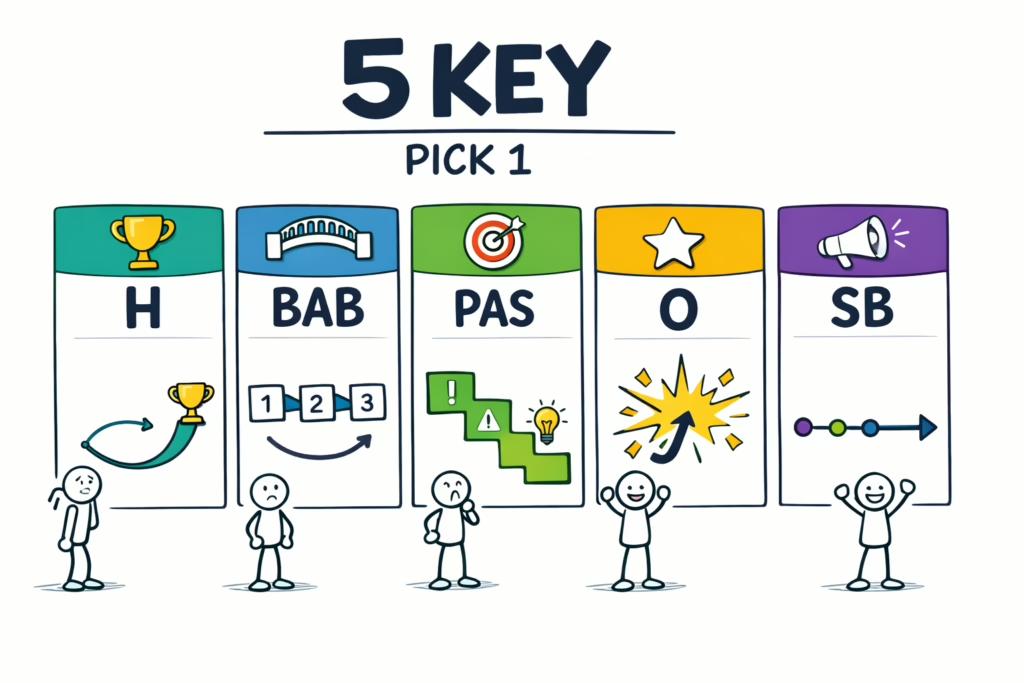
Storytelling Frameworks for Founders and Brands
Business Storytelling: How to Tell Stories That Sell
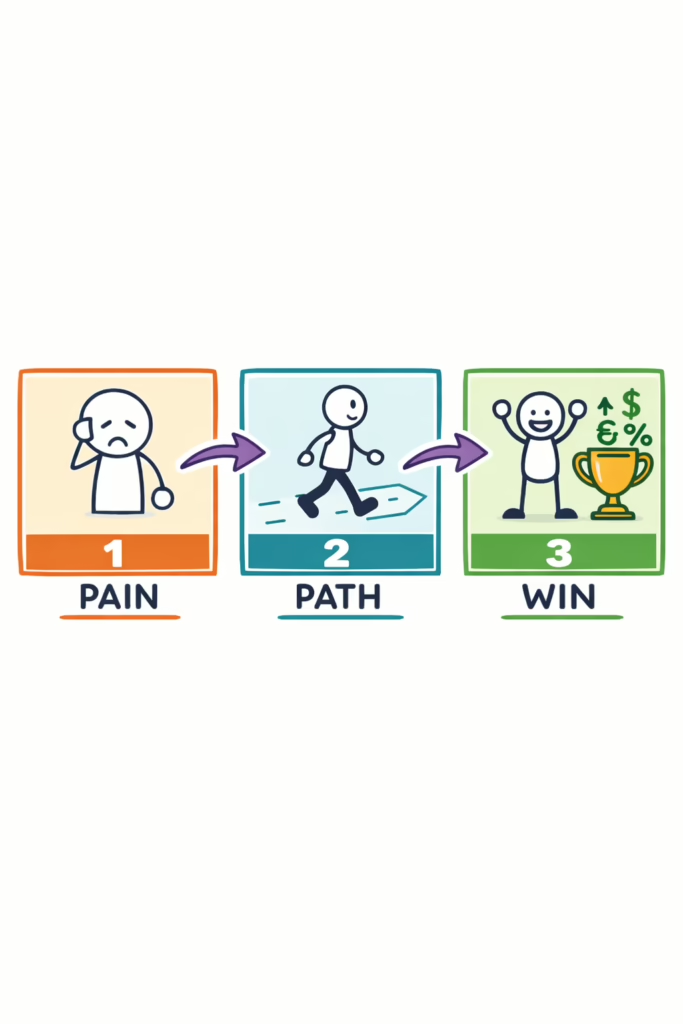
CTA Examples That Increase Conversions for Service Businesses
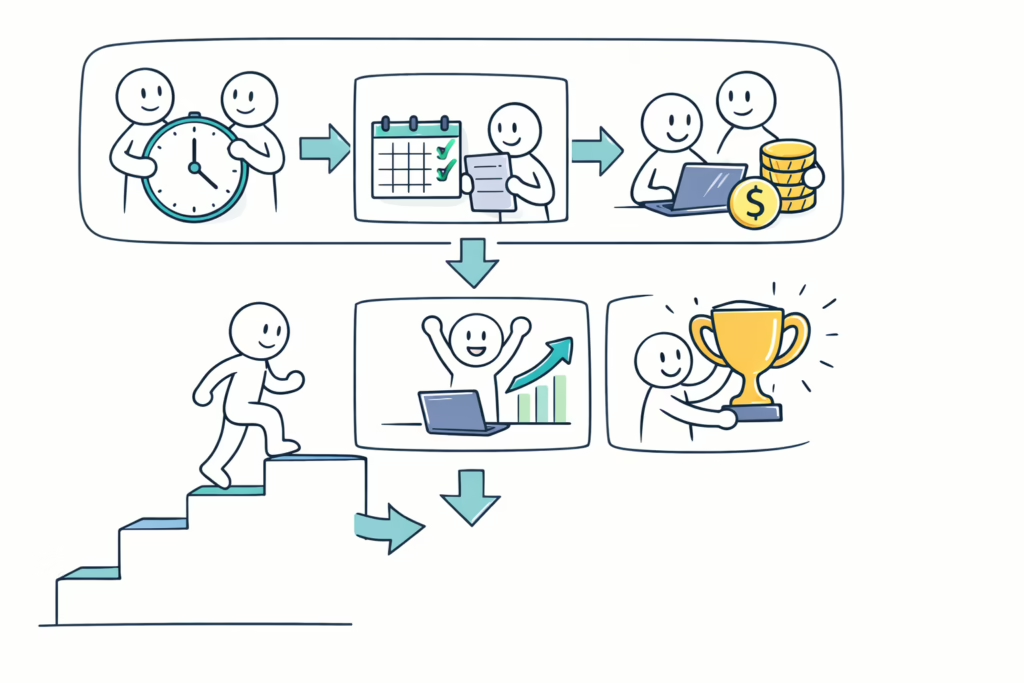
Start Creating Compelling Stories Today
You now understand how business storytelling builds trust, drives engagement, and converts prospects into customers. Stories set you apart in crowded markets. Stories prove your value through real transformation. Stories make your marketing memorable.
Don’t let another month pass with generic marketing that sounds like everyone else. Start telling stories that showcase your unique approach and real customer results.
Our free AI storytelling tools help you create professional case studies, blog posts, and social media stories in minutes. No writing experience needed. Just answer a few questions and get complete narratives ready to share.