You spent hours with a client. They got real results. But now you stare at a blank page wondering what is a case study and how to write one. Most service business owners feel stuck here.
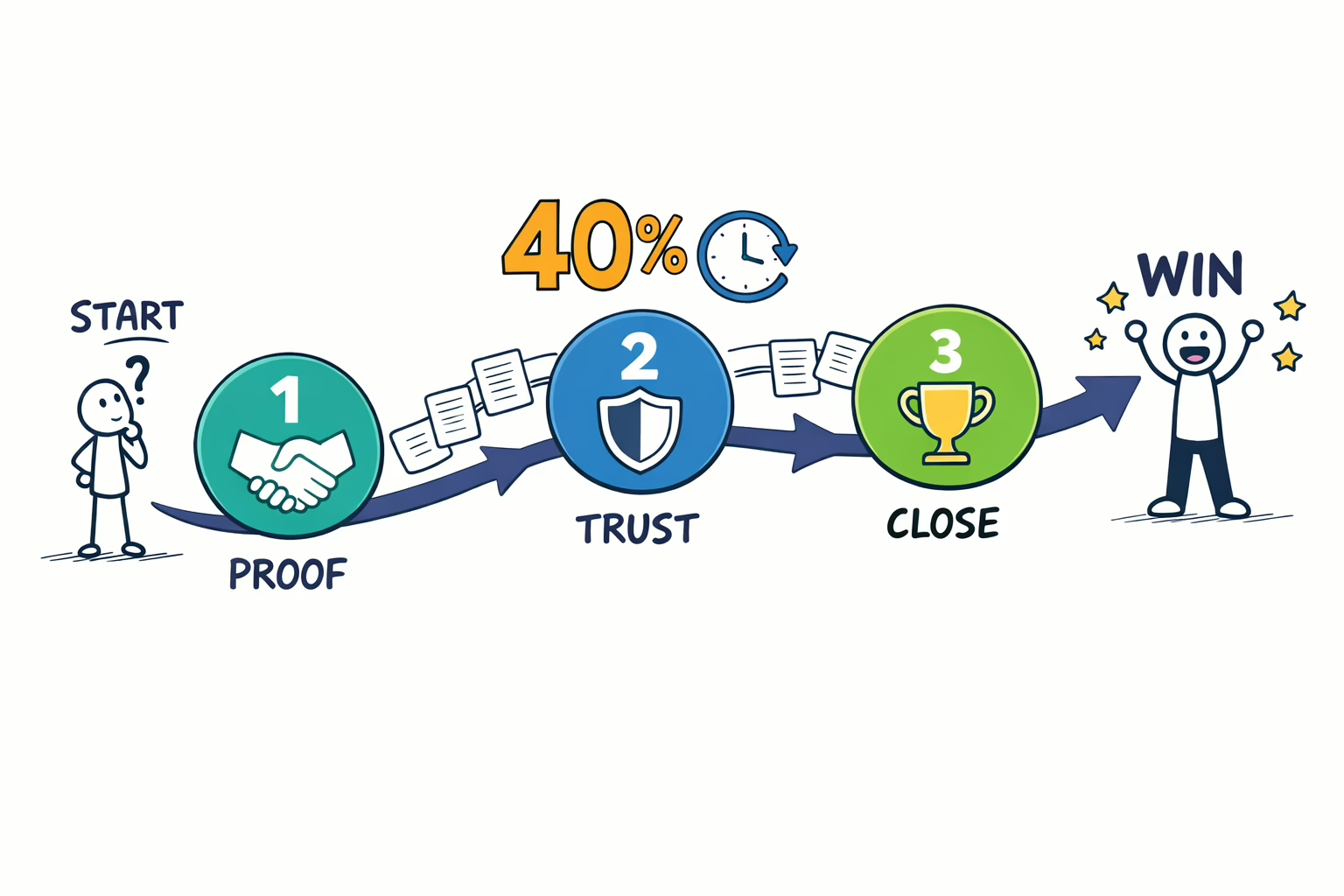
A case study is a detailed story about how your service helped a specific client. It shows real results with real numbers. So, it builds trust faster than any sales pitch.
I built a marketing agency that generated $25M for clients. Case studies were our top sales tool. Also, they closed deals without long calls. Now I’ll show you exactly what is a case study and how to create one.
Table of Contents
- What Is a Case Study: The Complete Definition
- Why Case Studies Matter for Your Business
- Essential Case Study Components That Convert
- How to Create a Case Study: Step-by-Step Process
- Real Case Study Examples for Service Businesses
- Common Case Study Mistakes to Avoid
- Frequently Asked Questions
What Is a Case Study: The Complete Definition
A case study is a detailed business document. It tells the story of one client’s success. So, what is a case study used for? It proves your service works.
Most business owners confuse case studies with testimonials. A testimonial is a short quote. But a case study shows the full journey. It includes the problem, your solution, and the results.
Think of a case study as proof. Your prospects want to see real numbers. They want to know what happened before you helped. Then they want to see what changed after.
The Business Case Study Format
Every business case study follows a simple structure. First, you describe the client’s problem. Next, you explain what you did. Finally, you show the results with data.
A strong case study definition includes three parts. The challenge section sets up the problem. The solution section explains your process. Also, the results section proves it worked.
Service businesses need case studies more than product companies. Why? Because your work is invisible. A case study makes your results visible and real.
Case Study vs. Success Story
Many business owners ask what is a case study compared to a success story. They are similar but different. A success story focuses on emotions. But a case study focuses on data.
Use success stories for social media posts. Save case studies for serious prospects. Also, case studies work better in sales proposals and pitch decks.
The AI case study generator helps you create both formats. It pulls the right details for each business purpose.
Expert Insight from Kateryna Quinn, Forbes Next 1000:
“Case studies closed more deals for my agency than any other content. Prospects trusted data over promises. So, we built a library of 30 case studies. Each one targeted a specific industry concern.”
Why Case Studies Matter for Your Business
Case studies build trust faster than any marketing tool. Prospects see real proof instead of empty claims. So, they make buying decisions with confidence.
A business case study answers the question every prospect has. Will this work for me? When they see similar businesses getting results, they believe you can help them too.
Case Studies Shorten Your Sales Cycle
Most service businesses waste time on long sales calls. Prospects need proof before they buy. But a case study provides that proof upfront.
Send a case study before your sales call. The prospect arrives already convinced. Also, they ask better questions. Your close rate goes up because objections disappear.
According to DemandGen research, 73% of buyers want case studies. They rank case studies as the most valuable content. So, skip the fancy brochures and focus on case studies.
Case Studies Attract Better Clients
When you publish case studies, you attract similar clients. A fitness studio case study brings more fitness clients. Also, a marketing agency case study brings more agency owners.
This is why the case study definition matters. You want to define your ideal client clearly. Then create case studies that show results for that exact business type.
The case study marketing approach works because prospects self-select. They see themselves in your case study. So, they reach out already qualified.
Case Studies Work Across All Channels
Use your business case study everywhere. Post it on your website. Share it in email campaigns. Also, send it in sales proposals.
Break a case study into smaller pieces. Turn the results into social media posts. Use the challenge section in blog content. Also, quote the client in testimonials.
One case study creates content for months. This is why understanding what is a case study helps your entire marketing strategy. It becomes your proof engine.
Essential Case Study Components That Convert
Every winning business case study has the same structure. Follow this format and your case study will convert prospects into clients. Skip any section and you lose trust.
Client Background and Context
Start with who the client is. Name their business type and industry. Also, include how long they’ve been in business.
Keep this section brief. Two to three sentences work best. For example: “Sarah owns a yoga studio in Austin. She opened five years ago. Her studio serves busy professionals.”
The client background answers what is a case study trying to prove. It shows your prospect that you work with businesses like theirs.
The Challenge or Problem
Next, describe what was wrong. Be specific about the business problem. Use numbers when possible.
For example: “Sarah’s studio had only 40 members. Her monthly revenue was $8,000. Also, she spent $2,000 per month on ads with poor results.”
This section makes prospects lean in. They recognize their own problems. So, they keep reading to find the solution.
Your Solution and Process
Now explain what you did. Walk through your process step by step. But keep it simple and clear.
Avoid industry jargon in this section. Write like you’re talking to a friend. For example: “We rebuilt Sarah’s offer. Then we created a referral system. Also, we trained her team on sales conversations.”
The solution section defines what is a case study at its core. It shows your methodology. Also, it proves you have a system that works.
Results with Real Numbers
This is the most important section. Show the results with specific data. Include before and after numbers.
For example: “Sarah now has 120 members. Her monthly revenue is $24,000. Also, she cut ad spend to $500 per month. Her profit tripled in 6 months.”
Numbers make your business case study credible. Vague claims like “increased revenue” don’t work. But “tripled profit in 6 months” creates belief.
Client Quote or Testimonial
End with a quote from the client. Let them describe the experience in their own words. Also, keep the quote short and authentic.
For example: “I was ready to close my studio. This process saved my business. Now I finally make enough to pay myself well.”
The quote adds emotion to your data. It helps prospects imagine their own success. So, always include a client voice.
How to Create a Case Study: Step-by-Step Process
Creating a business case study doesn’t take weeks. Follow this simple process and finish one in under two hours. Also, you’ll have a format to repeat for every client.
Step 1: Choose the Right Client
Pick a client with strong results. Look for clear before and after numbers. Also, choose someone who will give you a quote.
The best case study subjects are enthusiastic clients. They already love your work. So, they’ll happily participate in the case study process.
Step 2: Gather the Data
Collect all the numbers before you write. You need starting metrics and ending metrics. Also, note the timeline from start to finish.
Ask your client for access to their data. Most business owners track revenue and customer numbers. Also, ask about time saved or costs reduced.
Step 3: Interview Your Client
Schedule a 30-minute call. Ask about their situation before working with you. Then ask how things changed after.
Record the call so you can quote them accurately. Also, ask what they would tell another business owner considering your service. This becomes your testimonial quote.
Step 4: Write the Case Study
Use the structure from the previous section. Start with client background. Then describe the challenge, solution, and results. Finally, add the client quote.
Write in simple language. Avoid technical terms. Also, keep sentences short. Each section should take only 2-3 paragraphs.
The AI case study generator speeds up this process. It asks for your client details. Then it creates a complete case study in minutes.
Step 5: Add Visuals
Include charts or graphs that show the results. Visual proof makes your business case study more convincing. Also, add a photo of the client if possible.
Keep visuals simple. One bar chart showing before and after works better than complex graphics. So, focus on clarity over design.
Step 6: Get Client Approval
Send the finished case study to your client. Ask them to review it for accuracy. Also, get written permission to publish their story.
Most clients approve quickly. They’re proud of their results. But always confirm before you publish the case study publicly.
Step 7: Publish and Promote
Post your case study on your website. Create a dedicated case study page. Also, share it in email campaigns and social media.
Send the case study to prospects during sales conversations. Include it in your proposal documents. Also, reference it when answering objections.
Step 8: Create Multiple Formats
Turn your case study into other content pieces. Create a one-page PDF version. Also, make social media graphics with key results.
Record a video case study if the client agrees. Video adds another layer of proof. But the written version remains your primary asset.
Step 9: Build a Case Study Library
Don’t stop at one case study. Create 5-10 case studies for different industries. This way prospects always see relevant proof.
A case study library shows you have a proven system. It proves you’ve helped many businesses succeed. So, invest time in building multiple case studies.
Step 10: Update Case Studies Regularly
Revisit old case studies every 6-12 months. Ask clients for updated results. Then refresh the numbers in your case study.
Growing results make your case study even stronger. A client who went from $10K to $30K is good. But showing they’re now at $50K is better.
Expert Insight from Kateryna Quinn, Forbes Next 1000:
“We created our first case study in one afternoon. It generated $47K in new business within 30 days. So, we made case studies our top priority. Eventually we had 30+ case studies covering every client type.”
Real Case Study Examples for Service Businesses
Let’s look at real business case study examples. These show how different service businesses use case studies to win more clients. Also, you’ll see the exact structure that works.
Marketing Agency Case Study Example
Client Background: Digital marketing agency serving e-commerce brands. In business for 3 years. Struggled to show ROI to clients.
Challenge: The agency couldn’t track results clearly. Clients questioned the value. Also, the agency lost 40% of clients annually.
Solution: We implemented a tracking system. We created monthly case studies for each client. Also, we built a reporting dashboard.
Results: Client retention jumped to 92%. The agency added $200K in annual revenue. Also, they raised prices by 30% with no pushback.
Client Quote: “Case studies changed everything. Now clients see exactly what they get. Our renewal rate is the highest it’s ever been.”
Fitness Studio Case Study Example
Client Background: Boutique fitness studio in suburban area. Open 4 years. Owner worked 60-hour weeks.
Challenge: The studio had 50 members paying $150 monthly. Revenue barely covered costs. Also, the owner couldn’t take a salary.
Solution: We restructured the membership model. We added small group training at $400 monthly. Also, we created a referral program.
Results: Membership grew to 85 members. Small group training added 20 clients. Monthly revenue increased from $7,500 to $23,500. The owner now takes home $6,000 monthly.
Client Quote: “I finally have a business instead of a second job. The case study process showed me what was possible. Then the system made it real.”
Consulting Business Case Study Example
Client Background: Solo HR consultant working with small businesses. Started consulting 2 years ago. Had inconsistent income.
Challenge: The consultant charged hourly at $125. She worked 50+ hours but earned only $4K monthly. Also, she had no clear service offering.
Solution: We created a packaged consulting offer. We set a fixed price of $3,500 monthly. Also, we defined the specific deliverables.
Results: The consultant signed 4 clients in 3 months. Monthly revenue jumped to $14K. Also, she works only 30 hours per week now.
Client Quote: “I was afraid to stop hourly billing. But the case study approach proved the value. Now clients sign up without negotiating price.”
Home Services Case Study Example
Client Background: Cleaning company serving residential clients. In business 5 years. Had 30 regular clients.
Challenge: The company charged too little at $80 per clean. They couldn’t afford to hire help. Also, the owner did all the cleaning herself.
Solution: We raised prices to $120 per clean. We added premium services at $180. Also, we created systems to hire and train a team.
Results: Revenue increased from $9,600 to $18,000 monthly. The owner hired 3 employees. Also, she now works only 20 hours per week.
Client Quote: “I thought clients would leave if I raised prices. Only 2 left. The rest stayed and many upgraded. My business finally works.”
These examples show what is a case study in action. Each one follows the same structure. Also, each one proves that the business approach works across industries.
Common Case Study Mistakes to Avoid
Most business owners make the same case study mistakes. These errors destroy trust instead of building it. So, avoid these common problems.
Mistake 1: No Real Numbers
Vague language kills a business case study. Phrases like “significant improvement” or “great results” mean nothing. Also, prospects assume you’re hiding the truth.
Always include specific numbers. Show exact revenue changes. Also, include percentages and dollar amounts. Numbers make your case study credible.
Mistake 2: Too Much Technical Detail
Some business owners explain every tiny step. They use industry jargon and complex terms. But this confuses prospects instead of convincing them.
Keep your case study simple. Explain your process in plain language. Also, focus on results more than methods. Prospects care about outcomes, not your entire workflow.
Mistake 3: Focusing Only on Yourself
A case study isn’t about you. It’s about your client’s transformation. Yet many business owners make themselves the hero of the story.
Center your case study on the client. Use their words and their numbers. Also, let their success speak for your abilities. This approach builds more trust.
Mistake 4: Making Up or Exaggerating Results
Never inflate numbers or create fake case studies. Prospects will find out. Also, you’ll destroy your reputation permanently.
Stick to real clients and real results. Even modest improvements work well. A 30% revenue increase is believable. But claiming a 300% increase sounds fake unless you have proof.
Mistake 5: Writing Too Long
Some case studies run 3,000 words. But prospects don’t read that much. Also, long case studies bury the important details.
Keep your business case study under 800 words. Include only essential information. Also, use bullet points and short paragraphs. Make it easy to scan.
Mistake 6: No Visual Proof
A wall of text doesn’t work. Add charts or graphs that show the results. Also, include before and after screenshots when possible.
Visual proof makes your case study more convincing. People process images faster than text. So, include at least one visual element.
Mistake 7: Not Getting Permission
Never publish a case study without client approval. Some business owners skip this step. Then they face angry clients and legal problems.
Always get written permission. Send the final case study for review. Also, ask if they want to remain anonymous. Respect their choice either way.
Mistake 8: Creating Only One Case Study
One case study isn’t enough. Prospects want to see multiple success stories. Also, different industries need different examples.
Build a library of 5-10 case studies. Cover different client types and problems. This way every prospect finds relevant proof.
The AI case study generator makes creating multiple case studies fast. You can finish several in one afternoon. So, there’s no excuse to have only one.
Quick Reference: What Is a Case Study
A case study is a detailed business document that proves your service works. It tells one client’s complete success story with real numbers and specific results.
Every business case study includes five parts. First, the client background sets context. Second, the challenge describes their problem. Third, the solution explains what you did. Fourth, the results show the data. Finally, a client quote adds authenticity.
Case studies work because they provide proof. Prospects trust data more than promises. Also, case studies answer objections before prospects even ask.
Understanding what is a case study helps your entire business. It creates content for sales, marketing, and proposals. Also, it attracts better clients who already believe in your approach.
Start with your best client success. Document their journey in 800 words or less. Then use that case study everywhere. You’ll see more conversions and shorter sales cycles immediately.
Frequently Asked Questions
What is a case study in business?
A business case study documents one client’s success story. It shows the problem they faced, your solution, and the results. Also, it includes real numbers and client quotes. Case studies prove your service works for real businesses.
How long should a business case study be?
Keep your case study between 600-800 words. This covers all essential sections without losing attention. Also, include one or two visuals. Busy prospects scan case studies quickly. So, brevity matters more than length.
What makes a good case study?
Good case studies include specific numbers and clear results. They tell a complete story with beginning, middle, and end. Also, they feature authentic client quotes. The best case studies focus on transformation, not just tactics. Real data builds trust.
How many case studies does my business need?
Start with 3-5 case studies covering different client types. Then build to 10+ as you grow. Each case study should show results for a specific industry or problem. So, prospects always find relevant proof. More case studies mean more conversions.
Can I create case studies without client permission?
No, never publish case studies without written client approval. Always send the final version for review first. Also, offer to make the case study anonymous if they prefer. Respecting client privacy protects your business reputation. Get permission every time.
Take Action: Create Your First Case Study Today
Now you know what is a case study and why it matters. You have the structure and examples. So, the only thing left is to start.
Choose your best client success story. Gather their results and schedule a quick interview. Then write your case study following the format above. You can finish in under two hours.
Or use the AI case study generator to speed up the process. Answer a few questions about your client. The tool creates a complete business case study in minutes. Then you just review and publish.
Case studies transform how prospects see your business. They stop questioning if you can help. Instead, they start asking when you can start. So, create your first case study this week.
Your ideal clients are looking for proof right now. Give them a case study that shows you understand their business. Then watch your close rate climb and your sales cycle shrink.
According to HubSpot research, businesses that publish case studies see 47% higher conversion rates. The data is clear. Case studies work. Start yours today.

Kateryna Quinn is the founder and CEO of Uplify AI, an AI-powered business strategist that helps service-based, brick-and-mortar small business owners increase profitability and reclaim their time. She also founded ASTASH, an award-winning full-service digital marketing agency specializing in SEO, Google Ads, branding, logo design, and website development, based in Northern Colorado. A Ukrainian immigrant who came to the United States at 17, Quinn has generated more than $25 million in organic revenue for her agency clients. She is a Forbes NEXT 1000 honoree and was named to NOCO Style Magazine’s 30 Under 30.